You know that feeling when your compost pile starts to smell bad and nothing seems to be breaking down? That’s usually because it’s lacking good air circulation. Think of your compost pile like a living thing – it needs oxygen just like we do. Without enough air, everything gets sluggish and stinky.
Composting is one of those magical processes that transforms kitchen scraps and yard waste into nutrient-rich soil amendment. But it’s not just about throwing materials together and waiting. The secret sauce that makes compost work efficiently lies in something often overlooked – aeration. Proper air circulation keeps the microorganisms happy, prevents foul odors, and speeds up the entire decomposition process. Whether you’re a seasoned composter or just starting out, understanding how to maintain optimal compost aeration can make all the difference between a thriving pile and a disappointing mess.
Why Aeration Matters in Composting
Think of your compost pile as a tiny ecosystem filled with billions of microscopic organisms. These bacteria, fungi, and other decomposers need oxygen to survive and thrive. When they get enough air, they work faster and more efficiently. Without adequate aeration, these helpful creatures become stressed and start producing unpleasant smells. You might notice a sour or sulfur-like odor – that’s your pile telling you it’s struggling. Good aeration also helps regulate temperature and moisture levels, creating ideal conditions for decomposition.
Signs Your Compost Needs More Air
There are several telltale signs that your compost pile could benefit from better air circulation. First, pay attention to odors. A healthy compost pile should smell earthy and pleasant, like fresh soil. If it starts to smell rank or sour, that’s your warning signal. Second, check the texture. If your pile feels very dense and compacted, air can’t move through it easily. Third, observe the temperature. A well-aerated pile will heat up nicely during active decomposition, while poorly aerated piles may stay cool or even get cold. Finally, watch for slow decomposition rates. If your materials aren’t breaking down within a few months, you might have an air problem.
How Often to Turn Your Compost
The frequency of turning depends on several factors including the size of your pile, what you’re composting, and weather conditions. For most home composters, turning every 1-2 weeks works well. This might sound like a lot, but it’s actually quite manageable once you get into a routine. Some people prefer to turn their pile monthly, especially if they have a large pile or live in cooler climates. During hot summer months, you might want to turn it more frequently since decomposition speeds up. Remember, the goal isn’t to turn it constantly, but to ensure air reaches all parts of the pile regularly.
Proper Tools for Effective Aeration
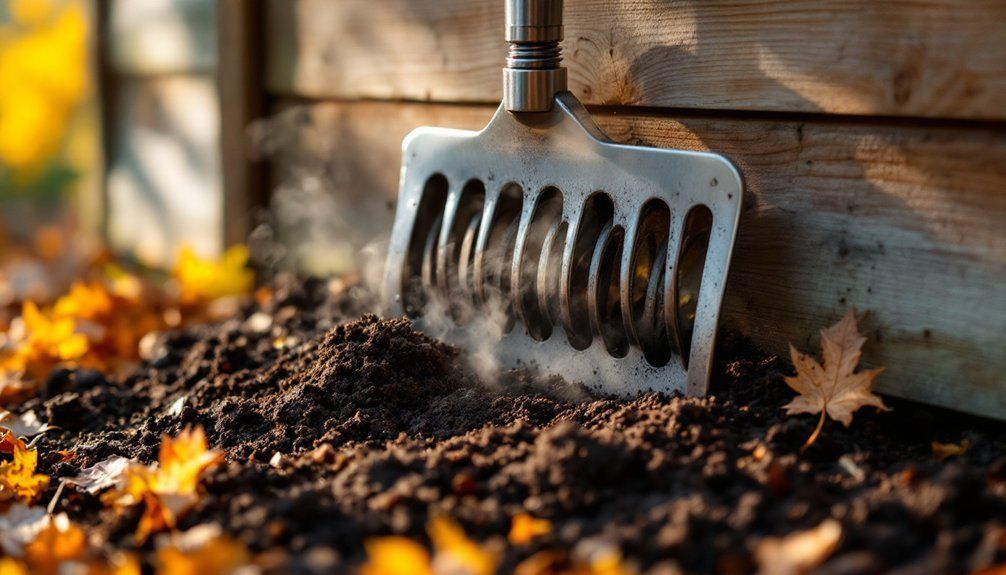
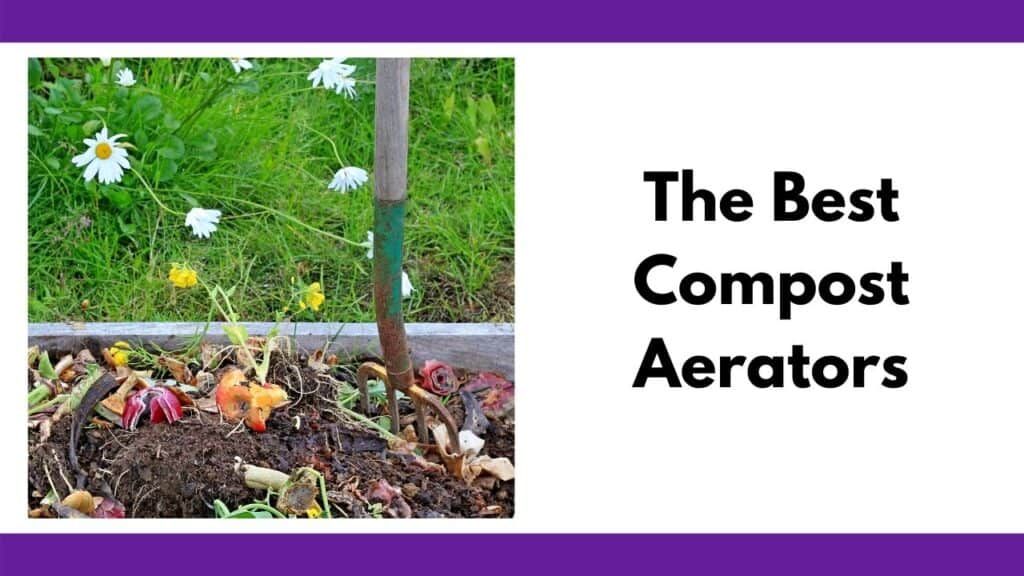
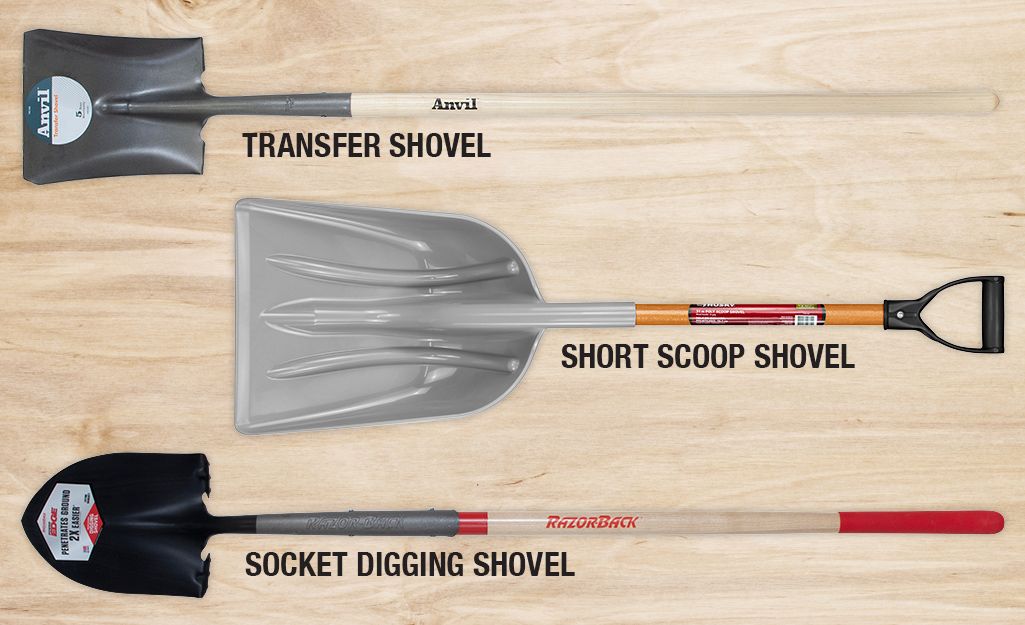
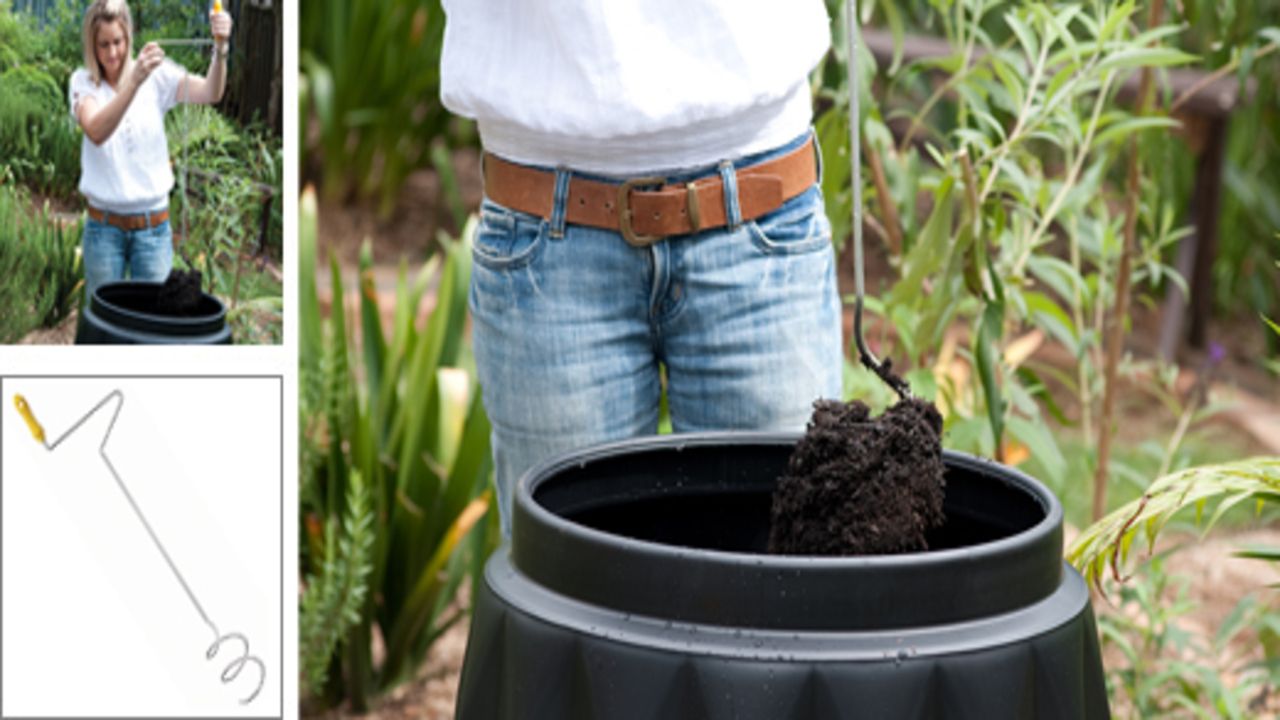
You don’t need fancy equipment to aerate your compost properly. A simple garden fork or pitchfork works wonderfully for most situations. The key is having tines that can penetrate deep into the pile. Some people prefer specialized compost aerators, which are essentially long-handled tools designed specifically for this job. These can be particularly helpful for larger piles. You might also consider using a compost thermometer to monitor internal temperatures and determine when to turn. A basic hand-held thermometer can show you if your pile is heating up properly, indicating good microbial activity.
Techniques for Effective Turning
When turning your compost, aim to mix the entire pile thoroughly. Start by inserting your tool deep into the center of the pile and work your way outward. This brings fresh air to the center where decomposition often slows down. You’ll notice that the outer edges of your pile tend to dry out and decompose faster than the center. By mixing everything together, you ensure even decomposition across all parts. Consider doing a partial turn first – just mix the outer layers – then turn the whole pile after a few days. This technique works well for very large piles or when you want to avoid disturbing the structure too much.
Managing Moisture for Better Airflow
Moisture plays a crucial role in compost aeration. Too much water and your pile becomes waterlogged, squeezing out air pockets. Too little moisture and the microorganisms can’t function properly. The ideal moisture level is similar to a wrung-out sponge – you should be able to squeeze a few drops of water from a handful of material. When your pile gets too wet, adding dry materials like straw, leaves, or cardboard can help absorb excess moisture. Conversely, if it’s too dry, add water gradually while turning. This dual approach of managing both moisture and aeration creates the perfect environment for your compost microbes to thrive.
Mastering compost aeration takes practice, but the payoff is huge. Your compost will break down faster, smell better, and produce richer soil amendment. Remember that aeration isn’t a one-time task but an ongoing process that requires regular attention. Don’t let your pile become a stagnant mess – keep it breathing, turning, and thriving. With these tips, you’ll be well on your way to creating amazing compost that will transform your garden. The key is consistency and paying attention to what your pile is telling you through its smell, temperature, and texture. Happy composting!