Picture this: you’re standing in your garden, hands dirty, surrounded by thriving vegetables and flowers. But something’s not right. The weeds are taking over, choking out everything else. You’ve tried everything – chemicals, machines, even pulling with both hands. Nothing seems to work. What if there was a better way? A way that works with the natural rhythm of plants instead of against it?
Let’s face it, weeding is one of those gardening tasks that most of us dread. It’s messy, time-consuming, and often feels like a losing battle. But what if we could approach this task differently? What if we could learn to work with nature’s own systems instead of fighting them? This isn’t about being lazy or avoiding work – it’s about becoming smarter about how we interact with our garden. Think of it like having a conversation with your plants instead of shouting at them. The results speak for themselves.
Understanding Plant Behavior
Before we dive into techniques, we need to understand what makes weeds so persistent. They’re not just random invaders – they’re incredibly adaptive. They grow quickly, reproduce rapidly, and have developed survival strategies over thousands of years. When you pull a weed by its roots, you’re essentially asking it to fight back harder.
Here’s the secret: weeds often appear where soil conditions aren’t ideal for your desired plants. Maybe the soil is too compacted, or there’s too much shade, or perhaps it’s too dry. Instead of fighting the weed, ask yourself: ‘What’s making this spot unsuitable for my good plants?’ Often, the solution lies in fixing the underlying problem, not just removing the visible offender.
Timing Is Everything
Weeding timing matters more than you might think. Early morning is usually best because:
• The soil is softer and easier to work with
• Weeds are less stressed from heat and sun exposure
• You can see weeds more clearly before they go to seed
Consider the difference between pulling a weed when it’s dry versus when it’s damp. The difference is dramatic. When soil is wet, you’re less likely to break off root sections that will regrow later. The right timing means fewer weeds returning and more success with your efforts.
Try this experiment: pull some weeds when the soil is dry and others when it’s moist. Notice how much easier it is to get the whole plant out when moisture helps loosen the earth around it.
The Art of Selective Pulling
Not every weed needs to go. Some actually benefit your garden. Clover, for instance, fixes nitrogen in the soil and attracts beneficial insects. Dandelions can be useful for their medicinal properties and as a food source for pollinators.
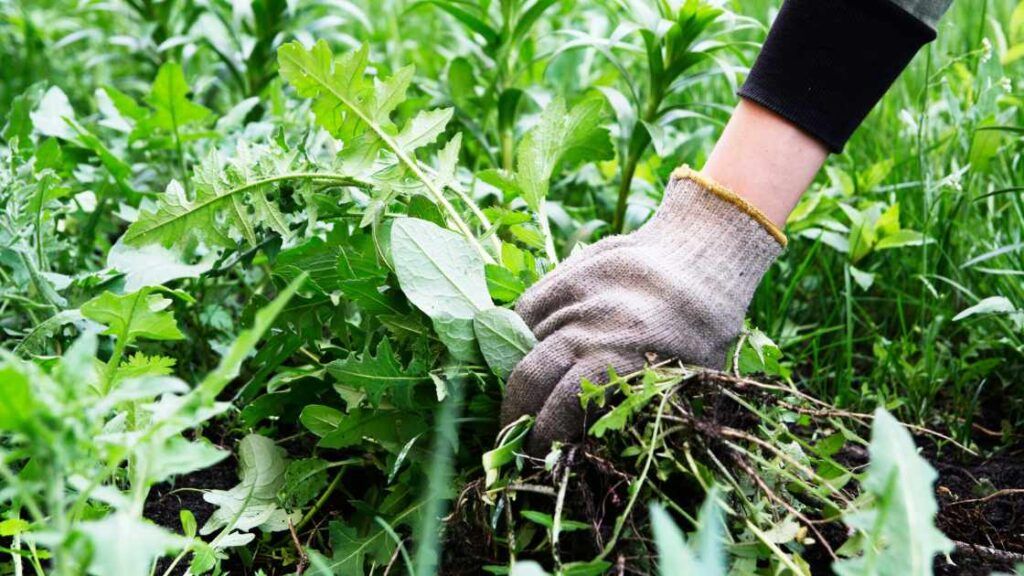
When you do decide to remove a weed, focus on getting the entire root system. Many gardeners make the mistake of just pulling the top part, thinking they’ve won. But the root system can regenerate new shoots, making your job even harder.
Use the proper technique: grasp the weed near the base, give it a gentle wiggle, then pull straight up. If it resists, don’t yank wildly. Let the soil soften around it first. Some weeds, like chickweed, are particularly tenacious. For these, you may need to repeat the process a few times before they finally give up.
Remember: it’s better to take your time and do it right than to rush and end up with more work later.
Working With Soil Health
Healthy soil is your best weapon against weeds. When your plants are strong and thriving, they naturally crowd out weeds. Poor soil conditions create opportunities for invasive species to take hold.
Here’s how to improve soil health:
• Add compost regularly to provide nutrients and improve soil structure
• Mulch heavily to suppress weed growth while retaining moisture
• Test soil pH and adjust as needed for your specific plants
• Practice crop rotation to prevent certain weeds from building up
Consider this: a well-established bed of tomatoes will naturally suppress many types of weeds. The dense foliage blocks sunlight, and the plants’ root systems compete for nutrients. It’s a natural form of weed control that requires no extra effort once established.
Sometimes the most effective "weeding" happens before you even start. By preparing good soil and planting strong, healthy specimens, you’re already ahead of the game.
Natural Prevention Methods
Prevention is always better than cure, especially when it comes to weeds. Here are some natural approaches that work with your garden’s ecosystem:
• Plant ground covers that will shade the soil and prevent weed seeds from germinating
• Use landscape fabric or thick mulch layers to block light
• Encourage beneficial insects that eat weed seeds or larvae
• Plant companion plants that naturally repel pests and unwanted growth
One particularly effective strategy is using cover crops during off-seasons. These plants grow densely and crowd out anything else trying to establish itself. They also add nutrients to the soil as they decompose.
Think of it like creating a natural defense system for your garden. Just as you wouldn’t leave your front door unlocked, you shouldn’t leave your garden vulnerable to invasion. These preventive measures work quietly in the background, making future weeding much easier.
Seasonal Adaptations
Weeds behave differently depending on the season, and smart gardeners adapt their approach accordingly:
Spring: Focus on early removal of annual weeds before they set seed. This is when many weeds are most vulnerable.
Summer: Weeds tend to be more established, so focus on maintaining clean beds and preventing seed production.
Fall: This is prime time for pulling perennial weeds when they’re storing energy in their roots for winter.
Winter: While many weeds are dormant, you can still remove perennials and prepare the soil for spring.
The key insight is that weeds follow predictable patterns. Understanding these patterns helps you plan your weeding schedule more effectively. It’s like learning the rhythm of your garden’s daily life.
Weeding doesn’t have to be a frustrating chore. When you approach it with understanding and patience, it becomes a conversation with your garden rather than a battle. The techniques we’ve discussed aren’t just about removing unwanted plants – they’re about creating conditions where your desired plants can thrive.
Remember, the goal isn’t to eliminate all weeds forever, but to manage them in ways that support your garden’s overall health. Some weeds can actually be helpful, and many are simply telling you something about your soil or growing conditions. By listening to what your garden is trying to tell you, you’ll find that weeding becomes more satisfying and effective.
The next time you stand in your garden with a handful of weeds, take a moment to consider whether you’re fighting against nature or working with it. Sometimes the most powerful action is simply doing less and letting your plants do the work. Trust the process, and watch your garden transform.