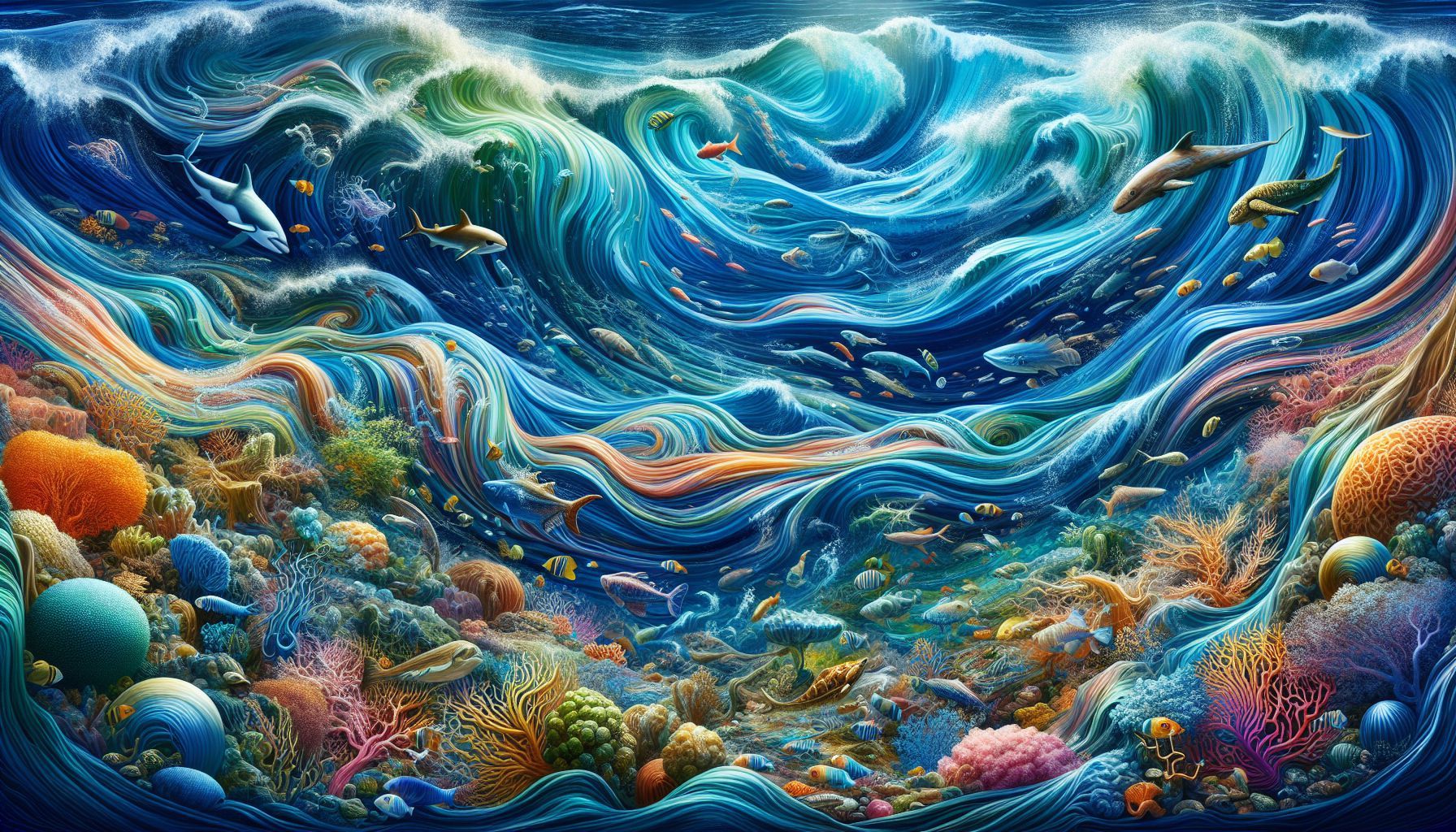
Have you ever gazed out at the ocean and felt a sense of awe? That endless expanse of blue, the way the light dances on the waves, the sheer power and tranquility it can evoke – it’s truly mesmerizing. But have you ever stopped to wonder why it’s so captivating? It turns out, the stunning scenery isn’t just a happy accident. It’s a complex interplay of physics, chemistry, and biology, a grand performance orchestrated by nature itself. Let’s explore the science that paints this magnificent, ever-changing canvas.
We often talk about the ocean’s beauty in poetic terms, but beneath the surface of that poetic grandeur lies a world of fascinating scientific principles. The colors we see, the patterns on the waves, even the clarity of the water – it all has a scientific explanation. It’s like understanding the brushstrokes and pigments that make a masterpiece, but on a scale so vast it dwarfs any human creation. So, how does the ocean manage to be so consistently, breathtakingly beautiful? Let’s get into it.
The Magic of Light and Water: Why Oceans Aren’t Just Blue
The most striking feature of the ocean is its color, and it all comes down to how light interacts with water. Sunlight, as we know, is made up of all the colors of the rainbow. When light hits the water, certain colors are absorbed more than others. Red and orange wavelengths get soaked up relatively quickly, leaving the blues and greens to penetrate deeper. This is why the ocean appears blue – it’s the light that’s left after the other colors have been absorbed.
But it’s not always a uniform blue, right? Factors like the depth of the water and what’s suspended in it play a huge role. Shallow waters might appear greener because of algae and other plant life that absorb blue light and reflect green. The clearer the water, the deeper and more intense the blue. Think about a swimming pool versus the deep ocean; the pool’s tile might make it look a different shade, but the water itself is still reflecting that blue light. It’s a constant, subtle dance of absorption and scattering.
Suspended Particles: The Ocean’s Natural Pigments
Beyond just water molecules, the ocean is teeming with tiny particles. These can include anything from microscopic plants and animals (phytoplankton and zooplankton) to sediment stirred up from the seabed. These little guys act like natural pigments, influencing the water’s color. Phytoplankton, for instance, contain chlorophyll, which is green. When there’s a large bloom of phytoplankton, the ocean can take on a vibrant greenish hue.
These particles also affect how light scatters. They can make the water appear more opaque or give it a milky appearance. Sometimes, you might see swirls of different colors in the ocean – these are often indicators of varying concentrations of these suspended materials. It’s like looking at a watercolor painting where the artist has deliberately mixed different shades and textures. And sometimes, these particles can even create shimmering effects as they catch the sunlight.
Waves and Ripples: The Dynamics of Surface Beauty
The ocean’s surface is rarely still, and the movement of waves is a huge part of its visual appeal. Waves are generated by wind, but their shape and behavior are influenced by a host of factors: the strength and duration of the wind, the fetch (the distance over which the wind blows), and the depth of the water.
As waves travel, they refract (bend) and diffract (spread out) around obstacles like headlands and islands, creating intricate patterns. The way sunlight reflects off a wave’s surface creates that sparkling, glittering effect we often admire. Think about a calm day with small, gentle ripples versus a stormy day with towering breakers. Each offers a different kind of beauty, a testament to the dynamic forces at play. The crests of waves can appear white and frothy due to trapped air, adding another layer of visual interest.
The Role of the Sky: A Collaborative Masterpiece
It might seem obvious, but the sky above plays a crucial role in the ocean’s appearance. The ocean acts like a giant mirror, reflecting the colors of the sky. On a clear, sunny day, the ocean will reflect the brilliant blue. During a sunset or sunrise, it can take on fiery oranges, soft pinks, and deep purples. Even clouds contribute, casting shadows and creating dramatic contrasts.
This reflection isn’t just a simple mirror image, though. The water itself is still influencing the color. So, a deep blue sky might be reflected, but the water’s inherent blue will enhance it, making it richer and more vibrant. The ocean doesn’t just mimic the sky; it interprets it, blending its own characteristics with the celestial display. This constant interplay makes the ocean’s appearance ever-changing and dependent on the time of day and weather conditions.
Beyond the Visual: The Invisible Forces
While we focus on what we see, there are invisible forces shaping the ocean’s scenery too. Currents, for example, are like underwater rivers, transporting water, heat, and nutrients. They can influence where phytoplankton bloom, thus affecting water color. Tides, driven by the moon and sun’s gravity, cause water levels to rise and fall, revealing different coastal landscapes and creating unique tidal pools and estuaries.
Even the seabed topography plays a part. Underwater mountains and trenches can influence wave patterns and currents. The composition of the seabed itself – sand, rock, coral reefs – affects the clarity and color of the water above it. So, while we’re captivated by the surface, the ocean’s beauty is deeply rooted in these unseen, fundamental processes.
Appreciating the Science, Enhancing the Wonder
Understanding the science behind the ocean’s stunning scenery doesn’t diminish its magic; if anything, it enhances it. Knowing why the water is blue, how waves form, and what gives it those vibrant hues adds a layer of appreciation for the intricate natural systems at work. It’s a reminder that beauty is often a product of complex, interconnected processes.
So, the next time you find yourself mesmerized by the ocean, take a moment to think about the light, the particles, the wind, and the gravity that are all contributing to that breathtaking view. It’s a symphony of science, playing out on a grand, liquid stage. And this knowledge can inspire us to protect these precious environments, preserving their beauty for generations to come. After all, understanding is the first step toward conservation.
The ocean’s scenery is a dynamic, living artwork, constantly being repainted by the forces of nature. From the fundamental physics of light absorption and scattering to the biological influences of plankton and the constant motion of waves and currents, every element contributes to its unique and captivating beauty. It’s a place where science and art converge, offering us a spectacle that is both profoundly beautiful and deeply complex. Cherishing this beauty means appreciating the intricate science that makes it all possible, and it underscores the importance of safeguarding these vital ecosystems for the continuation of their grand, visual performance. The ocean is a testament to the elegance of natural law, a boundless source of wonder, and a constant reminder of the incredible world we inhabit.

![Beach Fabric Ideas [Bold Pin Stripes, Ocean Sofa Pillows] intended for Navigating the World of Oceans Sofa Materials](https://dahomengarden.com/wp-content/uploads/2025/10/beach-fabric-ideas-bold-pin-stripes-ocean-sofa-pillows-intended-for-navigating-the-world-of-oceans-sofa-materials.jpg)