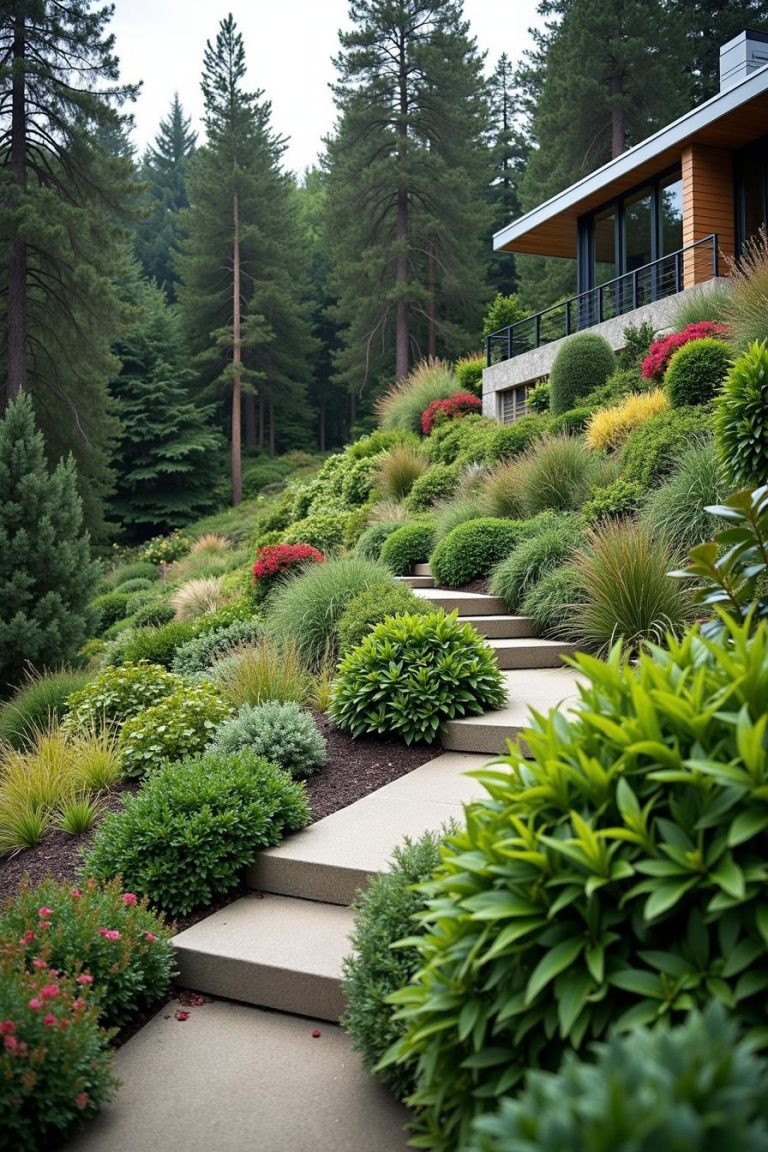

Ever stood at the bottom of a steep backyard and felt that little pang of dread? You know the one. It’s that mix of admiration for the view and absolute terror at the thought of climbing up there, especially if it’s raining or you’re carrying groceries. Hills are beautiful, sure. They give us privacy, views, and that dramatic landscape look everyone wants. But let’s be real—they are a pain to navigate.
Most people look at a slope and see a problem. They see erosion, wasted space, or a safety hazard. But what if you saw it as an opportunity? A chance to create a journey? Designing pathways on challenging terrain isn’t just about getting from point A to point B. It’s about how you feel while you’re doing it. It’s about rhythm, safety, and making the climb feel effortless. In 2026, we’re moving away from fighting the land and starting to dance with it. This guide is here to help you do just that.
The Art of the Zigzag: Why Straight Lines Fail on Slopes
Let’s get one thing straight immediately: never build a path straight down a steep hill. Just don’t do it. It looks aggressive, it erodes quickly, and frankly, it’s dangerous. When you walk straight down a steep grade, your center of gravity shifts forward, and every step feels like a controlled fall. Nobody wants that anxiety in their own garden. Instead, think about switching back. You’ve seen switchbacks on mountain hikes, right? That’s not an accident. It’s physics.
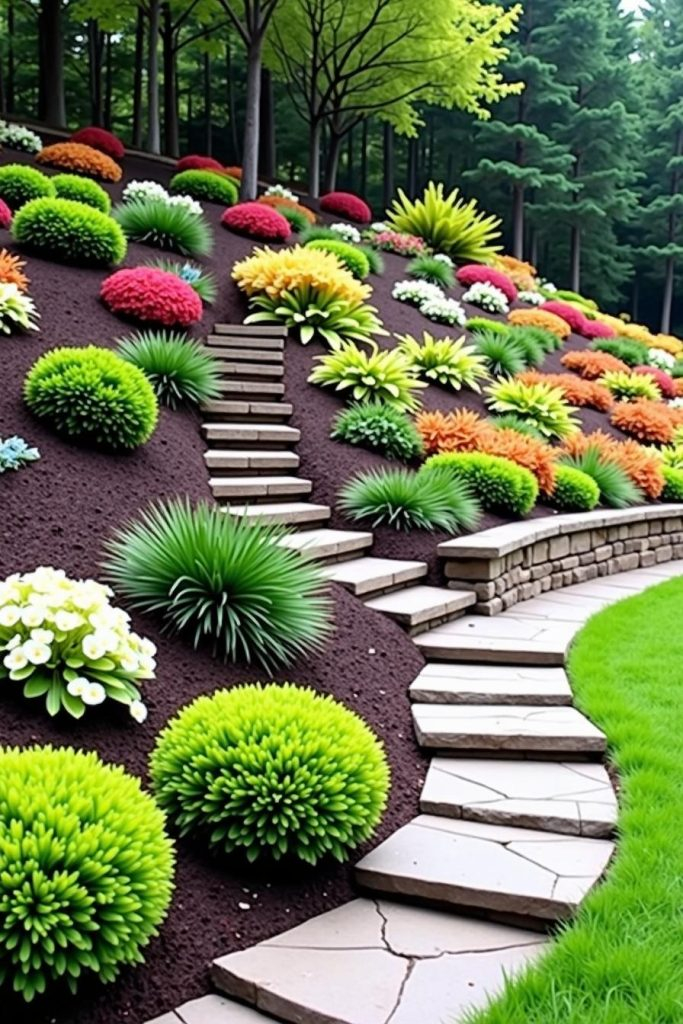
By creating a meandering or zigzag path, you lengthen the distance you travel, which reduces the steepness of the incline. It’s a simple trick that makes a huge difference. A path that winds back and forth across the slope allows for a gentle gradient, usually around 5-8%, which is comfortable for most people to walk. It also slows you down. And when you slow down, you notice things. You see the ferns unfurling, the way the light hits the moss, the texture of the stone. The path becomes a destination, not just a corridor.
This approach also helps with water management. Straight paths act like chutes for rainwater, washing away soil and mulch. A winding path interrupts that flow, allowing water to soak into the ground rather than rush off it. If you have a particularly steep section, consider breaking the zigzag with small landings. These flat spots give your legs a rest and provide a place to pause and breathe. It’s about pacing yourself. The goal is to make the ascent feel like a stroll, not a workout.
Terracing: Creating Level Ground Where None Exists
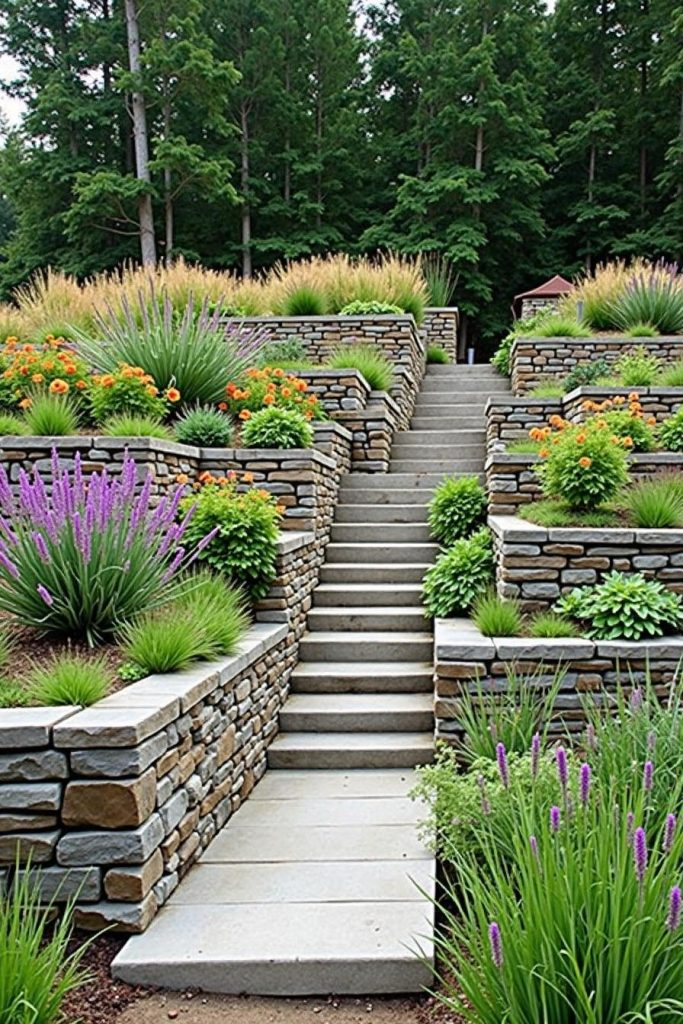
Sometimes, a winding path isn’t enough. Sometimes, the slope is just too severe, or you need flat space for seating, planting, or just standing still without leaning forward. That’s where terracing comes in. Think of terraces as giant steps carved into the hillside. Each level is flat, held in place by a retaining wall, and connected by short flights of stairs. This "step-like design" is a hallmark of luxury hillside homes, but it works just as well in a modest backyard.
Terracing does two major things. First, it creates usable space. On a 45-degree slope, you can’t put out a chair. You can’t grow a vegetable patch. But on a terrace, you can. You’re essentially stealing flat land from the angle of the earth. Second, it breaks the visual monotony of a long slope. A single long staircase can look daunting. A series of terraces with short sets of steps feels manageable. It invites exploration. You want to see what’s on the next level.
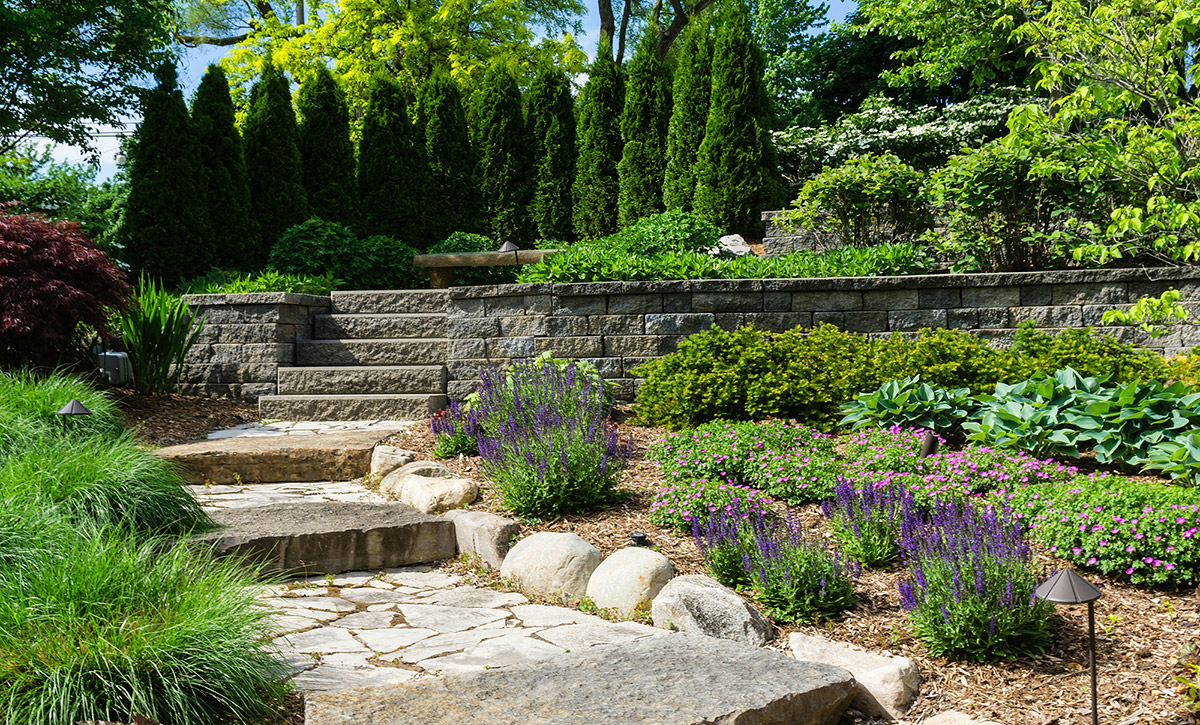
When building terraces, keep the walls low and frequent rather than high and sparse. A three-foot wall is easier to build and looks more natural than a six-foot one. Use materials that blend with the surroundings. Stone, timber, or even living walls (plants grown vertically) can soften the hardscape. The key is integration. The terrace shouldn’t look like it was dropped onto the hill; it should look like it grew out of it. And don’t forget the drainage behind those walls. Water buildup is the number one killer of retaining structures. Always include gravel backfill and weep holes to let water escape.
Choosing Materials That Grip and Last
You’ve got your layout. You’ve got your levels. Now, what do you walk on? This is where safety meets style. On a hill, slip resistance is non-negotiable. Smooth polished stone might look sleek in a showroom, but put it on a damp slope and it’s a skating rink. In 2026, the trend is toward textured, natural materials that offer traction even when wet. Think rough-cut flagstone, textured concrete pavers, or decomposed granite stabilized with a binder.
Brick is another fantastic option, especially if laid correctly. As noted in recent landscape designs, laying bricks horizontally or in a herringbone pattern provides excellent grip. The edges of the bricks create tiny ridges that your shoes can catch onto. Plus, brick has a warmth and charm that fits almost any aesthetic, from cottage to modern. If accessibility is a concern, brick laid flat without steps can accommodate wheelchairs or walkers on gentler slopes, ensuring everyone in the family can enjoy the space.
For a more rustic look, consider railroad ties or large timber steps. They’re sturdy, natural, and age beautifully. However, they require maintenance. Wood rots, so use treated lumber or naturally resistant species like cedar or redwood. Another popular choice is gravel, but only if it’s contained. Loose gravel on a slope is a nightmare to walk on. Use edging to keep it in place, and consider mixing it with a stabilizer product that locks the stones together while still allowing water to permeate. The best material is the one that feels solid underfoot and doesn’t require you to watch every step you take.
The Geometry of Steps: Rise, Run, and Rhythm
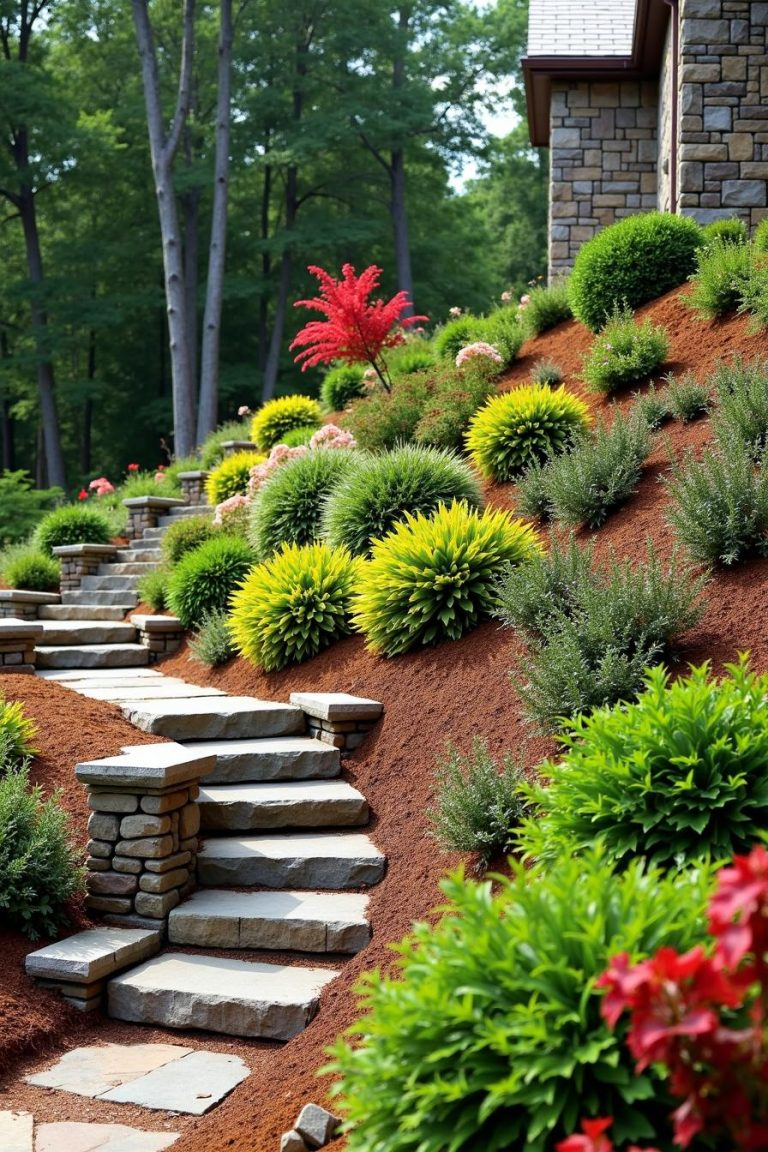
Steps are the vertical connectors of your hillside path, and getting them wrong is easy. Get them right, and they disappear. Get them wrong, and you’ll trip over them every time. The secret is consistency. Your brain predicts the height of the next step based on the previous one. If one step is six inches high and the next is eight, you will stumble. It’s not a matter of if, but when. Every riser (the vertical part) and every tread (the horizontal part) must be identical within a single flight of stairs.
So, what are the magic numbers? For outdoor steps, a comfortable ratio is a 6-inch rise and a 12-to-14-inch run. This is shallower than indoor stairs because you’re wearing shoes, maybe carrying something, and dealing with uneven attention spans. You want a lazy, loping gait, not a march. If the slope is very gentle, you can go even lower, like a 4-inch rise and a 15-inch run. These are called "garden steps" and they feel more like a ramp than a staircase. They’re incredibly inviting and easy on the knees.
Don’t forget the landings. If you have more than 10-12 steps in a row, you need a flat landing. This gives people a place to rest and resets their rhythm. It’s also a crucial safety feature. If someone does trip, a landing limits how far they can fall. And lighting! Never leave hillside steps in the dark. Integrated LED strip lights under the nosing of each step or low-voltage post lights along the side are essential. They aren’t just for aesthetics; they’re for preventing broken ankles. Make sure the light is warm and diffuse, not blinding.
Working With Water, Not Against It
Water is the enemy of hillside paths, but only if you ignore it. If you fight water, it wins. Every time. Rainfall runs downhill, gathering speed and volume as it goes. If your path blocks that flow, the water will undercut your steps, wash away your base material, and eventually destroy your hard work. The key is to manage the flow. You want to intercept the water, slow it down, and direct it safely away.
Start with the base. Underneath every path and step, you need a solid foundation of compacted gravel. This allows water to drain through the surface material rather than pooling underneath. For paved paths, ensure there’s a slight cross-slope (about 1-2%) so water sheds off the sides, not down the middle. If you’re using natural materials like mulch or bark, consider installing French drains or swales (shallow ditches) alongside the path to catch runoff.
Vegetation is your best ally here. Plant deep-rooted groundcovers along the edges of your path. Plants like creeping juniper, sedum, or native grasses hold the soil in place with their roots. They act as a living net, preventing erosion. In 2026, we’re seeing more "bioswales" integrated into path designs—small, planted depressions that collect and filter rainwater. It’s functional, beautiful, and eco-friendly. By thinking about water from the start, you ensure your path stays stable and safe for years to come. Don’t wait for the first storm to think about drainage.
Accessibility and Inclusivity on Slopes
Here’s a tough truth: traditional hillside paths are often exclusive. They assume you have two strong legs, good balance, and no mobility issues. But a garden is for everyone. Grandparents, young children, people with temporary injuries, or those who use wheelchairs or walkers should all be able to enjoy the space. Designing for accessibility on a slope is challenging, but it’s not impossible. It just requires more creativity and sometimes, more space.
The gold standard is a gentle ramp. The maximum recommended slope for a wheelchair-accessible ramp is 1:12 (for every inch of rise, you need 12 inches of length). On a steep hill, this means a lot of zigzagging. It might seem like it takes up a lot of room, but it opens up the space to everyone. If a full ramp isn’t feasible, consider a hybrid approach. Create a primary accessible route that winds gently up the hill, using switchbacks and smooth, firm surfaces like concrete or tightly laid brick. Then, have secondary, steeper paths for those who want a quicker, more vigorous climb.
Another option is the use of lifts or inclined platforms for extreme slopes, though these are more common in commercial or high-end residential settings. For most home gardens, the key is offering choices. Provide a "easy" route and a "hard" route. Label them subtly through design—wider, smoother paths for ease; narrower, steeper steps for adventure. This inclusivity doesn’t just help people with mobility challenges; it helps everyone. A path that’s easy to walk is a path that gets used more often. And a path that gets used is a path that brings joy.
Designing pathways on challenging hillside terrain is less about engineering and more about empathy. It’s about understanding how the body moves, how the eye sees, and how the heart feels when faced with a climb. It’s about taking a difficult piece of land and turning it into a welcoming, functional, and beautiful part of your home. Whether you choose winding switchbacks, sturdy terraces, or gentle ramps, the goal is the same: connection. Connection to the land, to your home, and to the people you share it with.
Remember, there’s no one-size-fits-all solution. Your hill is unique. Your needs are unique. Take your time. Walk the site. Watch how the sun moves, where the water flows, and where your feet naturally want to go. Use materials that age well, design steps that are consistent, and always, always prioritize safety. But don’t forget the beauty. A well-designed path is a gift. It invites you out. It encourages you to explore. It turns a chore into a pleasure.
So, grab your shovel, or better yet, grab a sketchpad. Start small. Maybe just one set of steps. Maybe one curved section. See how it feels. Adjust as you go. The hill isn’t going anywhere, and neither are you. Together, you can create something that lasts. Something that works. Something that makes coming home feel like an arrival, not an ordeal. After all, isn’t that what a home is supposed to be?