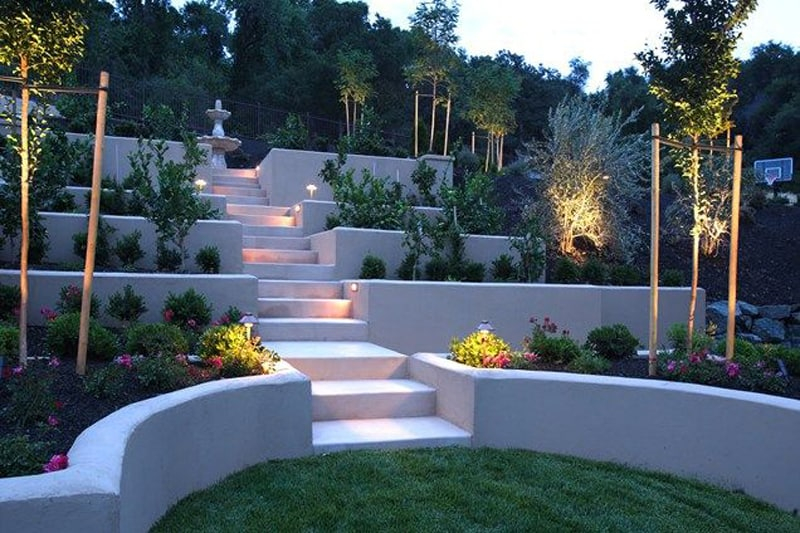

We’ve all been there. You buy a house with "character," only to realize that character is a forty-five-degree angle of dirt that refuses to stay put. It’s awkward. It’s unusable. And honestly? It’s kind of a pain in the neck. But here’s the thing about 2026: we’ve stopped fighting our landscapes and started working with them. That steep grade isn’t a limitation anymore. It’s your ticket to the most stunning, multi-layered outdoor room on the block.
Think about it. Flat yards are fine, sure. They’re easy. But they’re also a bit… boring. A slope gives you drama. It gives you views. It gives you the chance to create distinct "rooms" without building a single interior wall. Whether you’re dreaming of a sunset cocktail nook perched above the rest of the yard or a sunken fire pit that feels like a secret hideaway, the hill is your best friend. You just have to know how to ask it nicely.
The tech and materials available this year make it easier than ever to tame the incline without breaking the bank or the environment. We aren’t just dumping concrete anymore. We’re using permeable pavers, native root systems, and modular decking that floats over the terrain like magic. So, grab a coffee (or a wine, no judgment) and let’s talk about how to turn that eyesore into your favorite spot to hang out.
The Art of the Terrace: Creating Flat Ground Where None Existed
Let’s get the heavy lifting out of the way first. If you want usable space on a slope, you need flat spots. This is where terracing comes in. In the past, this meant massive, ugly concrete walls that looked like bunker fortifications. Thankfully, design trends in 2026 have moved toward softer, more integrated approaches. The goal is to make the wall disappear into the landscape, not stand out as a scar.
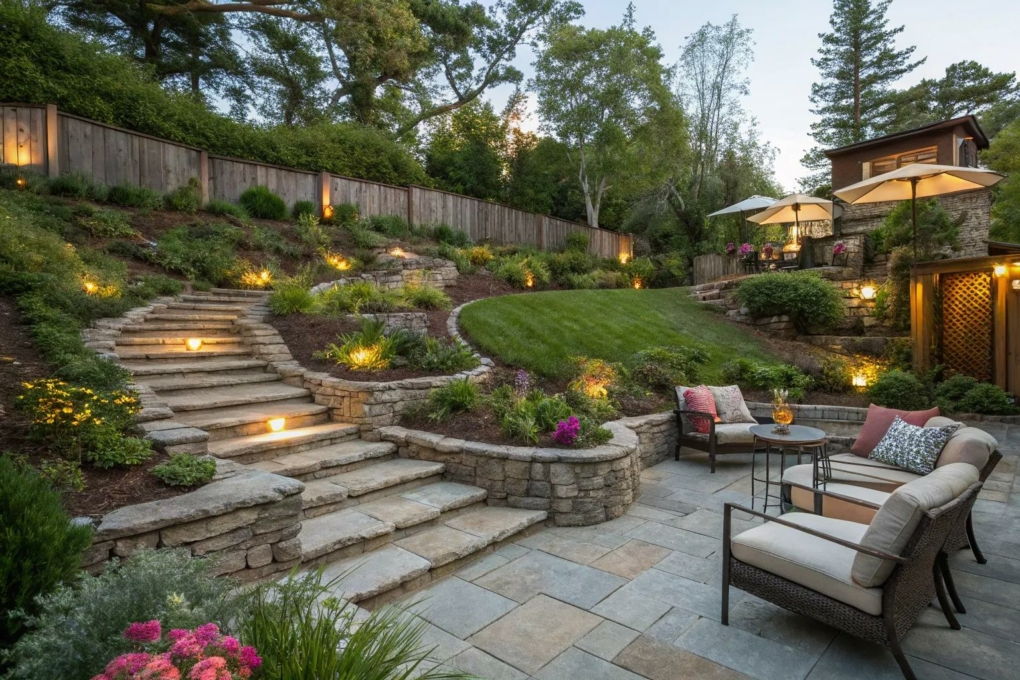
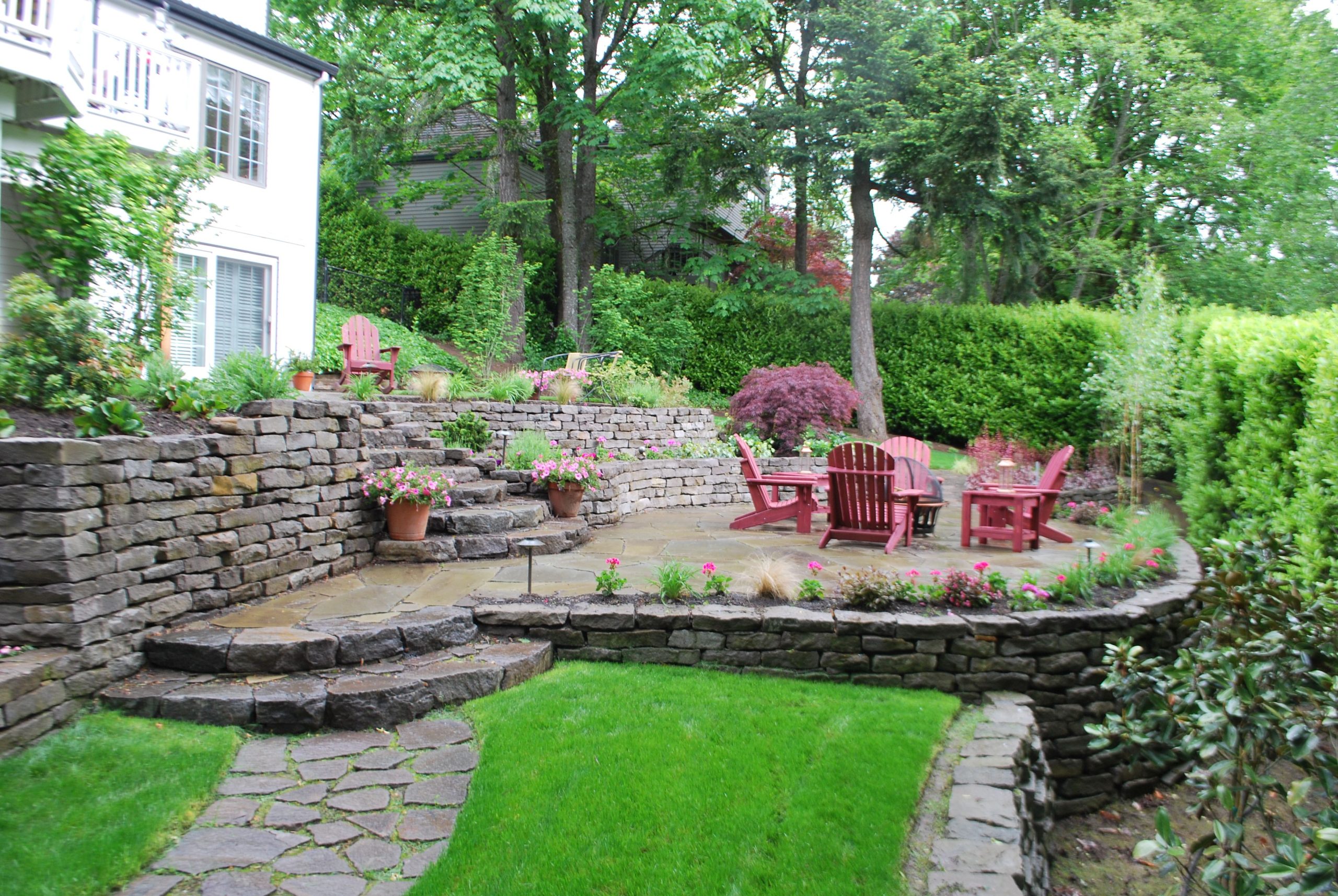
Retaining walls are still the backbone of this strategy, but the materials have changed. Gabion baskets—wire cages filled with local stone—are having a huge moment. They’re affordable, they drain water naturally (more on that later), and they look ruggedly chic. Another popular option is segmented block walls with a textured face that mimics natural rock. These can be stacked to create tiered levels, each one serving a different purpose. Imagine the top tier for dining, the middle for lounging, and the bottom for play or gardening.
But here’s the trick: don’t make every level the same size. Variety creates interest. Make one terrace deep enough for a full outdoor kitchen and dining set. Make the next one narrow, just wide enough for a couple of Adirondack chairs and a small side table. This variation breaks up the visual monotony and makes the climb from one level to the next feel like a journey rather than a chore. Plus, smaller terraces are cheaper to build and require less engineering oversight.
Floating Decks and Modern Hardscaping Solutions
Sometimes, digging into a hillside is too expensive or environmentally risky. That’s when you go up, not in. Elevated decks are the classic solution, but the 2026 version is sleeker, lighter, and smarter. We’re seeing a shift away from traditional wood pressure-treated lumber toward composite materials that resist warping and fading. These new composites come in earthy tones that blend seamlessly with the surrounding foliage, avoiding that plastic-looking sheen older decks had.
Cantilevered designs are particularly effective on steep slopes. By anchoring the deck into the stable soil higher up the hill, you can extend the platform out over the slope, creating a feeling of floating above the garden. It’s dramatic. It’s airy. And it keeps your feet dry when the ground below gets muddy. For those on a tighter budget, modular deck tiles made from recycled plastics offer a DIY-friendly alternative. They snap together quickly and can be adjusted to follow the contour of the land slightly, though for steep grades, a framed structure is still safer.
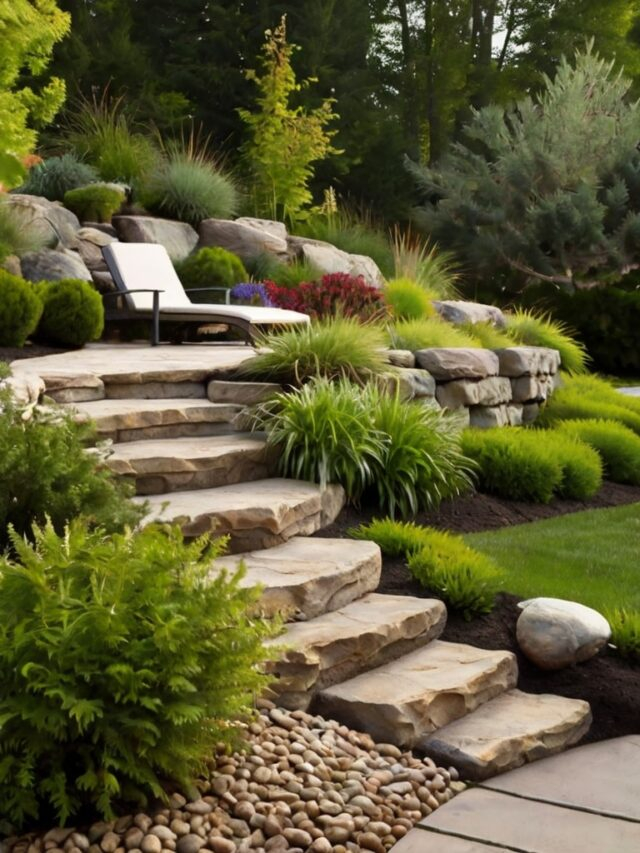
Don’t forget the connection points. How do you get from the house to the deck, or from the deck to the lower garden? Stairs are obvious, but they can be bulky. Consider switchback pathways that zig-zag down the slope. They reduce the steepness of each step, making them easier to walk, and they add a sculptural element to the landscape. Use materials that contrast with the greenery, like dark steel edging or light-colored gravel, to guide the eye and the foot.
Taming the Flow: Drainage and Erosion Control That Looks Good
Here’s the unsexy truth: water is the enemy of the sloped yard. Gravity pulls rain down fast, picking up soil and debris as it goes. If you don’t manage this flow, your beautiful new terraces will wash away in the first heavy storm. But drainage doesn’t have to mean ugly black pipes sticking out of the ground. In fact, some of the best drainage solutions are also the most beautiful features of the garden.
Swales are shallow, vegetated ditches that slow down water and allow it to soak into the ground. Line them with river rocks or plant them with moisture-loving natives like ferns and sedges. They act as natural sponges, filtering runoff before it hits your lower levels. French drains are another staple, but instead of hiding them completely, consider exposing the gravel trench as a decorative dry creek bed. It adds texture and sound to the garden, especially if you incorporate a small recirculating pump to create a gentle trickle.
Permeable paving is also key for hardscaped areas. Instead of solid concrete patios that shed water, use pavers with gaps filled with gravel or grass. This allows rain to penetrate the surface directly, reducing the volume of runoff your retaining walls have to hold back. In 2026, there are even porous concrete mixes that look like standard stone but allow water to pass through. It’s a small detail that makes a huge difference in the longevity of your project.
Planting with Purpose: Roots That Hold the Line
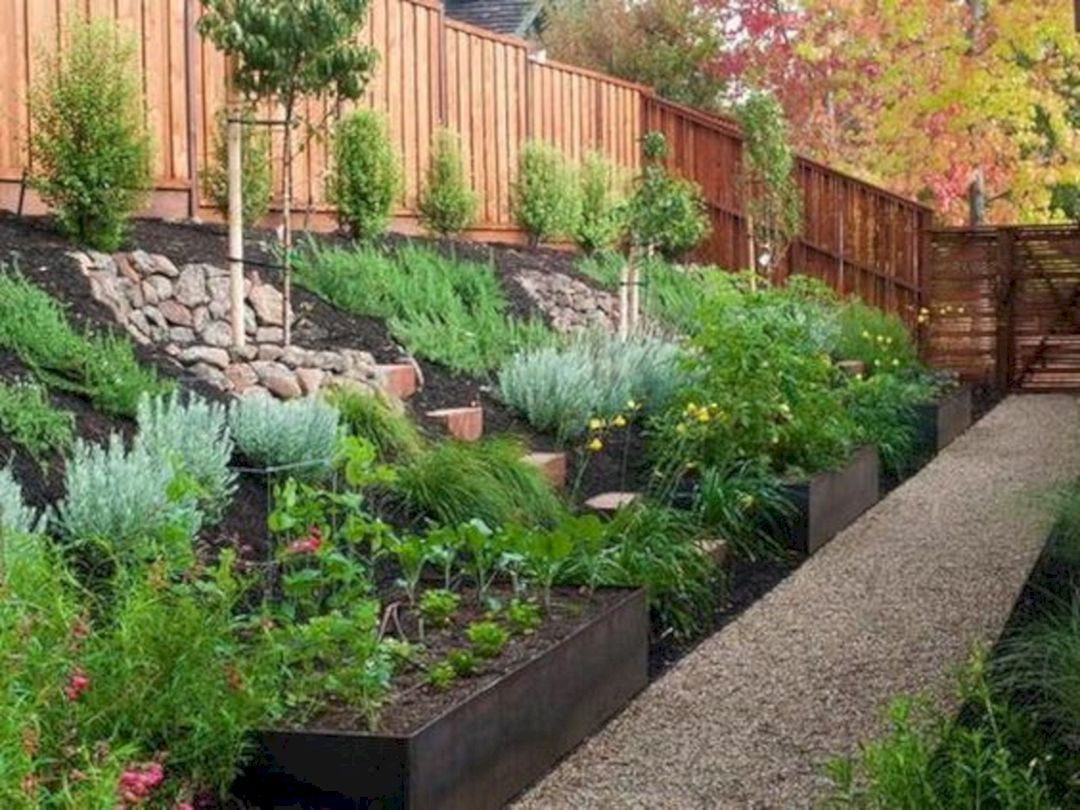
Plants aren’t just decoration on a slope; they’re infrastructure. Their roots bind the soil together, preventing erosion in a way that no wall can match alone. The key is choosing the right plants for the right spot. On the steepest parts of the hill, you need aggressive spreaders with deep, fibrous root systems. Think ornamental grasses, creeping juniper, or pachysandra. These guys knit the soil together like a living net.
Avoid large shrubs with shallow roots on the upper tiers, as they can become top-heavy and unstable during high winds. Instead, opt for low-growing groundcovers that hug the earth. Succulents like sedum are fantastic for sunny, dry slopes because they require little water and establish quickly. For shadier areas, try mosses or liriope. The goal is to cover every inch of bare soil. Bare soil is an invitation for weeds and erosion.
Layering is important for visual appeal. Don’t just plant one type of groundcover and call it a day. Mix textures and colors. Pair the fine blades of fescue with the broad leaves of hostas. Add pops of color with flowering perennials like coneflowers or black-eyed Susans, which have strong taproots that anchor deeper soil layers. And remember, native plants are always the best choice. They’re adapted to your local climate, require less maintenance, and support local wildlife. It’s a win-win-win.
Designing the Rooms: Function Meets Flow
Now that the structure is solid and the plants are in place, it’s time to make it livable. Think of each terrace or level as a separate room in your house. What do you want to do there? The top level, closest to the house, is usually the best spot for dining. It’s convenient for carrying food out from the kitchen, and it often offers the best view of the rest of the yard. Install a pergola or a retractable awning here to provide shade during those hot summer afternoons.
The middle levels are perfect for lounging. This is where you put the deep-seated sofas, the hammocks, or the yoga mat. Because these areas are partially enclosed by the retaining walls above and below, they feel cozy and protected. It’s a great spot for reading or napping. Add some outdoor rugs and plenty of pillows to soften the hardscape. Lighting is crucial here too. String lights overhead or solar-powered path lights along the edges create a magical ambiance in the evening.
The bottom level, often the hardest to access, can be the most fun. Make it a destination. A fire pit is a classic choice, drawing people down the hill for s’mores and stories. Or, if you have kids, this could be the play zone, with a swing set or a sandbox. Because it’s at the bottom, any mess stays contained. Just make sure the path down is well-lit and safe. You want people to feel invited to explore every corner of their new outdoor oasis.
Let’s be real. Landscaping a slope is not cheap. Engineering, materials, and labor add up fast. But you don’t have to do it all at once. In fact, phasing the project is often smarter. Start with the most critical area—usually the section closest to the house or the one with the worst erosion issues. Build that first terrace, get the drainage sorted, and plant it up. Live with it for a season. See how it works. Then, move on to the next level.
DIY can save a significant amount of money, but know your limits. Building a retaining wall over three feet high usually requires a permit and professional engineering in most jurisdictions. Don’t skimp on this. A failed wall is dangerous and expensive to fix. However, you can handle the planting, the mulching, and the decoration yourself. Buying plants in smaller sizes and letting them grow in is much cheaper than buying mature specimens.
Look for reclaimed materials. Old bricks, broken concrete (urbanite), and fallen logs can be used to build informal walls or steps. They add character and cost next to nothing. Check local online marketplaces or construction sites for leftovers. In 2026, sustainability is huge, so using recycled materials is not just budget-friendly, it’s stylish. Just be patient. Transforming a slope is a marathon, not a sprint. Enjoy the process.
So, there you have it. Your steep, scary slope doesn’t have to be a burden. With a bit of planning, some smart engineering, and a lot of plants, it can become the heart of your home. It’s about shifting your perspective. Stop seeing the hill as a problem to be solved and start seeing it as a canvas waiting for your touch.
Take it one step at a time. Literally. Start small. Fix the drainage. Build one small seat wall. Plant some grass. Watch how the light hits it in the evening. You’ll find that the effort you put in pays off every time you step outside. You’ll have a space that’s not just functional, but deeply personal. A place that reflects your style and meets your needs.
And hey, if you mess up a little? That’s okay. Gardens are forgiving. Plants grow. Stones settle. It’s all part of the journey. The important thing is that you’re out there, enjoying your land, instead of staring at it from behind a window, wishing it was flat. Embrace the slope. Love the hill. It’s got character, after all. And now, so do you.