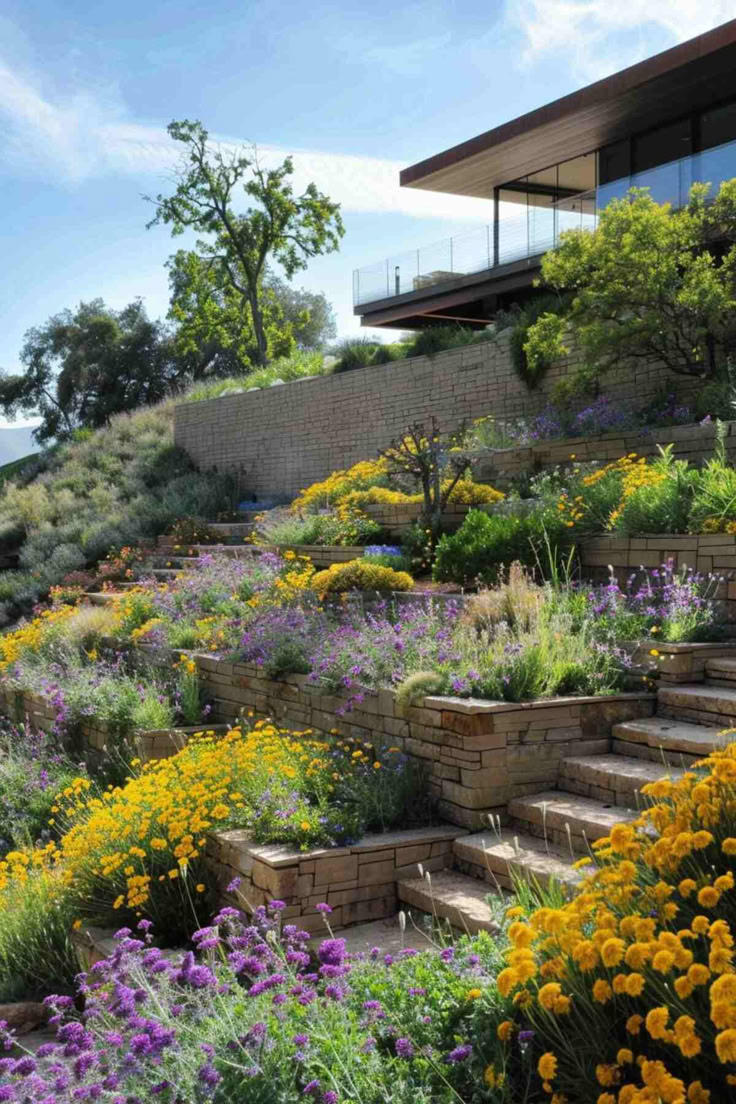

You know that feeling when you look at a steep backyard hill and just sigh? It’s beautiful, sure. But it’s also a headache waiting to happen. Every time it rains, you worry about the dirt sliding down into your patio or, worse, your neighbor’s yard. The traditional fix is usually a big, ugly concrete wall. Or maybe some pricey timber blocks. But let’s be honest. Those things cost a fortune. And they often look like a scar on the landscape rather than a feature.
So, what if you didn’t have to build a fortress? What if you could work with the land instead of fighting it? In 2026, homeowners and landscapers are moving away from massive hardscaping. They’re choosing smarter, softer ways to keep the ground in place. It’s not just about saving money. Though that helps. It’s about creating a space that feels alive. A place where roots do the heavy lifting. Where water slows down instead of rushing off. This approach isn’t new, but the techniques have gotten way better. And frankly, a lot more interesting.
Letting Roots Do the Heavy Lifting
The most powerful tool you have for holding soil isn’t steel or concrete. It’s biology. Plants are nature’s original engineers. Their root systems act like a living net, grabbing onto dirt particles and binding them together. But you can’t just throw any seed on a slope and hope for the best. You need the right kind of greenery. Native plants are your best bet here. They’ve evolved to handle the local climate and soil conditions. They don’t need much coddling once they get established.
Think about ground covers like creeping juniper, pachysandra, or native sedges. These guys spread out quickly. They create a dense mat that shields the soil from the impact of raindrops. When rain hits bare earth, it dislodges particles. That’s how erosion starts. But when it hits a leaf, the energy dissipates. The water trickles down gently. Plus, deep-rooted perennials and shrubs anchor the deeper layers of soil. This prevents those scary shallow landslides during heavy storms. In recent years, hydroseeding has become a popular quick-fix for larger slopes. It’s a slurry of seed, mulch, and fertilizer that sprays on evenly. It germinates fast and gives you immediate coverage.
Don’t forget about trees, either. A well-placed tree can stabilize a huge area. Its roots go deep, acting like anchors. Just be careful not to plant them too close to structures. You want their strength, not their upheaval. Mixing different types of plants creates a resilient system. If one species struggles, others pick up the slack. It’s a diverse defense strategy. And it looks way better than a blank wall. You get color, texture, and even flowers. All while keeping your hill secure. It’s a win-win that gets better every year as the plants mature.
Terracing with Tiny Steps
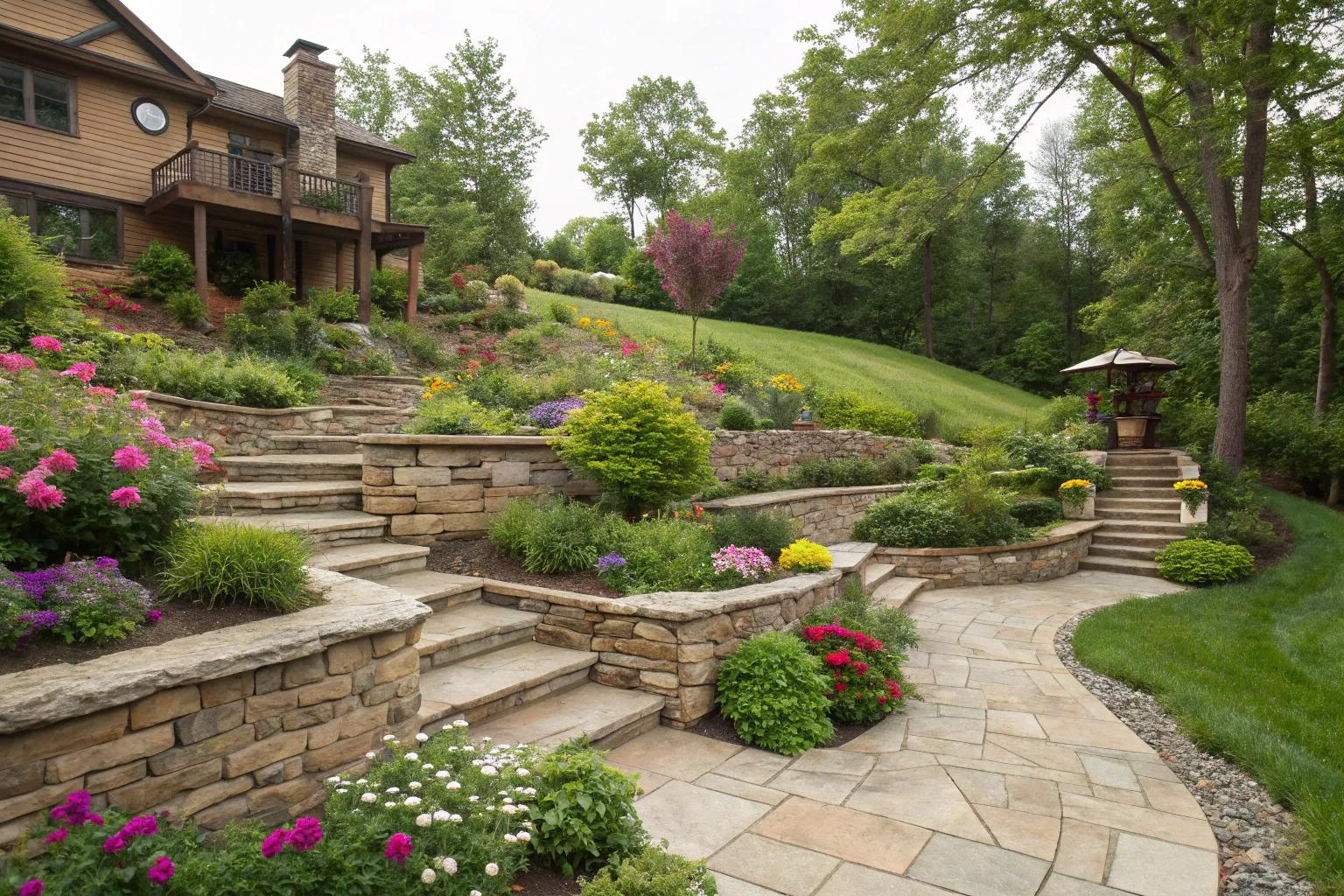
Sometimes, a slope is just too steep for plants alone. The angle fights gravity too hard. In these cases, you need to break up the incline. But you don’t need one giant, imposing wall. Try "escalation" walls instead. This means building several small, low retaining structures rather than one massive one. Think of it like stairs for your garden. Each step flattens a small section of the hill. This reduces the pressure on the soil behind each mini-wall. It’s easier to build, cheaper, and looks much more natural.
These smaller walls can be made from all sorts of materials. Local stone is a classic choice. It blends in seamlessly. You can also use recycled timber, old bricks, or even large logs. The key is keeping them low. Maybe two or three feet high max. This allows you to create distinct planting zones. You can have a herb garden on one tier, flowers on the next, and shrubs on the top. It adds visual interest and functionality. Plus, it slows down water runoff. Instead of sheeting off the surface, rainwater pools slightly on each terrace. This gives it time to soak into the ground.
Building these tiers doesn’t require heavy machinery. Often, you can do it by hand or with minimal help. It’s less invasive than digging a huge trench for a deep foundation. And if one section fails? It’s a small fix. Not a catastrophic collapse. In 2024 and 2025, landscape designers really pushed this trend. People loved the look of layered gardens. It feels intimate. Cozy. You can walk through the levels. Explore the nooks. It turns a problematic slope into a destination. Just make sure you compact the soil well behind each little wall. And add some gravel for drainage. Water buildup is the enemy of any retaining structure, big or small.
Harnessing the Power of Rocks and Boulders
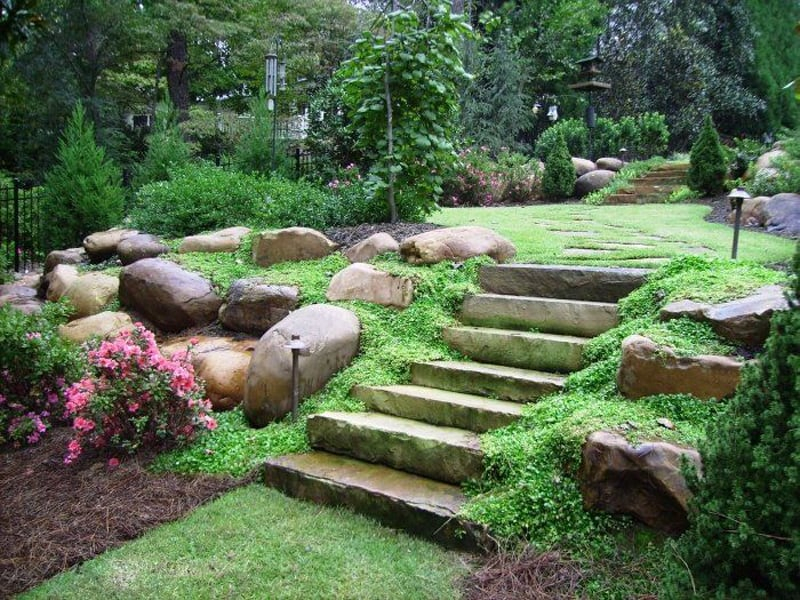
Rocks are heavy. Static. Unmoving. That makes them perfect for anchoring soil. Strategically placing large boulders on a slope can stop erosion in its tracks. They act as speed bumps for runoff. They break the flow of water. And they provide shelter for smaller plants to grow around them. This method is often called "riprap" in engineering terms. But in your backyard, it’s just rock gardening. You don’t need uniform stones. In fact, irregular shapes look better. They fit together like a puzzle.
Start by identifying the paths where water naturally flows. These are your erosion hotspots. Place your biggest boulders there. Dig them in slightly so they don’t roll. Then, fill the gaps with smaller stones and gravel. This creates a permeable surface. Water passes through, but the soil stays put. You can also use rocks to create dry creek beds. These are decorative channels that mimic natural streams. They guide water safely downhill during storms. When it’s dry, they look like artistic features. When it rains, they become functional rivers. It’s a dual-purpose design that handles extreme weather beautifully.
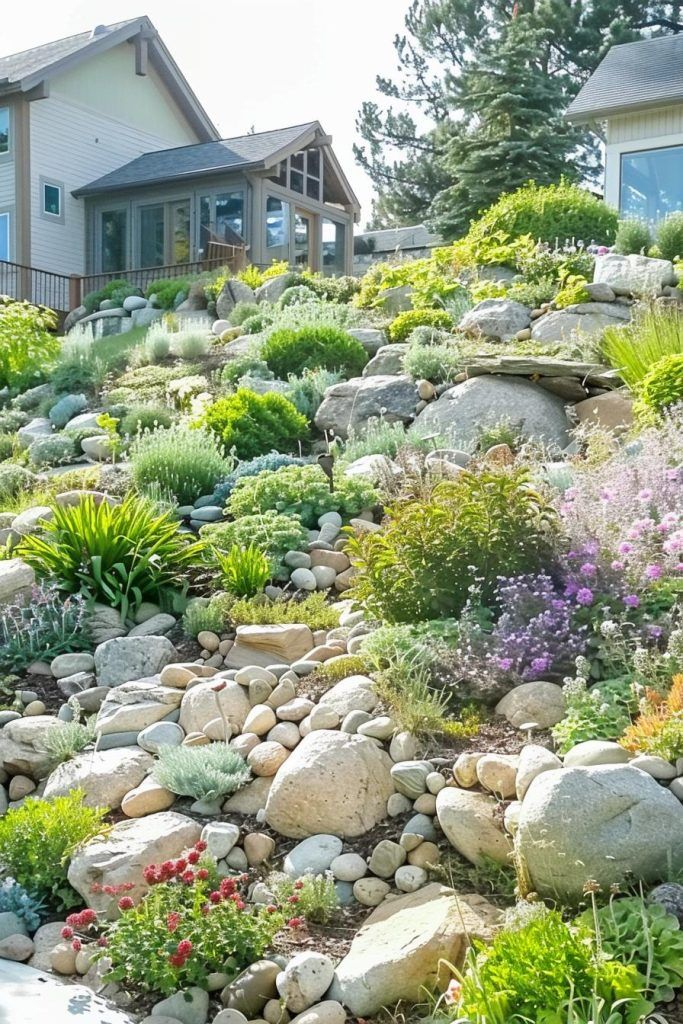
Another trick is using rock pockets for planting. Nestle drought-tolerant succulents or alpine plants between the stones. Their roots will further lock the rocks in place. Over time, moss and lichen might grow on the stones. This adds age and character. It makes the slope look like it’s always been there. Using local stone is crucial here. It ensures the colors match the surrounding landscape. Transporting rocks from far away is expensive and carbon-heavy. Keep it local. Keep it simple. And remember, bigger is often better. One large boulder holds more soil than ten small pebbles. Don’t be shy about going bold.
Managing Water Before It Becomes a Problem
Water is the main culprit behind soil movement. If you control the water, you control the erosion. This means thinking about drainage before you even plant a seed. Swales are a fantastic, underused tool. A swale is basically a shallow ditch on contour. It catches runoff and lets it infiltrate the soil slowly. Instead of rushing down the hill, the water spreads out. It recharges the groundwater. And it keeps the soil moist for your plants. You can disguise swales with mulch or grass. They don’t have to look like ditches.
Dry creek beds, mentioned earlier, are another form of water management. But you can also use French drains. These are perforated pipes buried in gravel. They collect excess water and redirect it away from sensitive areas. Combine these underground systems with surface features. For example, use drip irrigation for your plants. Sprinklers spray water into the air. Much of it evaporates or runs off. Drip lines deliver water directly to the roots. This minimizes waste and prevents surface saturation. Saturated soil is heavy and slippery. It slides easily. Keeping it moderately dry (but not bone dry) increases stability.
Mulch is your friend here too. A thick layer of organic mulch acts like a sponge. It absorbs rain impact. It slows evaporation. And as it breaks down, it improves soil structure. Better soil structure means better infiltration. Wood chips, straw, or shredded leaves work well. Avoid fine mulches that wash away easily. Chunky stuff stays put. In 2026, many homeowners are using arborist wood chips. They’re often free from local tree services. It’s a sustainable cycle. Trees get trimmed, chips go on the slope, soil gets healthier. It’s a simple loop that works. Just keep the mulch a few inches away from plant stems to prevent rot.
Hidden Strength: Geotextiles and Soil Nails
Sometimes, you need a bit of extra reinforcement. Especially if the slope is very steep or the soil is sandy. This is where modern tech comes in. Geotextiles are fabric sheets that you lay under the soil. They allow water to pass through but hold soil particles back. Think of them as a filter. They prevent the fine dirt from washing out while letting the water drain. You can bury them under mulch or gravel. They’re invisible once installed. But they add significant durability to your slope. They’re great for areas where vegetation is slow to establish.
For tougher jobs, there’s soil nailing. This sounds intense, but it’s actually quite common. It involves drilling holes into the slope and inserting steel bars. These bars are grouted in place. They act like pins, holding the soil mass together. Usually, you’d see this on highway embankments. But it’s becoming more accessible for residential projects. Especially where space is tight. You don’t need a huge footprint for a wall. The nails go deep into the stable earth. Then, you can cover the face with vegetation or a light mesh. It’s strong, discreet, and cost-effective compared to massive concrete structures.
Another option is ground anchors. These are similar to nails but often used to tie back a facing. They provide lateral support. If you have a small wall that’s bowing, anchors can save it. You drill through the wall into the stable soil behind. Then you tension the anchor. It pulls the wall back into place. It’s like braces for your landscape. These methods require professional installation. You’re dealing with structural integrity. But they offer peace of mind. You know the hill isn’t going anywhere. And because they’re hidden, you still get the natural look you want. No ugly concrete faces. Just solid, secure ground.
How you move across the slope matters too. Hard, straight paths channel water. They accelerate runoff. Instead, opt for winding, soft-edged pathways. Use stepping stones set in gravel or mulch. This allows water to seep between the steps. It breaks up the flow. Curves slow people down, yes, but they also slow water. A zig-zag path is more interesting to walk. And it’s gentler on the land. You can line the edges of your paths with low-growing plants. This reinforces the borders. It prevents the path from widening due to foot traffic.
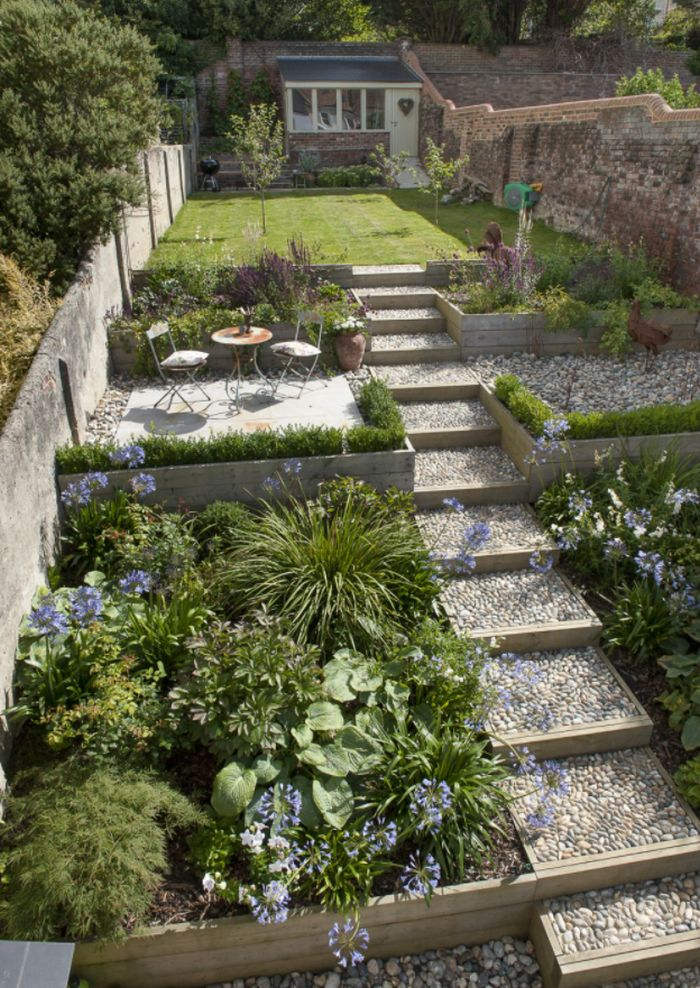
Boxed-off gardens are another creative idea. Build small, raised beds along the slope. Frame them with timber or stone. Fill them with soil and plants. These boxes act as mini-terraces. They catch rain. They reduce the effective steepness of the hill. And they give you flat spots to garden on. You can stagger them down the slope. Create a rhythm. It’s visually appealing. And functionally sound. Each box holds a bit of soil that would otherwise be moving. It’s modular. You can add more later. Or change the plants as you like. It’s flexible design.
Finally, think about the overall aesthetic. A slope doesn’t have to look "fixed." It can look wild. Intentional. Use native grasses that sway in the wind. Add some artistic elements like a sculpture or a bench. Make the slope a place you want to spend time. When you care about a space, you maintain it. You notice problems early. A loose rock. A bare patch. Fix it before it becomes a landslide. Engagement is key. The more you interact with your land, the better you understand its quirks. And that understanding leads to better solutions. It’s a partnership. Not a battle.
So, there you have it. You don’t need a massive wall to keep your hill in place. You need a mix of strategies. Plants for binding. Rocks for weight. Terraces for breaking the grade. Drainage for managing water. And maybe some hidden tech for extra security. It’s about layering these methods. Creating a system that works together. It takes a bit more thought than pouring concrete. But the result is richer. More beautiful. And ultimately, more stable. Because living systems adapt. They grow stronger over time. Concrete just cracks.
Start small. Pick one corner of your slope. Try some native ground cover. Add a few boulders. See how it handles the next rainstorm. Adjust as needed. Learn from the land. It’ll tell you what it needs. And don’t rush. Good landscaping takes time. But the payoff is worth it. You’ll have a yard that’s not just safe, but stunning. A place that feels connected to the earth. And honestly, isn’t that what we’re all looking for? A little harmony in our own backyards. So grab a shovel. Or maybe just some seeds. And get started. Your hill will thank you.