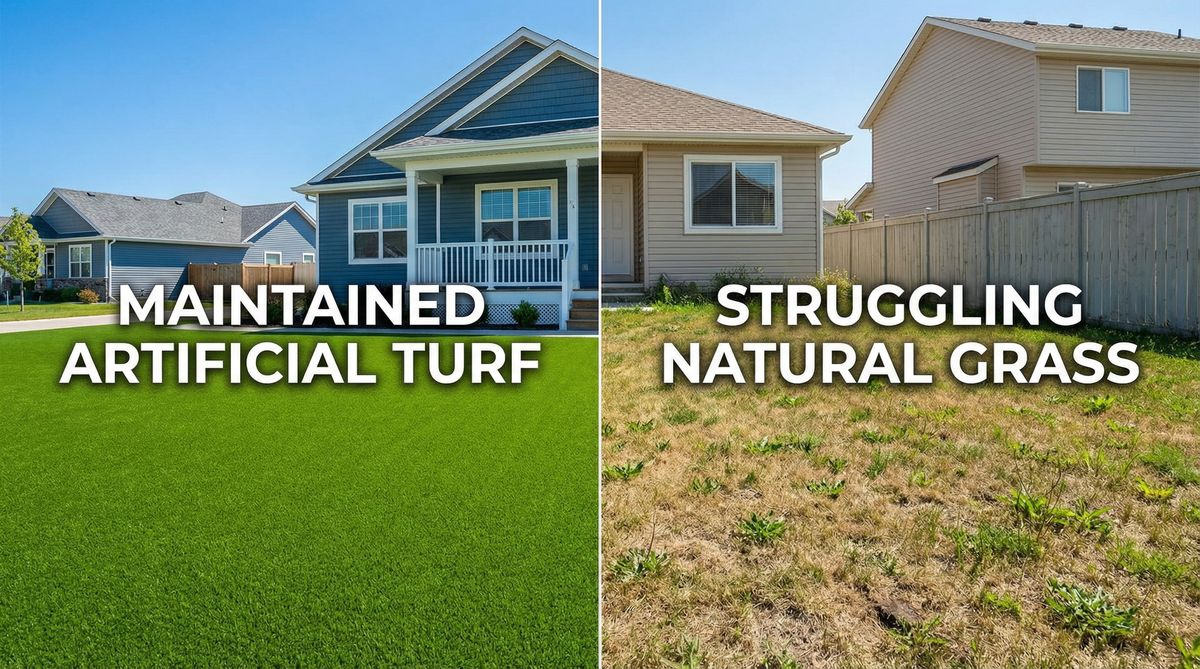

So, you’re standing in your backyard. Maybe it’s a patchy mess of brown spots and crabgrass. Or maybe it’s lush, but you’re tired of spending every Saturday morning pushing a mower while your neighbors sleep in. You’ve probably seen those ads for synthetic turf. They look perfect. Too perfect, right? Like a golf course that never needs water. It’s tempting. But then you see the price tag for installation, and your wallet flinches.
Is it worth it? That’s the question keeping folks up at night in 2026. We aren’t just talking about aesthetics here. We are talking about cold, hard cash. And not just today’s cash, but where your money goes over the next half-decade. Because let’s be honest, nobody buys a lawn for just one year. You live with it. You pay for it. Year after year.
Let’s cut through the marketing noise. Let’s look at what actually happens to your bank account when you choose plastic grass versus the real deal. It’s not as simple as "fake is expensive upfront" and "real is cheap later." The reality is messy, nuanced, and surprisingly different depending on where you live and how you use your yard. Grab a coffee. Let’s dig in.
The Sticker Shock: Upfront Installation Costs
Let’s start with the elephant in the room. The initial bill. If you go with natural sod or seed, you might think you’re getting a bargain. In many parts of the country, laying down fresh sod can cost between $1 and $2 per square foot, including labor. Seeding is even cheaper, sometimes under fifty cents a square foot. It feels like a win. You spend a few hundred bucks, maybe a thousand if you have a huge yard, and boom—you have grass.
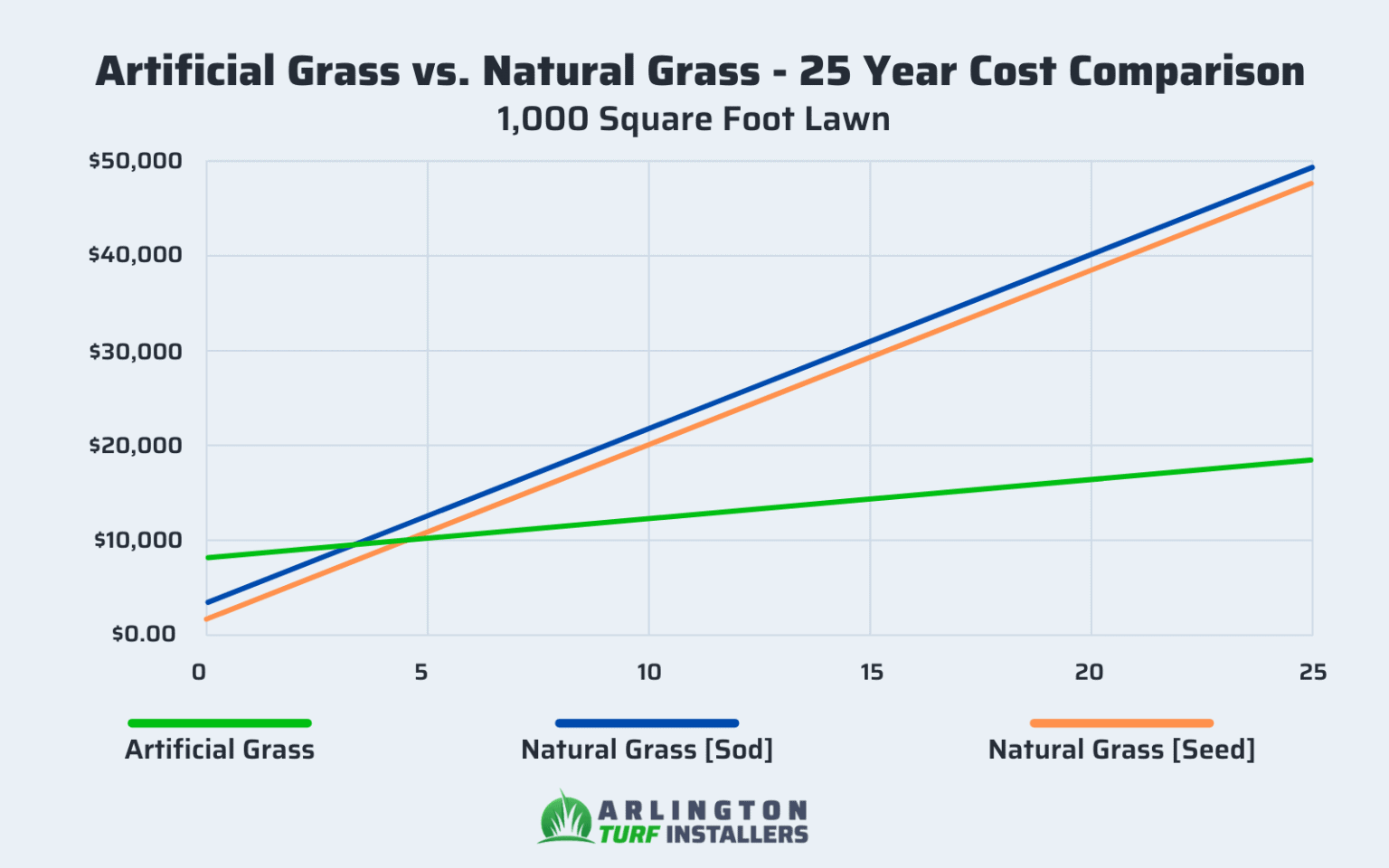
But synthetic turf? Oof. The average installation cost in 2026 hovers between $8 and $15 per square foot. For a standard 500-square-foot backyard, that’s $4,000 to $7,500 before you even blink. Why so much? It’s not just the carpet. It’s the excavation. You have to remove the old soil, add a base layer of crushed rock for drainage, compact it perfectly, and then lay the turf. If you skimp on the base, you get puddles and uneven spots. It’s labor-intensive. It’s heavy. And it requires specialized tools.
However, don’t forget the hidden startup costs for natural lawns. You need a mower. A good one isn’t cheap. You need a trimmer, edger, maybe a sprinkler system if your city has watering restrictions (which most do now). You might need soil amendments, fertilizer spreaders, and aerators. When you add up the equipment needed to maintain a natural lawn properly, that "cheap" option starts creeping up in price. Suddenly, the gap doesn’t look quite so wide.
The Water Bill: A Rising Tide of Expenses
Water is no longer just a utility; it’s a luxury item in many regions. By 2026, water rates have climbed steadily across the Sun Belt and even into traditionally wet areas due to infrastructure upgrades and drought management policies. A natural lawn is thirsty. Really thirsty. On average, a typical suburban lawn needs about 10,000 to 15,000 gallons of water per year to stay green during the growing season.
Let’s do the math. If you pay $3 to $5 per 1,000 gallons (a conservative estimate in many municipalities), you’re looking at $30 to $75 a month just for irrigation during peak months. Over five years, that adds up to $1,800 to $4,500. And that’s assuming you don’t face tiered pricing penalties for excessive use. In places like California, Arizona, or Nevada, those numbers can double or triple. The cost of keeping nature alive is becoming unsustainable for many budgets.
Synthetic grass, on the other hand, drinks nothing. Zero. Zilch. You might hose it down occasionally to cool it off or rinse off pet waste, but that’s a fraction of the volume. Over five years, your water savings from switching to synthetic could easily cover a significant chunk of the initial installation cost. It’s not just about money, either. It’s about peace of mind. No guilt when you turn on the tap. No worrying about drought restrictions shutting off your sprinklers while your grass turns to straw.
Maintenance: Time, Labor, and Hidden Fees
Money isn’t the only currency you spend on your lawn. Time is money too. Think about the hours lost to mowing, edging, weeding, and fertilizing. For a natural lawn, you’re looking at 1-2 hours a week during the growing season. That’s 20-40 hours a year. Over five years, that’s 100-200 hours. If you value your weekend time at even $20 an hour (the cost of hiring a teen neighbor or a basic service), that’s $2,000 to $4,000 in "labor" value.
Then there are the consumables. Fertilizer, weed killer, pest control, overseeding patches, aerating services. These aren’t one-time purchases. They recur every spring, summer, and fall. A professional lawn care service can charge $50 to $100 per visit. Even if you DIY, the chemicals and seeds add up to hundreds of dollars annually. Plus, equipment maintenance. Mower blades need sharpening. Engines need oil. Batteries die. It’s a never-ending cycle of upkeep.
Synthetic turf demands less frequent attention, but it’s not zero-maintenance. You’ll need to brush the fibers to keep them upright, especially in high-traffic areas. You’ll need to rinse it down to prevent odors, particularly if you have dogs. Infills (the sand or rubber pellets that weigh down the turf) might need topping up after a few years. Some homeowners hire pros for this, costing $100-$200 a year. Others do it themselves. Either way, the time commitment is drastically lower. You gain back your Saturdays. That’s a tangible benefit that’s hard to put a price on, but it feels pretty good.
Durability and Lifespan: The Five-Year Mark
Here’s where things get interesting. Five years is a weird milestone for lawns. For natural grass, it’s just… continuing. If you’ve taken care of it, it’s still there. If you haven’t, it’s probably a disaster zone requiring renovation. Renovation costs—ripping out dead grass, re-sodding, fixing irrigation leaks—can run thousands. Natural lawns are living things. They get sick. They get infested. They suffer from climate extremes. The risk of unexpected major expenses is always present.
Synthetic turf, however, has a lifespan. Most high-quality products installed in 2026 come with warranties of 8 to 15 years. At the five-year mark, your synthetic lawn should still look nearly new. There’s no degradation in performance yet. No fading (if it’s UV-stabilized, which most are). No flattening that can’t be brushed out. It’s a stable asset. You know exactly what you have. There are no surprises. No sudden death of your landscape due to a beetle infestation or a freak heatwave.
But wait. What about repairs? If a dog digs a hole in synthetic turf, you have to patch it. If a heavy piece of furniture leaves a permanent dent, you might have to replace a section. These are rare, but they happen. Natural grass heals itself (mostly). Synthetic grass does not. However, the frequency of these issues is low compared to the constant battle against weeds and bare spots in natural lawns. Over five years, the durability of synthetic usually wins out in terms of consistency and lack of surprise repair bills.
Environmental and Health Factors: The Intangible Costs
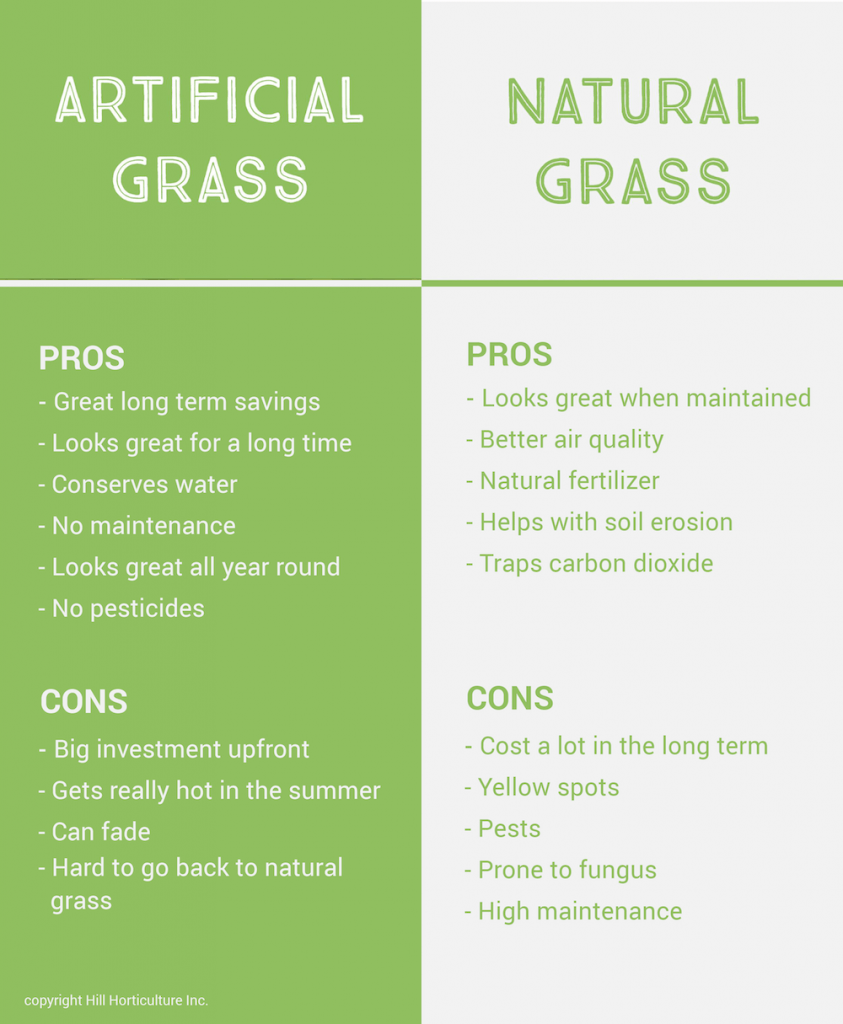
We can’t talk about cost without mentioning the environment. It’s becoming a bigger part of the decision-making process for homeowners in 2026. Natural lawns support biodiversity. Bees, butterflies, and birds find habitat there. They absorb carbon dioxide. They cool the air through evapotranspiration. But they also require chemical inputs. Pesticides and fertilizers runoff into local waterways, causing algae blooms and ecological damage. The cost of this environmental impact is borne by society, but increasingly, individuals feel the moral weight of it.
Synthetic turf eliminates chemical runoff. No pesticides. No fertilizers. That’s a huge plus for local ecosystems. But it’s made of plastic. Polyethylene and polypropylene. It contributes to microplastic pollution as it degrades over decades. It absorbs heat, creating urban heat islands. In summer, synthetic lawns can be 20-30 degrees hotter than natural grass. This increases cooling costs for your home if it’s near windows or patios. Is there a cost to that? Yes. Higher AC bills. Potential health risks from heat exposure for kids and pets playing on it.
There’s also the end-of-life cost. In five years, you aren’t disposing of synthetic turf. But in 10 or 15, you will. Recycling options are improving, but they aren’t universal yet. Disposal fees can be hefty. Natural grass has no disposal cost; it just keeps growing. When weighing these factors, consider your personal values. Do you prioritize water conservation and chemical-free zones? Or do you prioritize natural materials and heat reduction? The "cost" here is subjective, but it’s real.
Resale Value and Curb Appeal: The Long Game
Does a synthetic lawn boost your home’s value? The data in 2026 is mixed but leaning positive in specific markets. In arid regions where water is scarce and natural lawns are difficult to maintain, a well-installed synthetic yard is a selling point. Buyers see it as a low-maintenance bonus. It’s move-in ready. No work required. In these areas, it can increase curb appeal and potentially speed up a sale.
In lush, green regions like the Pacific Northwest or parts of the Southeast, buyers might view synthetic turf with skepticism. They prefer the feel and smell of real grass. A plastic lawn might seem odd or undesirable. It could even deter some buyers who associate it with "cheap" aesthetics or environmental concerns. Context matters. Know your local market. If everyone else has natural grass, going synthetic might make your house stand out for the wrong reasons.
Over a five-year period, you likely won’t sell your home. But you’re investing in its future appeal. If you plan to stay longer, the enjoyment factor outweighs resale concerns. If you plan to move soon, consult a local realtor. Ask them: "Do buyers here want fake grass?" Their answer will tell you more than any national statistic. The cost of misjudging your market could be a longer time on the market or a lower offer. Don’t underestimate the power of local preference.
So, where does this leave us? After five years, who wins? For most homeowners in dry, hot climates, synthetic turf often breaks even or saves money compared to the high water and maintenance costs of natural grass. The upfront pain is real, but the monthly relief is sweet. You save thousands on water, hundreds on chemicals, and reclaim dozens of hours of free time.
For homeowners in wetter, cooler climates, natural grass usually remains the cheaper option over five years. The water bills are lower, the growing season is shorter, and the aesthetic preference leans natural. The lower upfront cost of sod or seed makes it hard for synthetic to compete financially unless you place a huge value on your free time.
But numbers don’t tell the whole story. Do you hate mowing? Do you have allergies to grass pollen? Do you have dogs that destroy everything? Do you love the smell of cut grass? These personal factors tip the scale. There is no universal "best" choice. There is only the best choice for you. Look at your budget. Look at your lifestyle. Look at your local climate. Then, make the call.
In the end, a lawn is more than just ground cover. It’s an extension of your home. It’s where kids play, dogs run, and families gather. Whether it’s made of blades of grass or strands of plastic, its value is measured in the joy it brings. Spend wisely. Choose consciously. And enjoy your outdoor space, whatever it’s made of.