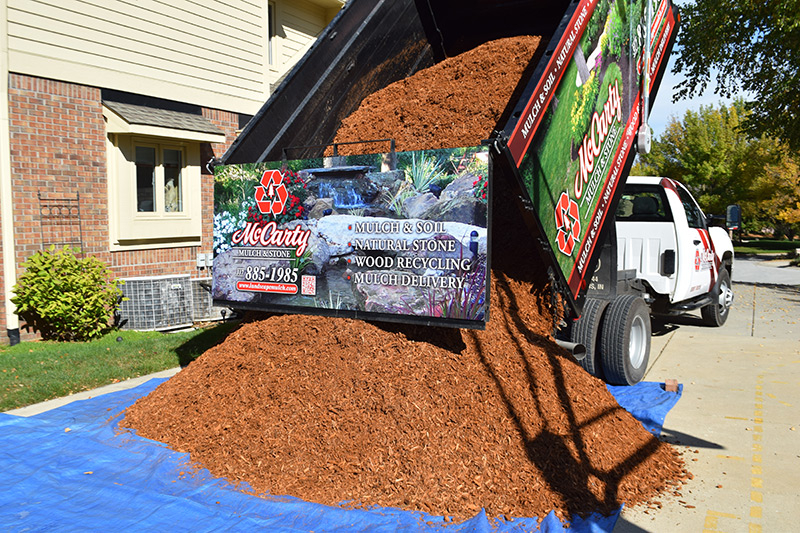

You’ve probably been there. You’re standing in your driveway, staring at a quote for twenty yards of premium hardwood mulch or a pallet of flagstone, and your eyes drift to the bottom line. There it is. The delivery fee. It’s not just a flat twenty bucks like when you order a pizza. It’s a number that seems to fluctuate based on the wind direction, the time of day, and maybe the mood of the dispatcher. It feels arbitrary. Maybe even a little unfair. But is it?
Most folks assume delivery is just "gas money." They think, "The truck is going that way anyway, why charge me so much?" It’s a natural reaction. We’ve all felt that pinch. However, the reality of moving heavy, bulky materials in 2026 is far more complex than just burning diesel. For local landscapers, delivery isn’t an afterthought; it’s a logistical puzzle that involves labor, liability, vehicle wear, and the ever-tightening margins of the green industry.
Let’s pull back the curtain. We aren’t talking about corporate giants with automated algorithms here. We are talking about your neighbor’s landscaping business, the one with the faded logo on the side of the dump truck. How do they come up with that number? Is it fair? More importantly, how can you understand it so you don’t feel ripped off next time you’re sprucing up your yard? The answer lies in a mix of hard costs, soft skills, and a bit of old-school negotiation.
The Weight of the Load: Volume vs. Actual Mass
First things first. Let’s talk about what’s actually in the truck. In the landscaping world, not all cubic yards are created equal. A yard of fluffy pine straw weighs significantly less than a yard of wet river rock. This distinction is crucial because it dictates which truck shows up at your house. Most local operators run a fleet that includes smaller pickup trucks with trailers, standard dump trucks, and sometimes massive tri-axles for the really big jobs.
If you order ten yards of topsoil, that’s heavy. Really heavy. We’re talking thousands of pounds. That weight requires a heavier-duty vehicle, which consumes more fuel and puts more stress on the brakes and suspension. In 2026, with vehicle maintenance costs skyrocketing due to supply chain lingering effects and higher parts prices, landscapers have to account for this wear and tear. They aren’t just charging for the distance; they are charging for the capacity required to move your specific material safely.
Then there’s the volume factor. Even if the material is light, like shredded bark, it takes up space. If your order fills the entire bed of the truck, that driver can’t take another job until they empty it. This is known as "opportunity cost." By dedicating the whole truck to your single drop, they lose the ability to stack multiple small deliveries efficiently. Smart landscapers calculate this by looking at the "drop density." Are they delivering to three houses on the same street? Or just you, five miles out in the sticks? The former spreads the cost; the latter bears it all alone.
The Fuel Factor and Vehicle Depreciation in 2026
Let’s address the elephant in the room: gas prices. While they have stabilized somewhat compared to the wild swings of the early 2020s, fuel remains one of the most volatile expenses for any transport-heavy business. But it’s not just about filling the tank. In 2026, many local businesses are transitioning their fleets. Some are hybridizing, others are sticking with diesel for torque, but all are dealing with higher insurance premiums and stricter emission standards.
When a landscaper calculates your delivery rate, they are using a "fully loaded" cost per mile. This isn’t just the price of diesel. It includes oil changes, tire replacements, and the inevitable repair when a rock chips the windshield or a pothole bends an axle. Industry benchmarks in 2026 suggest that the true cost of operating a medium-duty dump truck is often double what the driver sees at the pump. So, when you see a mileage charge, remember it’s covering the slow decay of the machine, not just the journey.
Furthermore, time is money. Traffic patterns in suburban areas have gotten worse, not better. A delivery that used to take twenty minutes might now take forty-five. Landscapers build "buffer time" into their rates to account for this congestion. If they guarantee a two-hour window, they have to plan for the worst-case scenario. This ensures that when traffic snarls up on the highway, your delivery doesn’t become a financial loss for them. It’s a protection mechanism, ensuring they can keep showing up tomorrow.
Labor Isn’t Just Driving: The Human Element
Here is a secret that often gets overlooked: the person driving the truck is rarely just driving. In many local landscaping outfits, the delivery driver is also the laborer who helps position the material. This is called "curbside" versus "placed" delivery. If you ask for the mulch to be dumped right by your front door, or worse, wheeled into your backyard, the calculation changes dramatically.
Standard delivery rates usually cover dropping the load at the nearest accessible point to the road. Anything beyond that enters the realm of manual labor. In 2026, labor shortages in the skilled trades mean that every hour of human effort is premium-priced. If a driver spends thirty minutes shoveling stone into a wheelbarrow and hauling it to your patio, that’s thirty minutes they aren’t earning revenue elsewhere. Fair calculators add a hourly labor surcharge for this, often in fifteen-minute increments.
It’s also about safety and liability. Moving heavy bags or loose bulk material on uneven terrain carries risk. If a worker throws out their back moving your pavers, that’s an insurance claim. Landscapers factor workers’ compensation and liability insurance into these labor rates. It’s not greed; it’s sustainability. They need to ensure that their team is compensated fairly for the physical toll of the job. When you pay for "placed" delivery, you are paying for convenience, yes, but also for the expertise and physical effort of a professional.
Zone Pricing and Geographic Realities
Not all miles are equal. This is where the concept of "delivery zones" comes into play. Most local landscapers divide their service area into concentric circles or specific zip code clusters. Zone 1 might be the immediate town center, where deliveries are quick and frequent. Zone 3 might be the rural outskirts, where roads are narrow, winding, and far apart.
In 2026, dynamic zone pricing is becoming more common, aided by simple routing software that even small businesses can afford. Instead of a flat rate, the price adjusts based on the density of deliveries in your area. If you live in a neighborhood where five other people are getting deliveries that week, your rate might be lower because the truck is already coming. If you are the only customer in a ten-mile radius, you pay a premium for the exclusivity of the trip.
This system encourages community coordination. Savvy homeowners often group their orders with neighbors to split the delivery fee or qualify for a lower zone rate. It’s a win-win. The landscaper saves on fuel and time by making one stop instead of two, and the customers share the savings. It’s a practical application of logistics that benefits everyone, provided you communicate with your neighbors and your provider.
The "Dump Fee" and Environmental Compliance
Disposing of waste or returning with an empty truck isn’t free. In many jurisdictions, environmental regulations in 2026 have tightened around construction and landscaping debris. If your large order involves removing old soil or broken concrete, there’s a disposal cost. But even for clean deliveries, there’s the issue of "backhaul."
Some materials require special handling. For example, certain types of fertilizers or chemically treated woods might have specific transport regulations. While rare for residential jobs, it’s a factor for commercial-scale landscape projects. The calculator must include any permits or special licensing fees required to transport these goods.
Moreover, the "dump fee" often refers to the cost the landscaper pays at the quarry or supply yard to load the truck. Some suppliers charge the landscaper per ton, while others offer a wholesale rate. The landscaper then marks this up slightly to cover the administrative hassle of managing the account. It’s a small line item, but it adds up. Transparency here is key. A fair provider will break down the material cost from the delivery cost, so you know exactly what you are paying for the product versus the service.
Finally, the most important variable is communication. There is no universal algorithm that fits every situation. A fair delivery rate is often the result of a conversation. Did you mention the steep driveway? Did you warn them about the low-hanging tree branch? These details matter.
In 2026, the best landscapers use digital tools to visualize the drop site. Sending a photo of your driveway via text or email can prevent surprises. If the driver arrives and finds they can’t access the spot you wanted, they might have to charge extra for a secondary location or reschedule. Being upfront about obstacles helps the estimator give you a accurate, fair quote from the start.
Custom quotes also allow for flexibility. If you are flexible on the date, you might get a better rate. Landscapers often have "slow days" where they are eager to fill slots. Asking, "Do you have any cheaper delivery windows next week?" can save you money. It shows you understand their business model and are willing to work with them, rather than against them. This collaborative approach builds trust and often results in better service overall.
So, the next time you look at that delivery fee, try to see the whole picture. It’s not just a number pulled from thin air. It’s a reflection of fuel, labor, vehicle health, geographic reality, and professional expertise. By understanding these components, you can engage with your landscaper more effectively. You can ask smarter questions. You can plan better. And ultimately, you can ensure that the price you pay is fair for both you and the people working hard to make your outdoor space beautiful. It’s about partnership, not just transaction. And in the end, isn’t that what good landscaping is all about?