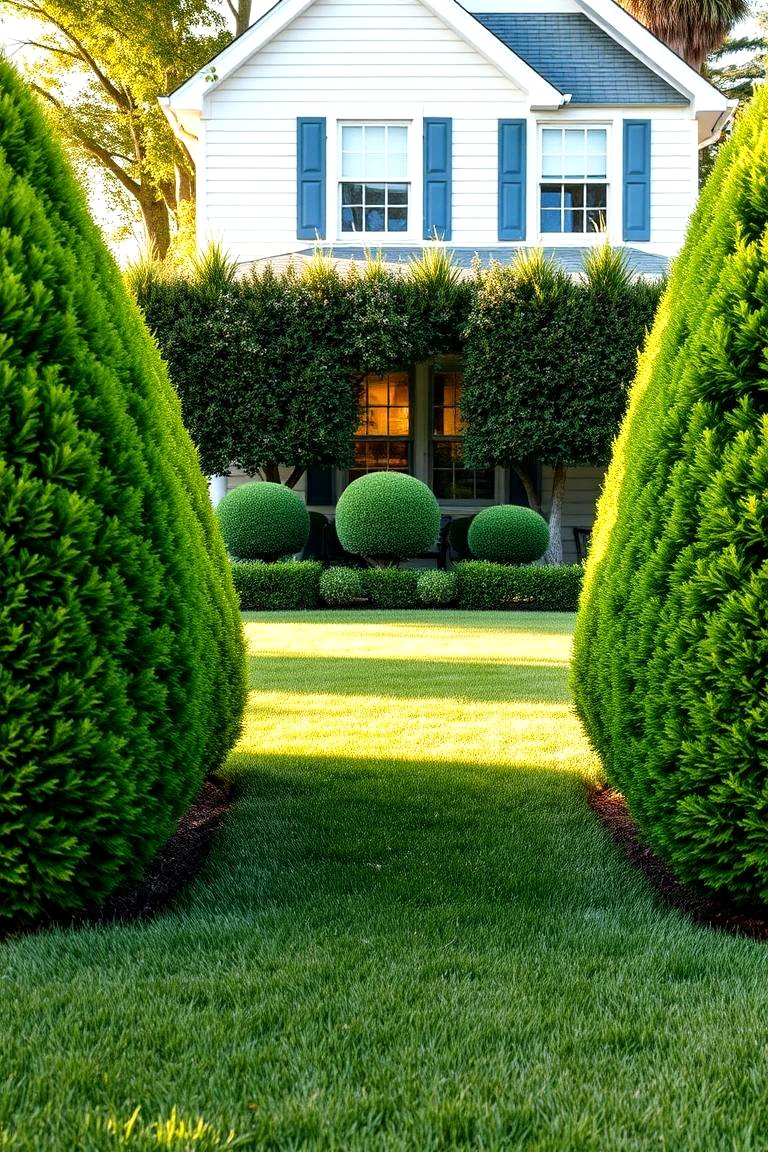

The morning sun hits the front window, and instead of enjoying your coffee in peace, you make eye contact with the delivery driver standing on the porch, who can see straight into your living room. It is a familiar, jarring moment of domestic exposure. Urban density has crept outward, lot sizes have shrunk, and the traditional suburban lawn now feels less like a pastoral retreat and more like an open fishbowl. Homeowners everywhere are looking for ways to reclaim their front yards from the constant gaze of passing cars, pedestrians, and neighbors.
Fences offer an immediate fix, but they often trigger local zoning code headaches, homeowner association rejections, and a stark, fortress-like aesthetic that alienates a home from its neighborhood. Heavy masonry walls or towering wooden stockades can turn a welcoming front elevation into an unwelcoming barrier. Masonry also demands deep pockets, while wood demands scraping, staining, and painting every few years. The search for domestic tranquility usually leads back to living architecture: plants that hold their leaves through winter’s bite, ask for very little in return, and build a living, breathing green shield.
The challenge lies in choosing the right material. Many traditional privacy plants behave like green tyrants, demanding monthly shearing, constant watering, and heavy seasonal feeding just to keep them from looking ragged. The modern gardener wants a sophisticated privacy solution that respects their weekends. By shifting the focus toward low-maintenance evergreen shrubs, property owners can construct reliable, year-round screening that thrives on neglect, stands up to regional weather extremes, and enhances property value without turning weekend gardening into an unpaid second job.
Anatomy of a Living Wall: Why Evergreens Outperform Fences and Fast-Growing Annuals
Hardscape privacy solutions act as static boundaries, but evergreen shrubs function as dynamic, living systems. When selecting plants for a front yard screen, understanding physiological structure is just as important as evaluating aesthetic appeal. Broadleaf and narrowleaf evergreens maintain their foliage year-round, ensuring that privacy does not vanish the moment autumn winds strip the deciduous trees bare. This uninterrupted canopy provides a consistent visual barrier against winter streetlights and bare-branched winter views, which is often when domestic exposure feels most acute.
Choosing the right species requires looking beyond a plant’s tag at the nursery. Fast-growing specimens like Leyland cypress or certain hybrid poplars often tempt frustrated homeowners seeking instant relief. However, these aggressive growers frequently present massive long-term liabilities. They demand intense, frequent pruning to prevent them from overwhelming the property, develop weak structural wood prone to ice storm damage, and consume massive amounts of subsurface water and nutrients, leaving nearby turf and ornamental beds starved. A truly low-maintenance strategy prioritizes plants with moderate growth rates, naturally dense branching habits, and inherent resistance to common pests and diseases.
The biological mechanics of a dense evergreen hedge rely on branching architecture and light penetration. Shrubs that possess a naturally upright, columnar, or dense multi-stemmed habit eliminate the need for corrective pruning. When planted with adequate spacing, varieties like ‘Green Giant’ arborvitae or compact cultivars of yew and boxwood develop interlocking canopies that block sightlines while allowing sufficient airflow to prevent fungal outbreaks. This natural density filters urban noise, traps road dust before it reaches the home, and softens the harsh lines of asphalt and concrete.
Microclimates play a defining role in how these living walls perform. The front yard is rarely a uniform environment; it features intense reflective heat radiating from driveways, wind tunnels rushing down suburban streets, and salt-laden spray cast off by winter snowplows. Selecting resilient, tough-as-nails species that can tolerate urban stressors ensures that the privacy screen remains vigorous even when subjected to less-than-ideal roadside conditions. Ground-level soil compaction, a common affliction near walkways and foundations, must also be factored into plant selection to avoid premature decline.
Selecting the Heavy Hitters: Low-Maintenance Shrubs Built for Real-World Conditions
Matching specific cultivars to the unique demands of a front yard separates a thriving landscape from a botanical graveyard. Not all evergreens are created equal, and understanding the mature dimensions and tolerance thresholds of elite choices prevents costly mistakes. The ideal front yard privacy shrub should handle pruning gracefully if needed, resist deer browsing where applicable, and maintain its rich color saturation through scorching July afternoons and freezing January nights.
For narrow side yards and tight property lines, columnar and pyramidal varieties offer maximum vertical coverage with a minimal footprint. The Emerald Green Arborvitae (Thuja occidentalis ‘Smaragd’) stands out as a reliable classic, reaching 10 to 15 feet in height while staying tightly constrained to a width of 3 to 4 feet. It requires virtually no shearing to maintain its neat, architectural form. For those dealing with heavy shade beneath mature street trees, the Hick’s Yew (Taxus x media ‘Hicksii’) proves indispensable. Yews tolerate hard pruning exceptionally well, making them ideal for formal hedges, and their dark green needles provide a rich, classic backdrop that elevates any home’s curb appeal.
Broadleaf evergreen options bring seasonal interest through flowers, berries, or unique leaf textures while maintaining year-round opacity. The Japanese Cherry Laurel (Prunus lusitanica) or English Laurel offer glossy, vibrant foliage and rapid coverage, though selecting more compact cultivars ensures they do not outgrow their welcome near windows. Boxwoods, such as the disease-resistant ‘Green Velvet’ or ‘Green Mountain’ hybrids, deliver a refined, formal aesthetic that handles tight shearing without breaking a sweat. For coastal or sandy soils where salt spray kills lesser plants, the Needlepoint Holly (Ilex cornuta ‘Needlepoint’) forms an impenetrable, glossy barrier that thrives on coastal neglect.
Evaluating regional climate adaptability ensures long-term success. Gardeners in the American South benefit from the drought tolerance of the Oakland Holly or dwarf wax myrtles, which withstand intense humidity and baking sun. Meanwhile, northern gardeners rely on the ironclad winter hardiness of upright junipers like the Wichita Blue or Spartan Juniper, which shrug off heavy snow loads and sub-zero temperatures. Factoring in regional rainfall patterns, soil pH preferences, and local wildlife pressures ensures that the chosen cultivars remain strong, vibrant, and genuinely low maintenance.
Strategic Layout and Installation Blueprint for Maximum Screening
Planting a straight line of identical shrubs right along the property line is the most common design trap in suburban landscaping. While this approach creates a barrier, it also highlights property boundaries, mimics a commercial parking lot divider, and fails to account for the actual angles from which prying eyes look into the home. A professionally designed privacy screen uses layered plantings, irregular spacing, and strategic staggering to create depth, visual interest, and total privacy without making the front yard feel boxed in.
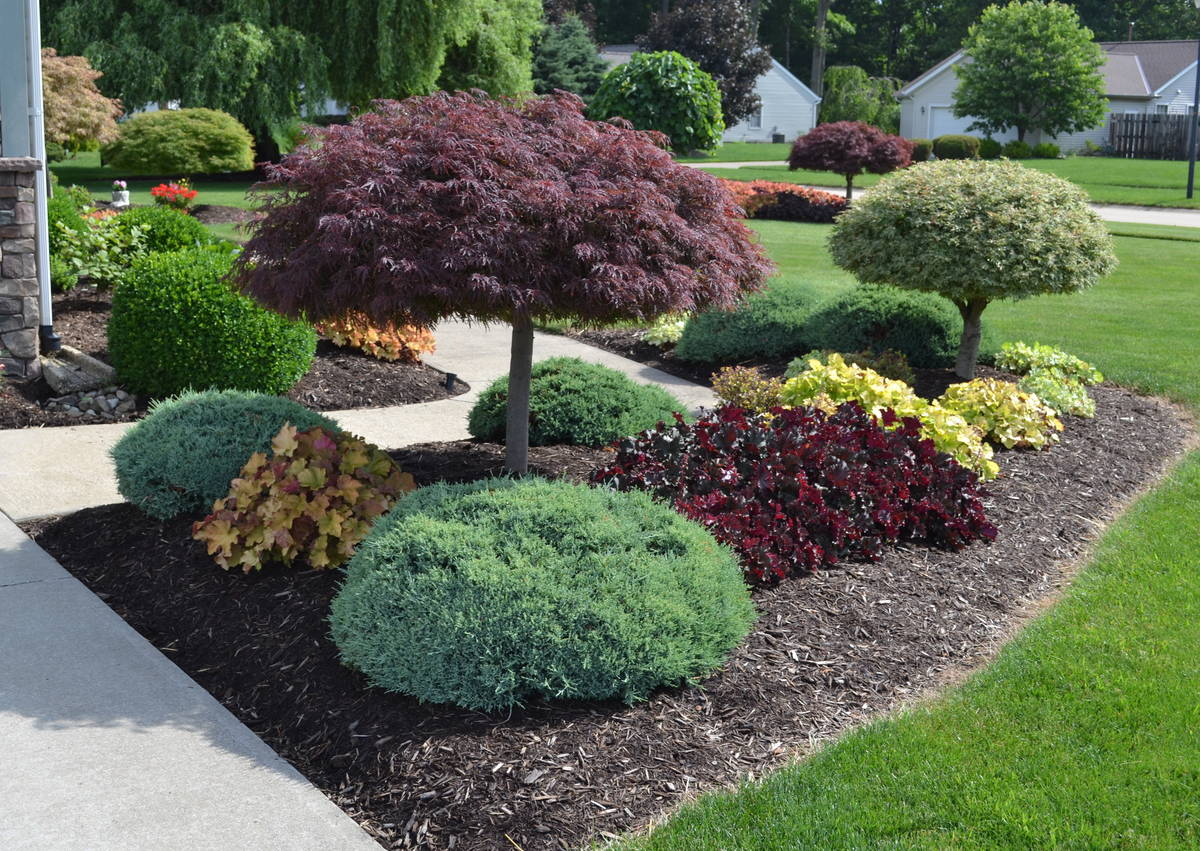
Designing an effective sightline block begins with a simple field test: sitting in living room chairs, standing at the front door, and walking down the driveway while noting exact angles of exposure. Once these vulnerability zones are mapped, planting beds can be curved outward from the foundation or property line. Creating deep, sweeping garden beds allows for a multi-tiered planting strategy where taller evergreen trees or large shrubs sit in the background, while medium and low evergreen shrubs occupy the foreground, anchoring the design into the surrounding landscape.
Spacing is the most critical variable in determining whether a hedge becomes a dense wall or a collection of isolated, struggling specimens. Planting too close together causes root competition and lower-branch dieback due to lack of sunlight, while spacing too far apart leaves gaps that compromise privacy for years. The goal is to plant at a distance equal to roughly two-thirds of the species’ mature spread, allowing the canopies to knit together naturally as they reach adult size.
Soil preparation lays the foundation for effortless maintenance down the road. Front yard soil is notoriously abused during construction, often buried under heavy equipment and lacking organic matter. Taking the time to amend the planting area deeply makes a massive difference in plant establishment.
- Step 1 (Site Mapping & Utility Locate): Call local utility notification services to mark underground lines before driving a single spade into the turf, then map out precise sightline targets from indoor vantage points.
- Step 2 (Bed Shaping & Turf Removal): Carve out expansive, curving bed lines using a garden hose or spray paint, and completely remove the grass within the footprint to eliminate root competition.
- Step 3 (Soil Conditioning): Excavate planting holes twice as wide as the nursery containers but no deeper than the root ball, amending the native soil with compost if drainage needs improvement.
- Step 4 (Staggered Planting & Grouping): Arrange shrubs in a staggered, zigzag double-row configuration rather than a single straight line to create a thicker visual barrier and naturalistic aesthetic.
- Step 5 (Mulching & Watering-In): Water each plant thoroughly immediately after setting, then apply a 3-inch layer of shredded hardwood mulch across the entire bed, keeping the mulch pulled a few inches away from the main stems.
Common Pitfalls and Field-Tested Workarounds for Long-Term Success
Even the toughest low-maintenance shrubs can fail if basic horticultural principles are ignored during installation or early establishment. Homeowners frequently assume that once an evergreen is in the ground, it can be entirely forgotten. While these plants require significantly less attention than annual beds or vegetable gardens, ignoring seasonal environmental stress can quickly degrade an expensive privacy screen.
One major hazard is the over-reliance on a single plant species across the entire front yard. Planting fifty identical arborvitaes creates a monoculture vulnerable to sweeping disease outbreaks or pest invasions, such as bagworms or root rot. If a single blight strikes, the entire privacy screen can vanish overnight. Mixing complementary evergreen varieties provides biological insurance while creating a richer, more visually appealing landscape texture.
Another frequent misstep involves improper watering habits during the crucial establishment window. Many people provide frequent, shallow sprinkles with a hose that only wets the top inch of soil, encouraging shallow root systems that make the plants vulnerable to summer drought. Deep, infrequent soaking encourages roots to dive deep into the soil profile, creating drought-resistant, self-sufficient plants.
- Pitfall 1 (Planting Too Deeply): Burying the root flare too deep in the soil suffocates the trunk tissue and invites collar rot; always ensure the top of the root ball sits an inch or two above the surrounding grade.
- Pitfall 2 (Neglecting Winter Watering): Assuming evergreens do not need water when the ground freezes leads to winter desiccation; soak root zones thoroughly during dry autumns before the ground freezes solid.
- Pitfall 3 (Over-Pruning into Old Wood): Shearing conifers like arborvitae or yews back into bare, brown interior wood permanently damages their ability to regenerate foliage; stick to shearing only the soft, green new growth.
- Pitfall 4 (Volcano Mulching): Piling mulch high against the trunk creates a moist environment that attracts wood-boring insects and fungal pathogens; maintain a doughnut-shaped mulch ring clear of the bark.
- Pitfall 5 (Ignoring Soil Drainage): Planting clay-loving or wet-sensitive shrubs in compacted, waterlogged roadside soils leads to root asphyxiation; amend the bed or choose drought-tolerant, taprooted species for heavy sites.
The Broader Impact: Sustainability, Curb Appeal, and Property Valuation
Investing in a well-designed evergreen front yard screen yields returns that extend far beyond simple privacy. Real estate data consistently demonstrates that mature, well-maintained landscaping significantly boosts property valuation, often returning more than the initial investment at the point of resale. A tastefully screened front yard frames the home architecture favorably, creating a polished first impression that draws prospective buyers in before they even step inside.
On an environmental level, living privacy screens offer substantial ecological benefits in urban and suburban settings. Unlike wood or vinyl fences, which consume resources and offer zero ecological value, evergreen shrubs act as miniature urban forests. They sequester carbon, intercept stormwater runoff before it overwhelms municipal storm sewers, and mitigate the urban heat island effect by cooling ambient air through transpiration. Dense evergreen canopies also provide essential year-round shelter, nesting sites, and winter protection for local bird populations and beneficial insects.
Sound abatement is another overlooked advantage of a dense shrub border. The physical mass of dense foliage, combined with soft soil and mulch beds, absorbs and dampens traffic noise from nearby streets. This acoustic buffering transforms a front yard from a loud, stressful thoroughfare into a quiet, restorative buffer zone. Homeowners frequently report a noticeable drop in decibel levels inside the home after establishing a thick perimeter of evergreens.
Sustainable landscaping practices also reduce long-term maintenance labor and chemical runoff. By selecting native or highly adaptable non-invasive evergreens that match local soil and climate conditions, homeowners eliminate the need for heavy chemical fertilizers, synthetic pesticides, and constant supplemental irrigation. This low-input approach protects local watersheds from nutrient runoff while creating a resilient, self-sustaining ecosystem that requires minimal intervention year after year.
Actionable Recommendations and Framework for Front Yard Privacy
Achieving lasting front yard privacy without drowning in weekend yard work requires a disciplined, step-by-step approach to design, installation, and upkeep. Treating the project as a long-term investment rather than a weekend DIY project ensures that the landscape matures gracefully into an asset that requires less and less attention over time.
Creating a successful privacy plan begins with an honest assessment of site conditions, budget, and time availability. Establishing clear priorities—such as whether the primary goal is blocking streetlights, hiding a neighbor’s driveway, or reducing traffic noise—guides the selection of plant heights, densities, and placements.
- Framework Phase 1 (Assessment & Budgeting): Inventory existing light levels, soil type, and utility locations, and establish a realistic budget that accounts for quality nursery stock and proper soil amendment materials.
- Framework Phase 2 (Species Diversification): Select at least two or three complementary evergreen species to avoid the risks of monoculture while achieving a layered, naturalistic aesthetic.
- Framework Phase 3 (Establishment & Irrigation): Install a drip irrigation system or soaker hoses along the new planting bed to guarantee deep, consistent root hydration during the critical first two growing seasons.
- Framework Phase 4 (Minimalist Maintenance Schedule): Adopt a hands-off approach after establishment, limiting intervention to an annual spring inspection, a single layer of fresh mulch, and light tip-pruning only when necessary to maintain shape.
Transforming a exposed, vulnerable front yard into a private, green sanctuary is one of the most rewarding upgrades a homeowner can undertake. By moving away from sterile wooden fences and high-maintenance annuals, you embrace a living, breathing architecture that evolves with the seasons. These low-maintenance evergreen shrubs do more than just block prying eyes; they clean the air, quiet the street, frame the home in beauty, and return your weekends to you.
The key to long-term success lies in patience and proper initial execution. Taking the time to choose the right cultivars for your specific microclimate, preparing the soil correctly, and resisting the urge to over-manage the plants sets the stage for decades of natural beauty. As the years pass, your living wall grows thicker, richer, and more self-sufficient, standing as a quiet, steadfast guardian of your home’s peace and tranquility.