
Pull into any suburban driveway on a Sunday afternoon, and you will likely see a homeowner wrestling with a stubborn edger or agonizing over a patch of yellowing turf. Behind that weekend sweat is a deeply ingrained belief whispered by real estate agents and home-improvement television hosts alike: that dropping a few thousand dollars on shrubs and sod will instantly net a massive windfall when it is time to sell. Industry lore has long claimed that professional landscaping automatically adds a neat 15% to 20% to a home’s overall valuation.
Step into a local appraiser’s office, however, and a very different reality emerges. When local MLS comps are pulled and structural valuations are calculated, that breezy 20% rule of thumb starts looking less like hard data and more like a real estate fairy tale. Appraisers do not value dreams; they value comparable sales, structural square footage, functional utility, and verifiable market demand. While a freshly manicured lawn undoubtedly captures a buyer’s attention during an open house, translating that emotional spark into hard equity requires a much more strategic approach than simply scattering mulch and crossing your fingers.
The modern residential market treats outdoor capital improvements with surgical precision. Homeowners navigating the property landscape find themselves balancing soaring material costs with shifting buyer preferences that prioritize low-maintenance durability over high-maintenance opulence. Understanding the true mechanics of landscape economics requires peeling back the marketing gloss to examine what National Association of Realtors studies, appraiser surveys, and actual resale data reveal about where outdoor dollars actually go.
For decades, the real estate industry relied on broad generalizations regarding curb appeal. The standard narrative suggested that any landscaping investment was inherently a good investment, driving up home values in a linear, predictable fashion. Yet, a closer examination of localized housing markets reveals a sharp divergence between lifestyle enhancements and direct appraisal bumps. Some interventions yield astronomical returns that dwarf indoor renovations, while others act as financial black holes, consuming thousands of installation dollars without moving the needle at resale.
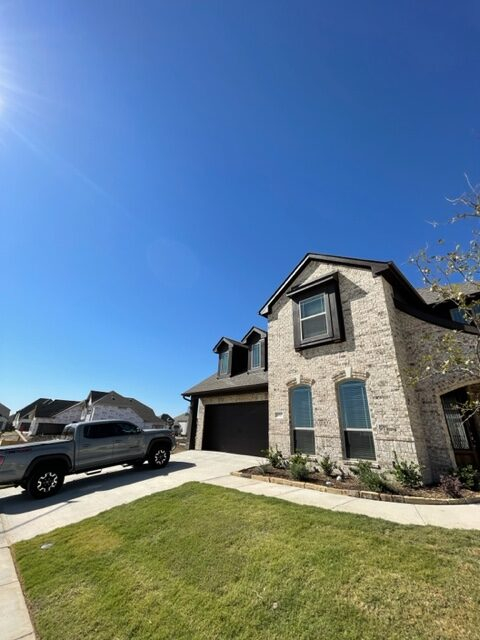
This divergence stems from how buyers perceive value the moment they pull up to the curb. Human psychology dictates that a home’s exterior serves as a proxy for its overall structural maintenance. If the boxwoods are overgrown and the turf is choked with crabgrass, a prospective buyer immediately assumes the HVAC system is neglected and the roof is leaking. Conversely, crisp lines and healthy vegetation signal pride of ownership. This psychological halo effect is real, but it has distinct financial limits defined by the surrounding neighborhood ceiling.
As real estate markets mature, the data surrounding these investments has grown increasingly sophisticated. Analysts can now track the precise cost recovery of individual project types, separating the everyday maintenance that preserves a home’s baseline value from the luxury upgrades that cater exclusively to short-term living preferences. Recognizing this split is the foundational step for any homeowner trying to decide whether to plant annuals or pour concrete.
The Anatomy of Outdoor Equity: Separating Maintenance from Luxury Upgrades
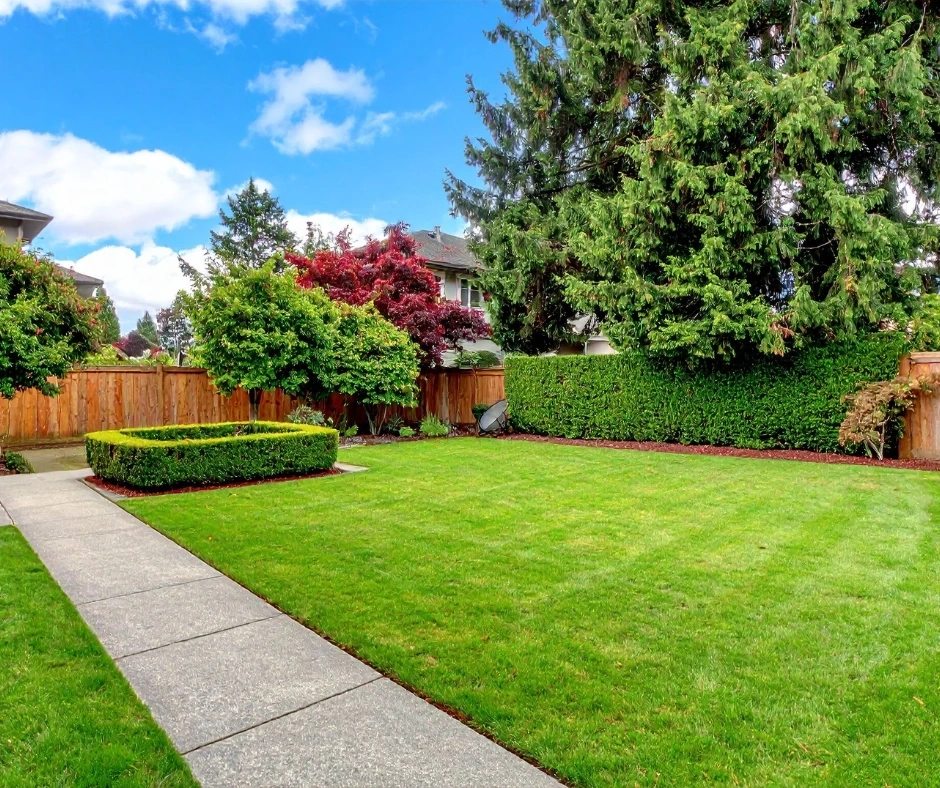
To understand why certain landscaping projects pay for themselves while others result in steep financial losses, one must first categorize outdoor spending into two distinct buckets: foundational maintenance and discretionary luxury. National Association of Realtors data paints a striking picture of this division. Basic lawn care—comprising routine mowing, fertilization, aeration, and weed control—routinely boasts a cost recovery rate exceeding 200%. On a purely mathematical level, spending a modest sum on continuous turf health yields an outsized return because it protects the baseline value of the entire property.
When a property manager or homeowner treats lawn care as a predictable, recurring operating expense rather than a sporadic chore, the financial dividends compound. Neglected soil degrades rapidly, leading to erosion, dead patches, and costly sod replacement down the line. By contrast, routine upkeep ensures that the home’s primary exterior asset remains vibrant and resilient, satisfying lender underwriting requirements and preventing appraisal deductions for deferred maintenance. General landscape maintenance, including seasonal pruning, mulch refreshing, and bed edging, similarly hovers around a 100% to 104% cost recovery, proving that cleanliness and order are fundamentally valued commodities in real estate.
Moving up the cost spectrum introduces discretionary luxury projects, such as built-in outdoor kitchens, custom stone fire pits, elaborate multi-tiered water features, and heavily customized koi ponds. While these features undoubtedly elevate the daily living experience of the current resident, their resale ROI often hovers far below parity, frequently capturing only 50% to 70% of their initial installation costs. The primary reason for this discrepancy is personalization. A custom stone pizza oven built to a specific homeowner’s culinary preferences may represent zero utility to a subsequent buyer who prefers an open lawn for children and pets.
Furthermore, neighborhood comparables heavily dictate appraisal caps. Installing a $60,000 resort-style backyard in a neighborhood where surrounding homes sell within a tight median band will rarely allow the appraiser to justify a corresponding price bump. The market simply refuses to absorb the over-improvement. Recognizing this ceiling protects homeowners from pouring capital into features that the local buyer pool will not support, shifting the focus from architectural excess to targeted, high-demand functional upgrades.
Appraiser Metrics and the Limits of Curb Appeal Claims
When an appraiser evaluates a property, they utilize the sales comparison approach, scouring the immediate geographic micro-market for recently sold properties with similar square footage, age, and condition. Landscaping falls under the broader umbrella of property condition and site utility. While a stunning garden can tip a fence-sitting buyer into making an aggressive offer, the formal appraisal report translates that beauty into quantifiable utility rather than an arbitrary aesthetic multiplier.
Claims that landscaping universally tacks 15% to 20% onto a home value often misunderstand how real estate pricing actually functions. In a $400,000 market, a literal 20% increase would mean simple shrubs and fresh mulch added $80,000 of equity—an economic impossibility that defies construction cost realities. Instead, real-world data shows that well-executed, professional landscaping typically supports a modest 5% to 12% boost in total property value, provided the baseline condition of the neighborhood justifies it. In upscale developments where mature trees and pristine lawns are the baseline expectation, lacking professional landscaping results in a severe appraisal penalty rather than its presence adding an extraordinary premium.
Mature trees play a uniquely powerful role in this appraisal dynamic. Studies from housing agencies and arboricultural associations consistently demonstrate that mature, healthy shade trees can lift a residential property value by 7% to 19%. Unlike a newly planted sapling that requires decades to provide visual and thermal utility, an established canopy offers immediate energy-saving shade, architectural framing, and a sense of permanence that cannot be artificially manufactured. Appraisers recognize this permanence, often attributing tangible dollar figures to established timber that sits strategically on the eastern and western exposures of a home.
Yet, not all vegetation aids the appraisal process. Overgrown, foundation-hugging shrubbery that blocks natural light from entering windows or traps moisture against siding acts as a distinct negative. Appraisers note deferred maintenance when root systems threaten concrete flatwork or branches encroach upon rooflines. Consequently, the relationship between property value and vegetation is not additive by default; it requires active curation to ensure that nature enhances, rather than obscures, the underlying structure.
Step-by-Step Framework for Maximizing Outdoor Return on Investment
Executing a landscape overhaul with resale value in mind requires a disciplined, step-by-step strategy. Treating your yard like a financial portfolio ensures that every dollar spent aligns with what buyers actually demand in the current market.
- Step 1 (Audit and Cleanse): Begin with zero-cost interventions by clearing out dead foliage, pruning overgrown shrubs away from windows, pulling weeds, and applying a thick, uniform layer of dark brown or black mulch to all planting beds.
- Step 2 (Establish Turf Dominance): Address bare patches and thinning grass through core aeration, overseeding with regionally appropriate grass seed, and correcting soil pH to ensure a deep green, resilient lawn that passes the initial buyer inspection.
- Step 3 (Define Structural Hardscaping): Install clean, straight, or gently curving stone or paver edging to separate turf from garden beds, and repair any cracked walkways or shifting pavers that present a tripping hazard during home tours.
- Step 4 (Implement Strategic Lighting): Install low-voltage, warm-white LED pathway and uplighting to accent architectural features and mature trees, dramatically boosting evening curb appeal and perceived safety for twilight viewings.
- Step 5 (Add Functional Hardscape Where Warranted): If the local market demands outdoor living space, construct a modest, professionally laid paver patio or functional deck that recovers 90% to 100% of installation costs without over-improving for the neighborhood.
Following this sequence protects your capital from being wasted on hyper-niche projects. By focusing intensely on the structural cleanliness and functional boundaries of the property before touching decorative elements, you build a sturdy foundation that resonates instantly with both appraisers and prospective buyers.
Navigating Common Landscaping Pitfalls and Costly Miscalculations
Even well-intentioned homeowners frequently sabotage their outdoor investments by falling prey to common design and financial missteps. Recognizing these traps before hiring a contractor or renting a trencher saves thousands of dollars in regret.
- Pitfall 1 (Over-Personalization): Building complex, high-maintenance water features like large koi ponds or custom labyrinth gardens often alienates buyers who fear the upkeep; the practitioner workaround is to stick to clean, minimalist planting beds and easily maintainable lawns that appeal to the broadest possible buyer demographic.
- Pitfall 2 (Ignoring Drainage Realities): Installing expensive flora without addressing subterranean water movement leads to pooling near the foundation and subsequent structural claims; the practitioner workaround is to grade soil away from the home and install discreet French drains or dry creek beds before adding any decorative plantings.
- Pitfall 3 (Mismatched Neighborhood Standards): Pouring tens of thousands of dollars into resort-grade outdoor kitchens in a modest neighborhood ensures you will never recoup those costs; the practitioner workaround is to research local comparable sales and cap your exterior improvement budget at a percentage that mirrors surrounding high-end listings.
- Pitfall 4 (Choosing High-Maintenance Flora): Planting exotic, delicate species that require constant chemical intervention and daily summer watering deters modern buyers seeking low-impact living; the practitioner workaround is to prioritize native, drought-tolerant perennials that establish deep root systems and thrive with minimal human interference.
- Pitfall 5 (Neglecting Professional Installation of Hardscapes): Attempting DIY patio or retaining wall construction without proper sub-base compaction results in sinking pavers and leaning walls within two winters; the practitioner workaround is to hire licensed masonry professionals for any structural weight-bearing outdoor elements.
Avoiding these missteps ensures that your landscape operates as a true financial asset. Every design choice must pass the dual test of local market viability and long-term durability, preventing aesthetic ambition from overriding fiscal common sense.
Holistic Perspectives on Sustainable and Long-Term Outdoor Economics
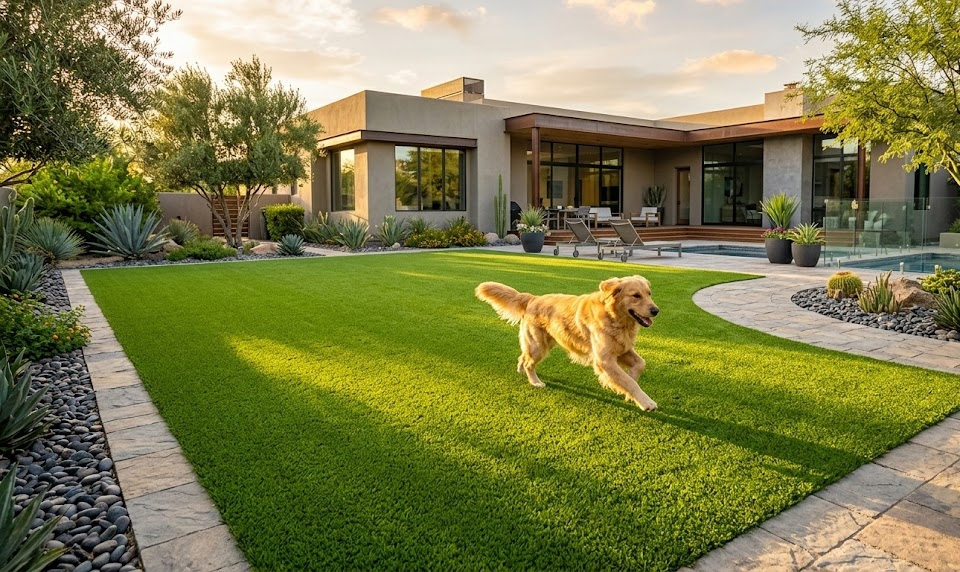
As municipal water restrictions tighten across various regions and environmental consciousness shapes consumer behavior, the definition of a high-value landscape is undergoing a structural evolution. Traditional, hyper-manicured Kentucky bluegrass lawns that demand massive amounts of chemical fertilizers and daily irrigation are slowly losing their unassailable status as the gold standard of suburban prestige. In their place, climate-resilient, sustainable landscaping practices are emerging as powerful drivers of long-term property equity.
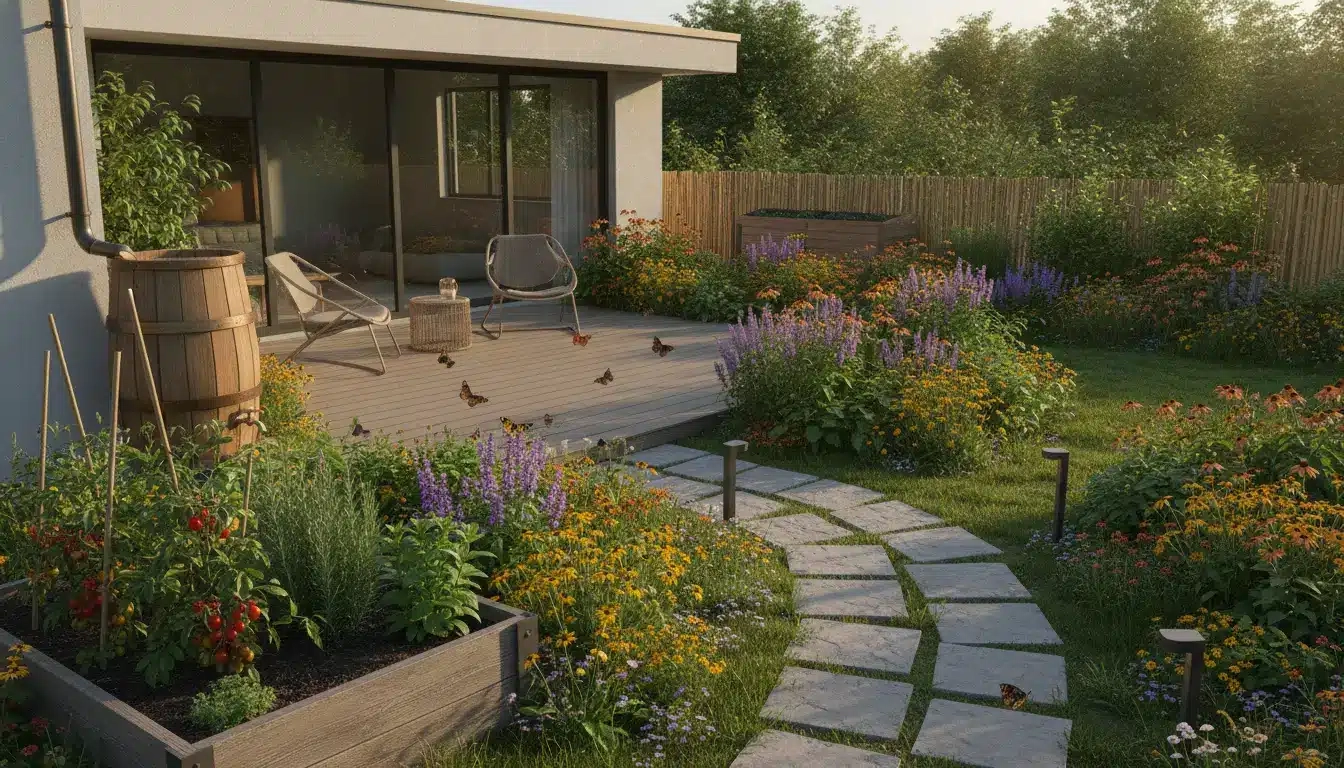
Modern buyers increasingly look for water-wise xeriscaping, native pollinator gardens, and efficient smart irrigation systems equipped with rain sensors and weather-tracking controllers. These installations reduce ongoing utility and maintenance costs—a financial benefit that savvy buyers calculate into their overall cost of homeownership. When an investment in smart irrigation or native plantings lowers monthly water bills while simultaneously enhancing visual appeal, the cumulative return on investment extends far beyond the initial resale window.
Furthermore, the integration of outdoor spaces with indoor living areas represents a permanent shift in architectural design. Patios that flow seamlessly through sliding glass doors to interior kitchens create an expanded sense of square footage. Appraisers are slowly developing more nuanced ways to account for this expanded utility, recognizing that a well-designed outdoor room functions as a viable living space for a significant portion of the year.
This macro-economic shift proves that the future of landscaping ROI is inextricably linked to efficiency and ecological intelligence. Homeowners who design with local climate patterns in mind protect their properties against rising utility costs and future regulatory hurdles, ensuring that their curb appeal remains resilient across changing economic cycles.
Strategic Recommendations for Homeowners and Real Estate Investors
Translating this comprehensive data into an actionable blueprint requires prioritizing projects based on their immediate structural impact and long-term cost recovery. Whether you are preparing to list your property next month or looking to fortify your long-term equity, a disciplined framework prevents misallocated capital.
- Prioritize Routine Maintenance Above All: Never skip professional lawn care, seasonal mulching, and basic tree pruning, as these everyday actions yield the highest percentage return on invested capital.
- Invest in Lighting and Edging for Immediate Visual Impact: Low-voltage LED lighting and clean bed edges change the psychological perception of a home instantly, creating an upscale feel for a fraction of a major construction budget.
- Match Your Investments to the Neighborhood Ceiling: Evaluate what comparable homes in your immediate zip code feature, and avoid building features that exceed the baseline expectations of your local buyer pool.
- Consult Local Real Estate Professionals Before Digging: Speak with top-performing local agents who understand current buyer psychology in your specific micro-market before committing to expensive hardscaping projects.
Adopting these strategic habits ensures that your property stands out in a crowded market without draining your bank account on vanity projects. The data is unambiguous: landscaping pays, but only when executed with strategic discipline, local market awareness, and an unwavering commitment to structural health.
The pursuit of the perfect outdoor space is ultimately an exercise in balancing emotional desire with hard economic reality. While the lure of a miraculous 20% property value increase makes for compelling marketing, the true power of landscaping lies in its ability to protect baseline equity, capture buyer attention, and elevate daily living.
By stripping away industry myths and anchoring your decisions in verified appraisal data, you transform your yard from a money pit into a calculated financial asset. Approach your next outdoor project not as an artistic whim, but as a strategic investment in structural perception, and your property will reward you both in daily lifestyle and ultimate resale value.