
The Saturday morning sun had barely cleared the fence line when Mark stood staring at a mountain of smooth, multi-colored stone dumped unceremoniously across his driveway. Two hundred and fifty dollars for the material, another hundred for the freight, and three tons of rounded quartz and granite sitting right where his sedan needed to go. What started as a casual weekend sketch for a backyard fire pit patio had quickly morphed into an exercise in heavy logistics. He had measured the length and width of the site, but he had completely misjudged the invisible math of bulk aggregates—the crushing weight of moisture-laden rock, the geometry of settling, and the sudden realization that buying stone by the ton is an entirely different language than buying sod by the roll or mulch by the bag.
Every homeowner who has ever attempted to transform an unkempt patch of dirt into a clean, drainage-friendly oasis eventually confronts this exact rite of passage. Aggregate pricing sits at a peculiar intersection of geology, heavy transportation, and local supply chain economics. One quarry quotes by the short ton, another by the cubic yard, and the local garden center measures life in heavy plastic bags that make your lower back ache just looking at them. When you factor in dump fees, delivery zone surcharges, and the labor required to move heavy material wheelbarrow by wheelbarrow, the per-square-foot cost of a seemingly inexpensive landscaping material can shift dramatically.
Navigating this terrain requires more than a casual glance at a calculator app. It demands an understanding of how aggregate is harvested, why moisture content alters your final bill, and how to look at a backyard footprint not just in square feet, but in cubic volume and physical tonnage. Whether you are budgeting for a serene side-yard walkway, a contemporary patio surround, or a large-scale erosion control project, breaking down the financial reality ton by ton and foot by foot is the only way to protect your wallet from unexpected overruns.
The Raw Economics of Aggregate: Understanding Bulk Versus Bagged Pricing Structures
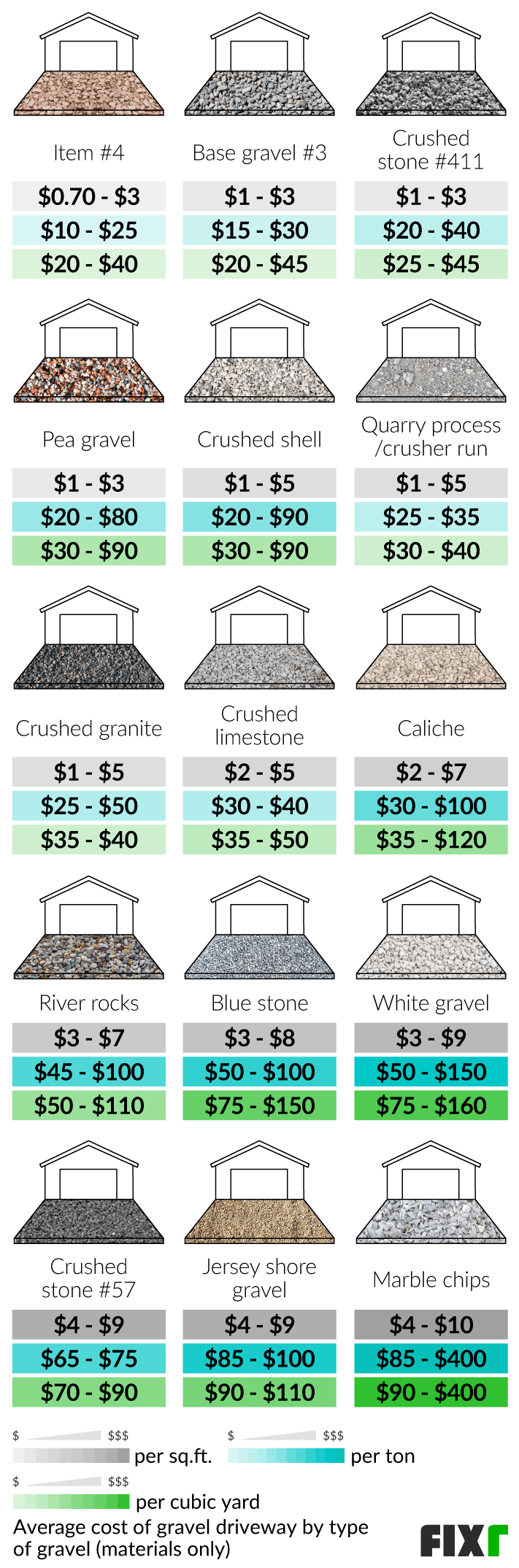
When you first begin shopping for stone, the sticker shock or pleasant surprise of base material costs can be deeply misleading. Bulk pea gravel generally commands between $30 and $60 per ton, while cubic yard measurements typically hover between $40 and $90. If you pivot to home improvement retailers and look at pre-packaged 0.5-cubic-foot bags, you will find prices ranging from $4 to $7 per bag. At first glance, a $5 bag feels harmless enough for a small flower bed. Yet, mathematics quickly exposes the retail markup: it takes approximately fifty-four of those half-cubic-foot bags to equal a single cubic yard of material. Buying your stone exclusively in bags for a medium-sized project can easily inflate your material budget by 300 to 400 percent once convenience premiums are fully factored into the equation.
The primary driver behind this massive price disparity is packaging and handling labor. Bulk stone is scooped directly from massive quarry stockpiles by front-end loaders and dropped straight into the bed of a tri-axle dump truck or a local contractor’s trailer. There are no paper sacks to print, no shrink-wrapped pallets to manage, and no retail floor space overhead. You are paying purely for the stone and the fuel required to move it from the pit to your property. Conversely, bagged gravel requires automated sorting, bagging, palletizing, warehouse storage, and retail staffing, all of which are quietly baked into that per-bag price tag.
Understanding these pricing tiers also requires a firm grasp of weight versus volume, a concept that frequently trips up first-time DIY landscapers. Rock is heavy—much heavier than the organic mulch you might be used to throwing around your shrubs. A standard cubic yard of dry pea gravel weighs roughly 2,600 to 2,700 pounds, which officially pushes it past the standard 1.5-ton mark for loose fill. When quarries quote you by the ton, they are measuring dead weight. When they quote you by the cubic yard, they are measuring space. Because pea gravel consists of smooth, rounded river stones, it does not lock together tightly like crushed angular stone. Instead, it leaves tiny air pockets between the rounded surfaces, which significantly influences how much actual rock fits into a given volume and how it will shift underfoot over time.
Decoding the Conversion Maze: Tons, Cubic Yards, and Surface Area
Transforming your raw project dimensions into an accurate order requires moving fluidly between linear feet, square feet, cubic yards, and tonnage. Most homeowners make the mistake of measuring only the surface area of their project—say, a 10-foot by 20-foot walkway—and stopping there. Surface area gives you 200 square feet, but stone does not live in two dimensions; it demands depth. If you specify a standard 2-inch depth for a low-traffic decorative garden border, or bump that up to a structural 3-inch depth for a high-use patio or dog run, your volume requirements change entirely.
To bridge this gap, you multiply your length in feet by your width in feet, and then multiply that result by your depth expressed as a fraction of a foot. For our 10×20 walkway at a 3-inch (0.25-foot) depth, you arrive at 50 cubic feet. Since there are 27 cubic feet in a standard cubic yard, dividing 50 by 27 yields roughly 1.85 cubic yards of physical space. Converting that volume into weight means multiplying by the standard density factor of dry pea gravel—roughly 1.35 to 1.5 tons per cubic yard. Suddenly, your 1.85 cubic yards translates to approximately 2.5 tons of stone.
Moisture adds another invisible layer to this calculation that catches many buyers off guard. Quarries do not keep their massive aggregate piles in climate-controlled indoor warehouses; they sit out in the open air, absorbing heavy spring rains and morning dew. Water is surprisingly heavy, and a few days of steady downpours can add hundreds of pounds of water weight to a standard multi-ton dump truck order. You are essentially paying stone prices for rainwater if your delivery arrives right after a storm. While you cannot control the weather, knowing that wet gravel weighs noticeably more than dry gravel helps explain why your truck might feel sluggish and why your calculated tonnage might seem physically heavier than expected on the scale.
Accounting for settling and sub-base compaction is the final mathematical hurdle. When you first spread pea gravel, the rounded stones sit loosely on top of one another, packed with air gaps. As people walk across the surface, drive light equipment over it, or as natural rain settles the sub-base, the stones shift and lock into a denser arrangement. If you order the exact net volume calculated by multiplying length, width, and depth, you will invariably find your stone level dropping below your edging within a month. Professional landscapers universally recommend adding a 10 to 15 percent overage buffer to any bulk order to account for both settling and the inevitable spillage that occurs during raking and leveling.
Step-by-Step Practical Implementation Guide for Sourcing and Delivery
Executing a smooth material acquisition process requires a methodical approach that starts long before a dump truck turns onto your residential street. Managing logistics effectively keeps your project budget intact and prevents the nightmare of blocked driveways or ruined lawns.
- Step 1 (Site and Dimension Audit): Measure your project area meticulously using a durable tape measure and marking paint. Calculate total square footage and determine your required depth based on project use, noting that walkways need 2 inches, patios need 3 inches, and driveways require 4 inches of compacted material.
- Step 2 (The Overage Calculation): Apply the standard 10 to 15 percent contingency buffer to your raw cubic yard or tonnage requirement to account for settling, irregular excavation depths, and edge spillage during the spreading phase.
- Step 3 (Quarry and Supplier Comparison): Contact at least three local stone yards or landscape suppliers. Ask for itemized quotes that clearly distinguish between the base material cost per ton/yard and the separate delivery or environmental fees.
- Step 4 (Delivery Access Assessment): Inspect your drop-off zone for overhead power lines, low-hanging tree branches, narrow gate clearances, and fragile asphalt driveways. Standard single-axle or tri-axle dump trucks weigh many tons empty and exponentially more loaded, easily cracking weak concrete or sinking into soft turf.
- Step 5 (Placement and Staging Execution): Coordinate the exact dump spot with your driver using chalk or cones. Have your wheelbarrows, rakes, and shovels ready immediately so you can begin moving and leveling the stone before your HOA or neighbors raise concerns about driveway blockages.
Common Pitfalls and Field-Tested Workarounds for Bulk Material Orders
Ordering bulk stone seems straightforward on paper, but field conditions often introduce costly complications. Anticipating these missteps separates a smooth DIY weekend from an expensive logistical headache.
- Pitfall 1 (Underestimating Delivery Surcharges): Many first-time buyers are shocked when a $200 load of gravel incurs a $150 delivery fee because the quarry is located thirty miles away. Workaround: Always ask for a delivered price upfront, and check if multiple local suppliers offer tiered delivery zones or free drop-offs for orders exceeding a specific tonnage threshold.
- Pitfall 2 (The Driveway Weight Disaster): Heavy tri-axle dump trucks can easily weigh 25,000 to 50,000 pounds fully loaded, causing catastrophic cracking on old residential concrete or sinking into damp spring soil. Workaround: Request a "tailgate spread" where the truck driver slowly lifts the bed and dispenses the gravel in a controlled line as they drive forward, or arrange for a smaller dump truck (often called a baby-single or mini-dump) for tight or fragile residential sites.
- Pitfall 3 (Ignoring Sub-Base Preparation): Pouring pea gravel directly onto bare, weed-infested soil guarantees a maintenance nightmare within a single growing season as dirt migrates upward and weeds take root. Workaround: Always excavate 2 to 3 inches of topsoil, tamp the sub-grade flat, install heavy-duty commercial woven geotextile fabric, and secure solid rigid edging before a single stone touches the ground.
- Pitfall 4 (The Mobile Migration Problem): Because pea gravel stones are completely round, they roll freely under foot pressure, easily spilling out of beds and onto lawns or pool decks. Workaround: Install heavy-gauge metal, thick composite, or deep stone paver edging that rises at least 1.5 to 2 inches above the finished gravel line to physically trap the stones in place.
- Pitfall 5 (Inconsistent Stone Grading): Ordering "pea gravel" without specifying size can result in a mixed load containing stones anywhere from quarter-inch pebbles to two-inch cobbles, ruining the uniform look of your design. Workaround: Always request a specific aggregate size classification—such as a clean 3/8-inch or 1/2-inch washed stone—and view a physical sample at the yard before authorizing bulk delivery.
Holistic Perspectives: The Long-Term Economic and Ecological Value of Pea Gravel
Stepping back from the immediate mechanics of tonnage and delivery fees reveals why pea gravel remains a perennial favorite among architects and ecological designers alike. From a macro perspective, surfaces paved with loose aggregate offer incredible environmental advantages over poured concrete or asphalt. Traditional hardscaping seals the earth, turning residential properties into stormwater runoff generators that overwhelm municipal drainage systems and contribute to local urban heat island effects. Pea gravel, by its very nature, is a permeable paving solution. Rainwater hits the stone surface, filters seamlessly through the loose matrix, and recharges the local water table directly beneath your yard rather than rushing across your lawn into the street.
From a long-term financial standpoint, the initial investment in proper bulk material ordering pays dividends across decades. While poured concrete slabs inevitably crack due to ground freeze-thaw cycles and shifting sub-bases—requiring expensive demolition and replacement—a pea gravel patio or walkway is essentially self-healing. If a section settles or dips over time, you simply rake the stones aside, toss down a few shovelfuls of fresh base material, and rake the gravel back over the top. There are no mixing trucks, no forms to build, and no specialized masonry contractors required for maintenance.
Moreover, the aesthetic versatility of natural stone ensures that your landscaping investment ages gracefully. Unlike dyed wood mulch that fades under the harsh summer sun and requires annual replacement, or artificial turf that degrades and requires disposal after a decade, natural quartz, granite, and river rock retain their color and structural integrity indefinitely. Occasional sweeping to remove fallen leaves and the occasional rinsing with a garden hose to wash away dust are all it takes to keep a pea gravel installation looking pristine year after year.
Actionable Recommendations and Key Takeaways for Your Project
Synthesizing the myriad details of aggregate purchasing into a clear framework ensures your project runs efficiently from conception to completion. Success in landscaping with stone is rarely about cutting corners; it is about respecting the physical properties of the material and planning every phase with precision.
- Measure Twice, Order Once: Always calculate your volume based on precise three-dimensional measurements (Length × Width × Depth) and convert those numbers into tons using the standard 1.5 multiplier for loose fill.
- Prioritize Bulk Over Bagged: Unless your project is limited to a single flower pot or a tiny accent patch, always opt for bulk delivery to save hundreds of dollars in retail markups and packaging waste.
- Inspect Delivery Logistics: Talk directly with your stone supplier about truck sizing, driveway weight limits, and whether tailgate spreading is available to save your back from excessive wheelbarrow labor.
- Never Skip the Foundation: Invest time and money into proper excavation, weed barrier fabric, and sturdy edging. A great base is the only thing standing between a low-maintenance paradise and an overgrown weed pit.
- Embrace the Buffer: Always add a 10 to 15 percent material buffer to your final order to cover settling, edging loss, and uneven sub-grade excavation depths.
Standing at the edge of your newly completed pea gravel installation, listening to the satisfying crunch of stone beneath your boots, the initial headaches of logistics, weight calculations, and truck deliveries quickly fade into the background. You realize that mastering the economics of aggregate is less about crunching numbers on a calculator and more about understanding how physical materials interact with the land. Every ton of stone hauled, every foot of edging anchored, and every yard of fabric laid represents a permanent upgrade to your living space—a functional, beautiful, and ecologically sound foundation for years of outdoor living.
As you look toward future outdoor projects—whether it is expanding that walkway around the side of the house or building an extended fire pit seating area—you carry forward a new set of instincts. You no longer look at a patch of dirt as an empty space, but as a clean slate ripe for thoughtful design. By respecting the weight, the measurements, and the craft of hardscaping, you have transformed raw geological material into a seamless extension of your home.