
You know that feeling. You look out at your backyard, maybe after a heavy spring rain, and see a fresh gully carved into the hillside. Or perhaps you notice your mulch has migrated downhill, leaving bare patches of dirt exposed. It’s frustrating. It feels like the land is working against you. For years, the standard advice was to fight it. Build a massive concrete wall. Spray chemicals to kill everything so you can lay down plastic. Try to force the earth to sit still.
But here’s the thing. The earth doesn’t want to sit still. Water wants to move. Gravity wants to pull. Fighting these forces is expensive, ugly, and usually futile. In 2026, we’re seeing a shift. Homeowners and landscapers are stopping the war. Instead, they’re working with the slope. And the secret weapon isn’t some new synthetic mesh or a high-tech polymer. It’s rocks. Simple, ancient, effective rocks. By letting stones do the heavy lifting, you can stabilize your soil, manage water flow, and actually make your yard look better than it did before.
Why Your Slope Is Losing the Battle
Let’s talk about why this happens in the first place. When rain hits flat ground, it soaks in. Simple. But on a slope, water gains speed. It picks up momentum. As it rushes downhill, it acts like sandpaper, scrubbing away the topsoil. This topsoil is the good stuff. It’s where your nutrients live. It’s where your plant roots breathe. Once it’s gone, you’re left with compacted clay or loose subsoil that nothing wants to grow in.
We lose about 24 billion tonnes of fertile soil every year globally due to erosion. That’s a staggering number. But on your property, it feels personal. You see the roots of your favorite shrub exposed. You see the lawn thinning out. The problem gets worse when we try to "fix" it with quick fixes like thin layers of mulch or straw. These materials are light. They float. When the next storm comes, they wash away, taking more soil with them.
The key misunderstanding is thinking we need to stop the water completely. We don’t. We just need to slow it down. We need to break its energy. If you can reduce the velocity of the runoff, the water stops acting like a scouring pad and starts acting like a sponge. It begins to infiltrate. This is where rocks come in. They are heavy. They don’t float. They create friction. And unlike wood chips, they aren’t going anywhere.
Choosing the Right Rock for the Job
Not all rocks are created equal. You can’t just dump a pile of smooth river pebbles on a steep bank and hope for the best. They’ll roll away like marbles. The type of stone you choose depends on the steepness of your slope and the volume of water you’re dealing with. For gentle slopes, where the issue is mostly surface sheet erosion, crushed stone or gravel works wonders. The jagged edges lock together. They form a semi-permeable crust that holds the soil in place while letting water seep through.
For steeper inclines or areas where water channels form, you need bigger muscle. This is where riprap comes in. Riprap is just a fancy word for large, irregular stones, usually between 6 to 15 inches in diameter. These boulders are heavy enough to resist the force of fast-moving water. They act as anchors. You place them strategically to break up the flow. Think of them as speed bumps for rain. They force the water to swirl and slow down, dropping its sediment load instead of carrying it away.
Then there’s the aesthetic choice. River rock looks nice, but it’s smooth. It’s best used in dry creek beds where the goal is drainage rather than holding back a wall of soil. If you’re building a terrace or a retaining structure, you want angular stone. Limestone, granite, or local fieldstone with flat faces stack better. They interlock. In 2026, sourcing local stone is also a big trend. It reduces the carbon footprint of transport and ensures the rock matches the natural geology of your area. It just looks like it belongs there.
The Art of Placement: Don’t Just Throw Them Down
Here is where most people mess up. They buy the rock, dump it from a truck, and walk away. Six months later, the rocks have slid to the bottom of the hill, and the erosion is worse than before. Proper placement is an art form. It requires intention. First, you need to prep the slope. Clear out weeds and debris. If the soil is very loose, you might need to grade it slightly to create a stable base. Some experts recommend a maximum 2% drainage gradient for the underlying soil to direct water properly, but on steeper slopes, you’re working with what you have.
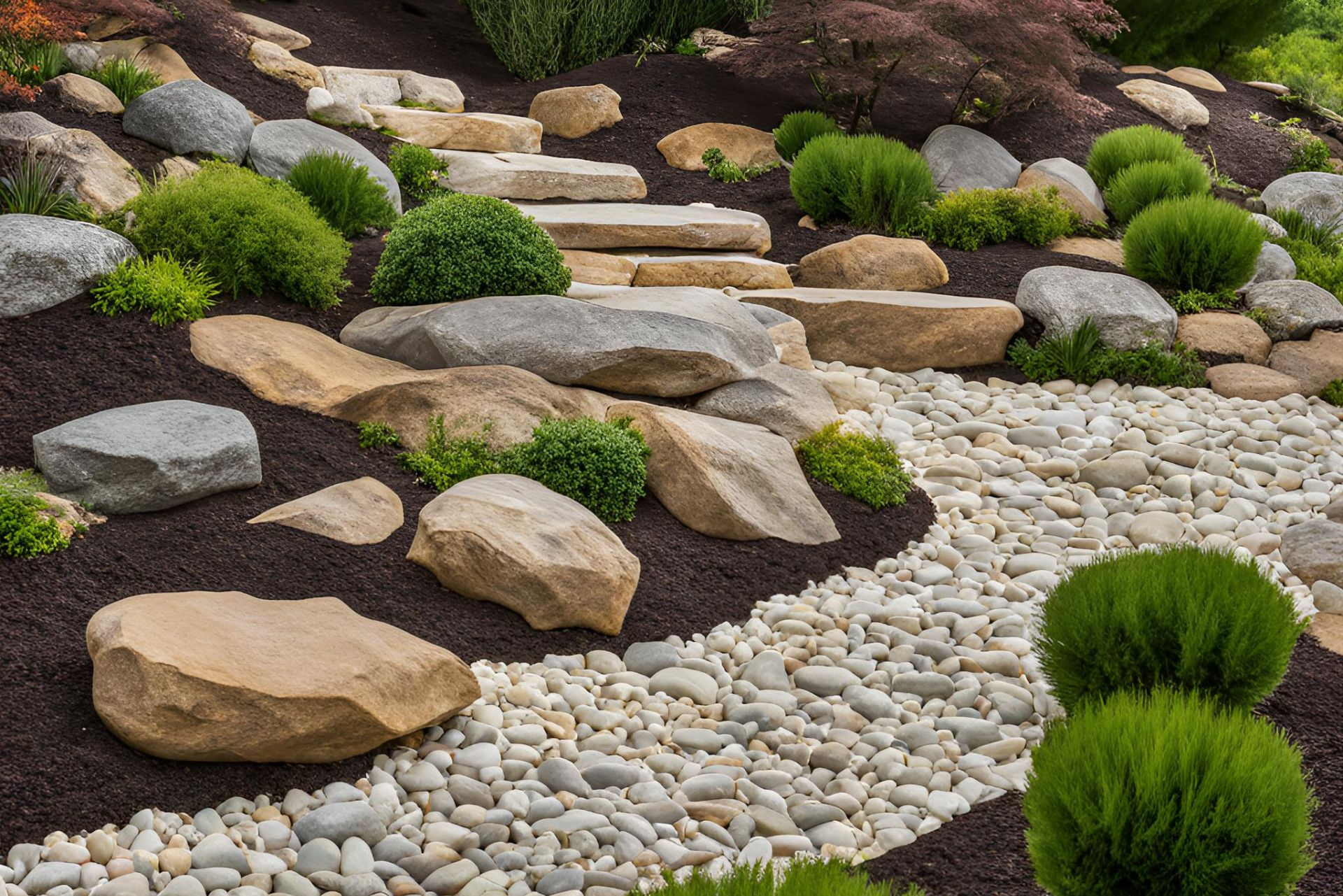
The golden rule is to sink your rocks. Don’t just set them on top of the dirt. Dig a small indentation or trench for each stone. Bury about one-third to one-half of the rock’s height into the soil. This anchors it. It prevents rolling. It makes the rock part of the landscape, not just sitting on it. If you’re creating a row of stones, like a mini retaining wall, make sure each row overlaps the one below it. This shingling effect directs water over the rocks, not under them. If water gets under your rocks, it will lift them up and wash them away.
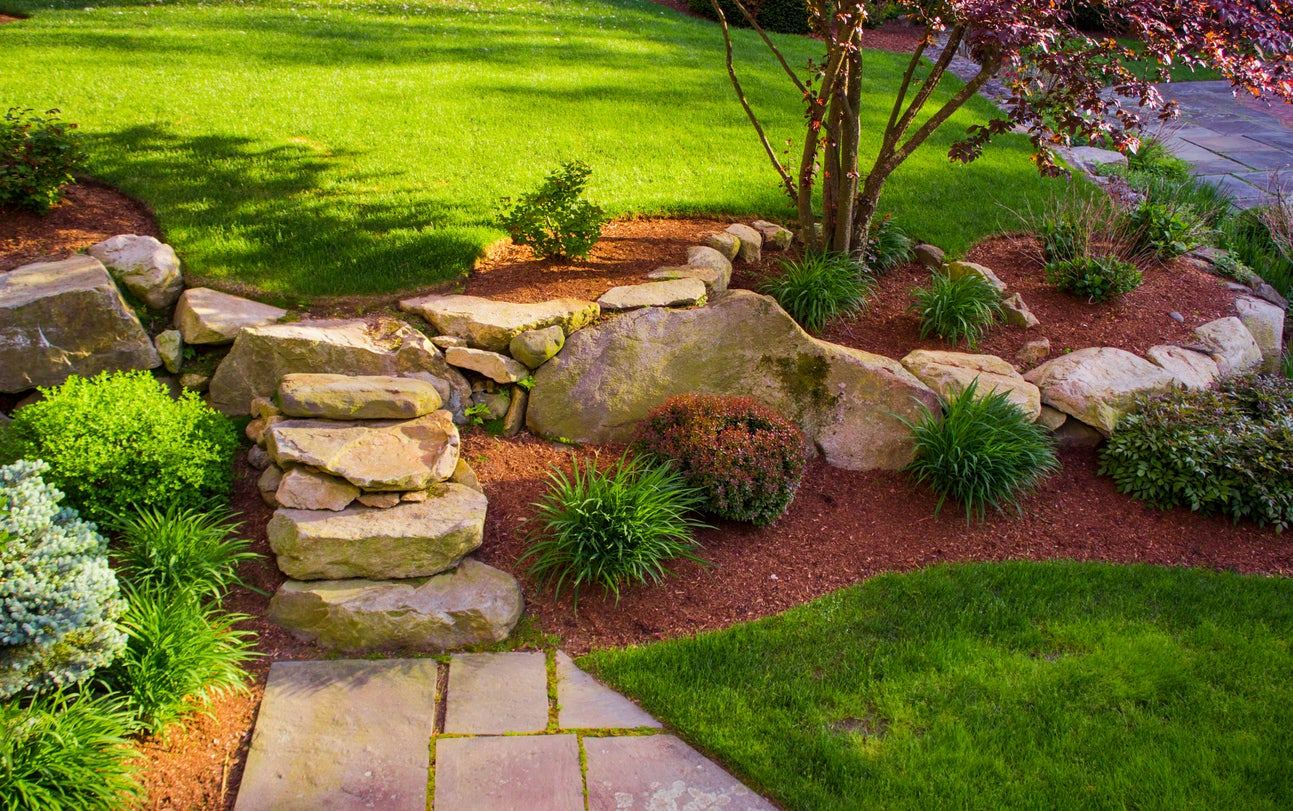
For larger slopes, consider creating terraces. You don’t need a formal engineering project. Just use large boulders to create step-like levels. These flat spots catch water and allow it to soak in. They also give you planting space. Place the largest boulders at the bottom of the slope or at points where water converges. These are the high-energy zones. They need the most protection. Smaller stones can go higher up, where the water flow is gentler. It’s about matching the tool to the task.
The Power Duo: Rocks and Roots
Rocks are tough, but they’re static. They don’t grow. They don’t adapt. That’s why the best erosion control systems in 2026 aren’t just rock gardens. They’re hybrid systems. We call it bio-engineering, but it’s really just common sense. Rocks handle the immediate force of the water. Plants handle the long-term stability. Their roots act like living rebar, knitting the soil together. Without plants, soil can still wash out from between the rocks. Without rocks, young plants can get washed away before their roots establish.
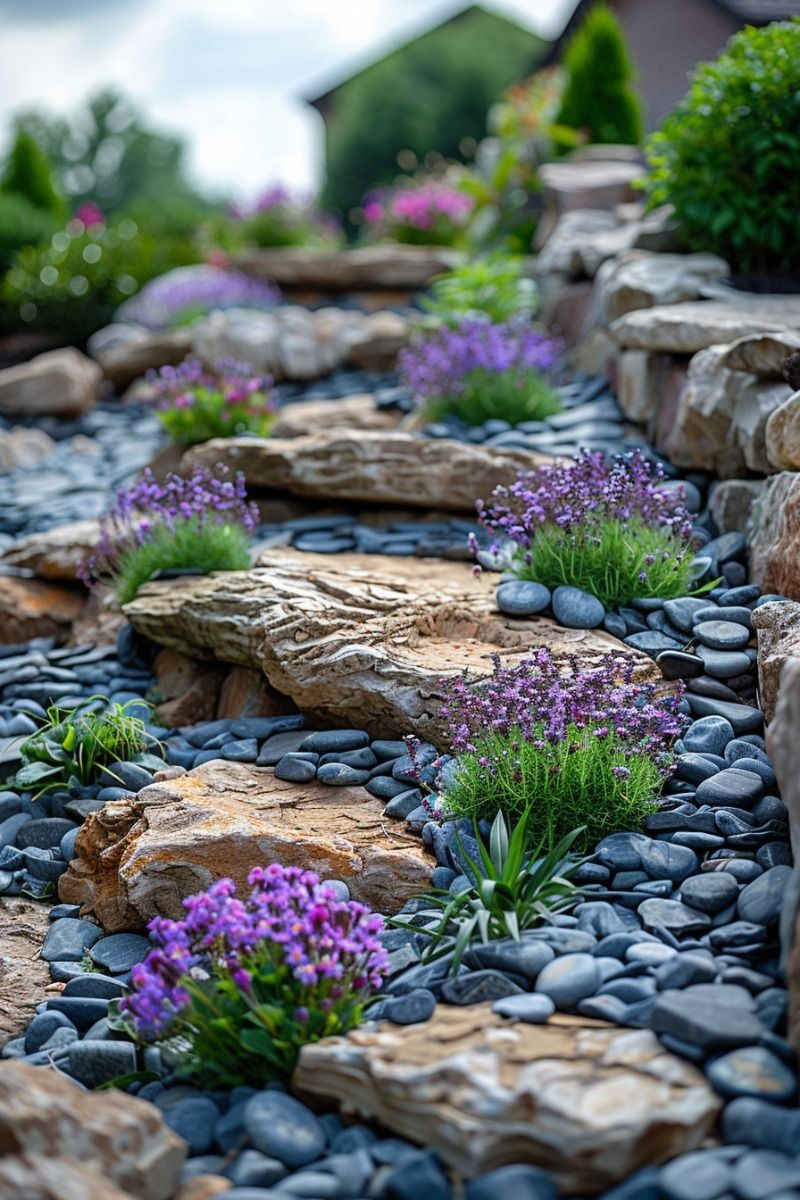
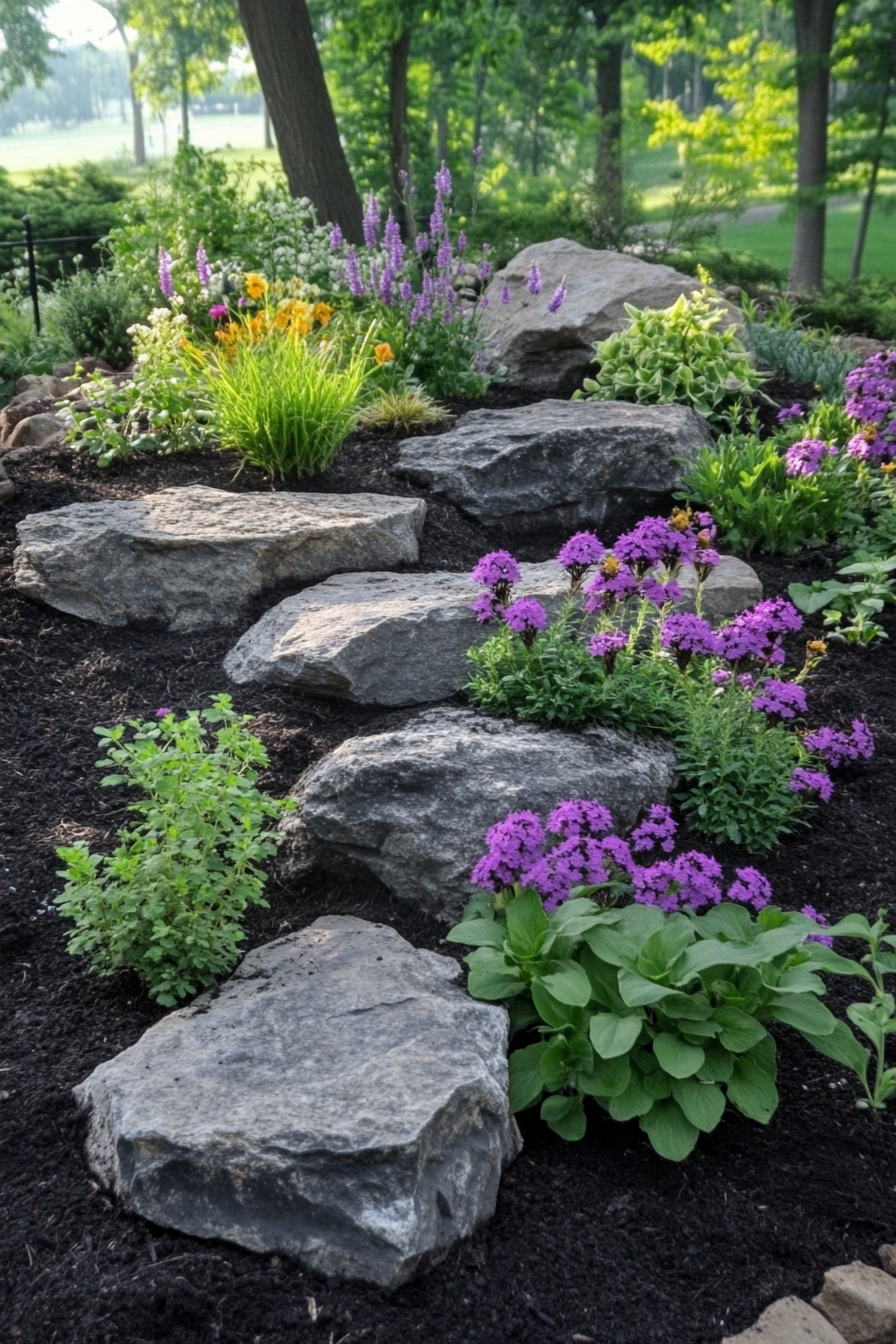
Start by placing your rocks. Then, plant in the pockets between them. Native vegetation is crucial here. Non-native ornamentals often have shallow root systems that don’t hold soil well. Native grasses, sedges, and groundcovers have deep, fibrous roots that grab onto the earth. Think tall fescue, switchgrass, or local wildflowers. Space them about one plant per square foot. Orient your rows perpendicular to the slope. This creates a horizontal barrier that catches any soil that tries to slip through the rock matrix.
The synergy is powerful. The rocks protect the young plants from being battered by heavy rain. As the plants grow, their shade keeps the soil moist, which helps beneficial microbes thrive. Their leaves break the impact of raindrops before they hit the ground. Over time, the plants become the primary stabilizer, and the rocks become the structural backbone. It’s a partnership. You’re not just building a rock wall; you’re building a living ecosystem. It’s resilient. It heals itself. And frankly, it looks a lot nicer than a bare rock pile.
Creative Solutions for Tricky Spots
Not every slope is a giant hill. Sometimes you have a small dip near your foundation. Or a weird angle behind the shed. These tricky spots need creative solutions. One of the most effective methods is the dry river bed. Even if you don’t have a permanent stream, water likely flows somewhere during a storm. Identify that path. Line it with river rocks and larger boulders. This creates a designated channel for the water. It guides the flow safely away from your house or garden beds. It turns a problem area into a feature.
Another trick is the sediment trap. If you have a spot where water slows down and deposits mud, don’t fight it. Enhance it. Build a small basin lined with large rocks and aggregate. This trap catches the sediment before it clogs your drainage pipes or covers your lawn. You can clean it out occasionally, but it saves you from having muddy water running everywhere. It’s simple physics. Slow the water, drop the dirt.
For smaller edging issues, like around flower beds on a slight incline, use edging stones. Stake out your line. Dig a trench. Set the stones partially underground. This prevents the mulch and soil from sliding out of your beds. It also creates a clean visual line. Stepping stones can also help. By placing flat stones in a path up the slope, you compact the soil underneath and provide a hard surface for foot traffic. This prevents people from carving unintended paths into the soft earth. Every rock serves a purpose.
Once your rocks are in place, you might think you’re done. Not quite. Nature is dynamic. Things settle. Rocks shift. Plants grow. In the first year, check your installation after heavy rains. Look for signs of undermining. Are there holes under the rocks? Fill them with smaller gravel or soil. Did any stones roll? Reset them and sink them deeper. This initial maintenance is critical. It ensures the system locks in properly.
Vegetation management is also key. In the beginning, you may need to water your new plants regularly. They’re establishing themselves. Keep an eye on invasive weeds. They can push rocks apart as they grow. Pull them early. As the native plants fill in, they will crowd out the weeds naturally. You won’t need herbicides. You won’t need much fertilizer. The system becomes self-sustaining.
In the long term, your rock landscape will age beautifully. Moss might grow on the stones. Lichen might appear. The plants will spread. The sharp edges of the rocks will soften. This is a good thing. It means the system is integrating with the environment. Unlike concrete walls that crack and fail, a rock and plant system gets stronger with time. The roots go deeper. The soil builds up. You’ve stopped fighting the slope. You’ve made peace with it. And in doing so, you’ve created a space that’s not just stable, but alive.
So, take a look at that eroding hill again. Don’t see it as a problem to be defeated. See it as an opportunity. Gather some stones. Pick some native plants. Get your hands dirty. Stop fighting your slope. Start using rocks. It’s simpler than you think. And the view from the bottom? It’s worth every ounce of effort.