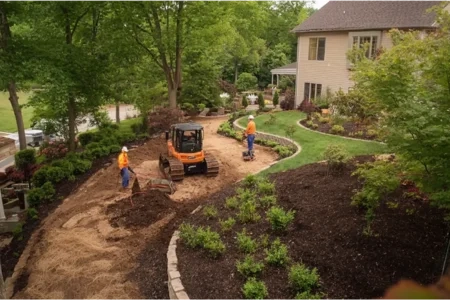

You stand at the back door, coffee in hand, staring at that patch of dirt that’s been mocking you since last autumn. It’s May 2026, the birds are singing, and the neighbor’s hydrangeas are already popping with color. Meanwhile, your yard looks like it lost a fight with a lawnmower. The urge to grab a shovel and fix everything right now is strong. But then you remember the back pain from last year’s mulch marathon. Or maybe you’re thinking about that retaining wall idea that requires engineering skills you definitely don’t have.
It’s the eternal tug-of-war for homeowners. Do you roll up your sleeves and get dirty, saving cash but spending weekends? Or do you write a check to a pro, keeping your free time but draining your wallet? The truth is, you don’t have to pick just one side. The smartest approach isn’t all-or-nothing. It’s a hybrid model. It’s about knowing where your sweat equity pays off and where calling in the experts actually saves you money in the long run. Let’s break down how to split the work so you get the yard of your dreams without losing your mind—or your savings.
The Money Talk: Where Labor Costs Really Hide
Let’s look at the numbers, because they tell a surprising story. Most people assume that if they hire a landscaper, they’re paying mostly for plants and stone. That’s a common misconception. In reality, labor makes up about 40% to 60% of a typical landscaping bill. Think about that for a second. On a $30,000 project, only $12,000 to $18,000 might go toward actual materials. The rest? That’s people power.
This gap is where your opportunity lies. If you can handle the tasks that require heavy labor but low technical skill, you can slash that bill significantly. However, this doesn’t mean you should try to do everything. The key is identifying which parts of the job are "labor-intensive" versus "skill-intensive." Moving mulch is labor. Designing a drainage system that won’t flood your basement is skill. By taking on the heavy lifting yourself—like site prep or planting—you keep the material costs low and avoid paying someone else to swing a shovel. But be careful. If you mess up the skilled part, the repair costs will wipe out any savings you made.
So, before you start digging, look at your budget. Set a total number you’re comfortable spending. Then, decide how much of that is for materials and how much you’re willing to pay for specialized expertise. This clarity helps you see where you can step in. Maybe you buy the pavers yourself to save on markup, but you hire a crew to lay them correctly. It’s a balance. You’re not just trying to be cheap; you’re trying to be efficient. And in 2026, with material prices still fluctuating, every dollar counts.
Green Light: Tasks Perfect for the Weekend Warrior
Some jobs are just plain satisfying to do yourself. They don’t require a degree in horticulture or a commercial driver’s license. Planting annuals and perennials is a great place to start. It’s creative, forgiving, and if you kill a petunia, nobody dies. You can visit local nurseries, pick out colors that speak to you, and spend a Saturday afternoon getting your hands in the soil. It’s therapeutic. Plus, you know exactly where every plant goes, which makes future care easier.
Mulching is another big one. Sure, it’s heavy. But it’s straightforward. You dump the bags (or bulk piles), spread it out, and done. There’s no wrong way to do it, as long as you don’t pile it against the tree trunks. Edging is similar. A simple half-moon edger or a spade can create crisp lines that make the whole yard look manicured. These tasks give you immediate visual gratification. You finish the job, step back, and wow—it looks better. That dopamine hit is real, and it keeps you motivated for the next project.
Don’t forget basic maintenance like weeding and raking. These are ongoing chores that pros charge hourly for. If you spend 20 minutes pulling weeds while you’re having your morning coffee, you’re saving money and keeping the garden healthy. It’s low stakes. If you miss a spot, the weeds will just be there next week. No disaster. These are the tasks that build your confidence. They teach you about your soil, your sun patterns, and what your plants actually need. Start here. Master these. Then you’ll know if you’re ready for bigger challenges.
Red Light: When to Call in the Cavalry
Now, let’s talk about the stuff that can go horribly wrong. Tree work is at the top of this list. I’m not talking about trimming a few small branches on a shrub. I mean anything involving a ladder, a chainsaw, or a limb heavier than your dog. Tree surgery is dangerous. One slip, and you’re looking at a hospital bill that dwarfs any landscaping savings. Pros have insurance, training, and equipment to handle falling limbs safely. Don’t gamble with gravity.
Complex hardscaping is another area where DIY often fails. Building a retaining wall over three feet high? Installing a patio with proper drainage? These aren’t just about stacking stones. They require understanding soil compaction, grade slopes, and structural integrity. If you get the base wrong, the wall will bulge and collapse after the first hard freeze. Then you have to pay a pro to tear it out and rebuild it. That’s double the cost. It’s frustrating and expensive. Let the experts handle the heavy machinery and the engineering.
Electrical and plumbing work in the landscape also needs a pro’s touch. Running low-voltage lighting might seem easy, but if you don’t calculate the load correctly, your lights will flicker or burn out. And if you’re tapping into main water lines for an irrigation system, one leak can cause thousands in water damage. These systems are hidden underground, so mistakes are hard to find and even harder to fix. Save yourself the headache. Hire a licensed technician for anything that involves wires or pipes. It’s not worth the risk.
The Gray Area: Tools, Rentals, and Phasing
What about the projects that sit in the middle? Like laying a simple gravel path or building a raised bed? This is where strategy comes in. You might not need to hire a full crew, but you might need better tools than what’s in your garage. Renting equipment is a smart move here. A plate compactor for a patio base or a sod cutter for removing lawn can be rented by the day. It’s cheaper than buying, and it gets the job done faster. Just make sure you watch a tutorial first. Operating heavy machinery without knowledge is a recipe for disaster.
Phasing your project is another clever tactic. Instead of doing everything at once, break it down. Start with the "bones" of the landscape—the paths, the patios, the big trees. These are permanent and expensive. Hire pros for this phase to ensure it’s done right. Once the structure is in place, you can take over the "soft" landscaping. Plant the flowers, lay the mulch, add the decor. This spreads the cost over time and lets you learn as you go. It’s less overwhelming and more manageable for your budget.
Also, consider your own interest level. Do you actually enjoy digging? Or do you dread it? If you hate the work, you’ll probably do a sloppy job or quit halfway through. In that case, it’s better to hire it out, even for simpler tasks. Your time has value. If spending a weekend on landscaping feels like punishment, then the "cost" of DIY is higher than just the money. Be honest with yourself. There’s no shame in paying for peace of mind. Sometimes, the best smart choice is knowing when to step back.
Safety and Soil: The Hidden Factors
We often overlook the ground beneath our feet. Soil quality can make or break a garden. If you have clay soil that drains poorly, or sandy soil that dries out too fast, simply planting pretty flowers won’t work. You might need soil amendments, tilling, or even drainage solutions. Testing your soil is easy and cheap. But interpreting the results and fixing the issues? That can get complicated. If your previous gardens have failed despite your best efforts, it might be time to call a soil specialist or a landscaper who understands local geology.
Safety isn’t just about chainsaws. It’s about ergonomics and long-term health. Lifting heavy bags of concrete or moving large boulders can injure your back. If you have existing health issues, don’t push it. Use mechanical aids like wheelbarrows or dollies. Or, again, hire help. Your health is more important than a perfectly edged lawn. Also, be aware of underground utilities. Before you dig any hole deeper than a few inches, call the local utility marking service. It’s free and it prevents you from cutting a gas line or fiber optic cable. That’s a mistake you only make once.
Another hidden factor is time. Landscaping takes longer than you think. What looks like a two-day project often stretches into a month of weekends. Are you okay with that? If you have a busy job, kids, or other commitments, your free time is precious. Factor that into your decision. If hiring a pro frees up four Saturdays for family time, that might be worth the extra cost. It’s not just about money. It’s about quality of life. Balance the physical toll with the mental relief of having it done.
So, how do you decide on a specific task? Use this quick mental checklist. First, ask: Is it dangerous? If yes, hire a pro. Second, does it require specialized tools or skills I don’t have? If yes, hire a pro. Third, will a mistake be costly or hard to fix? If yes, hire a pro. Fourth, do I have the time and energy to do this well? If no, hire a pro. If you answered "no" to most of these, then go for it. DIY away.
For example, replacing dead shrubs? Safe, simple tools, easy to fix if you mess up, and you have the weekend free. Go DIY. Installing a new sprinkler zone? Involves digging near pipes, requires specific knowledge of pressure and heads, and leaks are a nightmare. Hire a pro. See the difference? It’s about assessing risk and reward. You want to feel proud of your work, not stressed by it.
Remember, you can mix and match. You can hire a designer to create a plan, then execute the planting yourself. You can hire a crew to install a patio, then build the fire pit yourself. There’s no rule that says you have to choose one lane. The best landscapes are often collaborative efforts. They combine professional precision with personal touch. So, look at your yard. Pick one thing. Assess it. Then make the smart choice. Your back—and your bank account—will thank you.
In the end, landscaping is about creating a space you love. Whether you get there by sweating over a wheelbarrow or signing a contract, the goal is the same. Don’t let the pressure to be perfect stop you. Start small. Learn what you can. Delegate what you can’t. And enjoy the process. After all, it’s your sanctuary. Make it work for you, not the other way around. Now, go enjoy that coffee. The yard will still be there tomorrow.