
Let’s be honest for a second. Nobody actually likes mowing the lawn. Sure, the smell of fresh-cut grass is nice, and maybe you enjoy the slight burn in your legs after pushing a heavy deck around for an hour. But let’s look at the reality. It’s hot. It’s loud. It takes up your entire Saturday morning when you could be sleeping in, hiking, or just sitting on your porch with a cold drink. For decades, we’ve accepted this as part of homeownership. The American dream apparently comes with a mandatory weekly chore that involves gasoline, noise, and sweat.
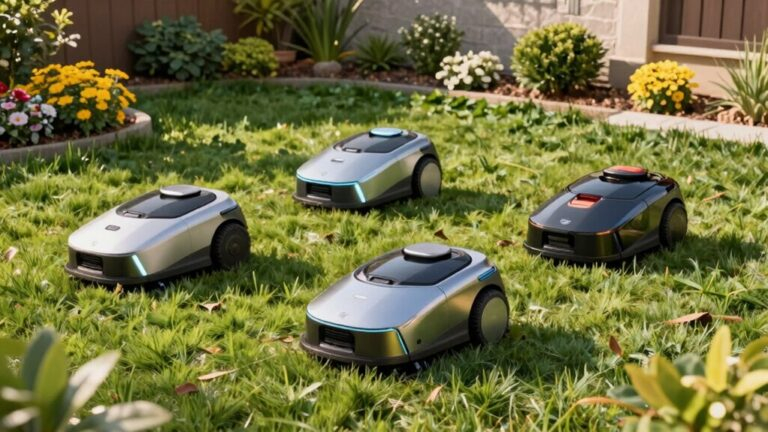
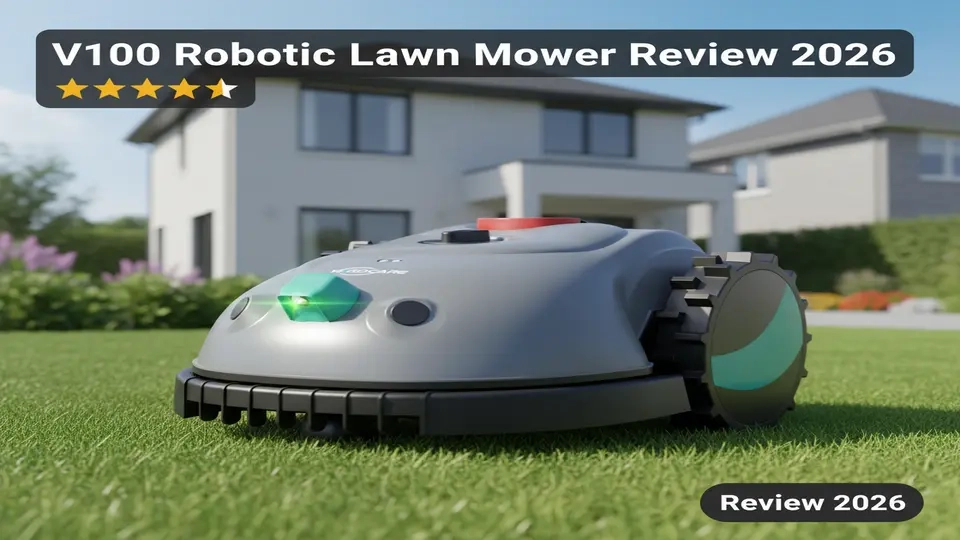
But things are shifting. Fast. By 2026, robotic lawn mowers aren’t just futuristic gadgets for tech billionaires anymore. They’re becoming as common as smart thermostats or LED bulbs. You see them zipping around neighborhoods, quiet as a whisper, trimming the grass while their owners are at work or enjoying their weekend. The question isn’t really "can they do it?" anymore. We know they can. The real question hitting homeowners hard this year is: "Is it worth the money?"
It’s a fair question. These machines aren’t cheap. You’re looking at an upfront cost that can sting. But if you stop looking at just the price tag and start looking at the value—the time saved, the fuel not bought, the lawn service bills cancelled—the picture changes completely. This isn’t just about buying a gadget. It’s about buying back your weekends. Let’s break down the actual numbers, the hidden costs, and the real benefits using data from right here in 2026.
The Sticker Shock: What Do Robot Mowers Actually Cost in 2026?
First, let’s rip the band-aid off. How much does this thing cost? If you go shopping today, you’ll see a wild range. In 2026, entry-level models for small, flat yards start around $800. These are basic units, often requiring a boundary wire to be installed around your perimeter. They get the job done, but they’re like the economy car of the mower world. Reliable, simple, but not fancy. On the other end of the spectrum, you’ve got high-end commercial-grade bots or massive residential units for multi-acre estates that can run upwards of $5,000 to $25,000. That’s a huge gap.
Most homeowners, though, fall somewhere in the middle. For a typical suburban yard (say, a quarter to half an acre), you’re likely looking at spending between $1,500 and $3,000 for a solid, reliable unit. This price usually includes the mower, the charging station, and the installation kit. But here’s where it gets interesting. The technology has jumped forward. In previous years, you had to bury wires. Now, in 2026, wire-free navigation using GPS, LiDAR, and AI vision is becoming the standard for mid-to-high-tier models. Brands like Mammotion and MOVA are pushing these wire-free options hard, arguing that the lack of installation hassle adds long-term value.
So, yes, $2,000 feels like a lot for a lawnmower. You can buy a really nice gas push mower for $400. But comparing those two prices directly is like comparing a bicycle to a car. One is a tool you operate; the other is a service provider. The robot doesn’t just cut grass; it manages your lawn’s health autonomously. When you look at the price, try to frame it not as a purchase of a machine, but as pre-paying for several years of lawn care labor. It shifts the perspective from "expense" to "investment." And unlike a gas mower that depreciates the moment you pull it out of the box, a well-maintained robot holds its value surprisingly well, especially if you keep the software updated.
The Hidden Ledger: Calculating Time, Fuel, and Maintenance
Let’s talk about the stuff that doesn’t show up on the receipt. The hidden costs of traditional mowing are sneaky. Think about gas. Even with efficient engines, you’re buying fuel every few weeks during the growing season. Then there’s the oil changes, air filters, spark plugs, and blade sharpening. A gas mower is a small engine that requires maintenance. If you take it to a shop, that’s $100+ a year easily. If you do it yourself, it’s your time and the cost of parts. Over five years, those little expenses add up to hundreds of dollars.
Then there’s the big one: your time. This is what economists call "opportunity cost," but let’s just call it "life." If you spend two hours every week mowing, edging, and cleaning up clippings, that’s roughly 60 hours a year. Maybe more if you have a tricky yard. If you value your free time at even a modest $30 an hour (which is probably low for many professionals), you’re "spending" $1,800 a year in labor just to keep the grass short. That’s not cash leaving your bank account, but it’s value leaving your life. A robot mower gives those 60 hours back to you. Completely.
In 2026, we’re seeing more people calculate this "time-cost" explicitly. It’s sometimes called the "Lemonading" effect—basically, if you wouldn’t pay someone $30 an hour to sit and watch paint dry, why are you paying yourself that rate to push a noisy machine in the heat? When you factor in the avoided gas costs (say $100/year) and the avoided maintenance ($100/year), the robot starts to look cheaper very quickly. You aren’t just saving money on the mower itself; you’re saving money on the ecosystem of support that traditional mowing demands. It’s a quieter, cleaner, and frankly, less annoying way to live.
The Break-Even Point: When Does It Pay for Itself?
Okay, so we have the upfront cost and the ongoing savings. When do they meet? This is the break-even analysis, and it’s where the rubber meets the road. Let’s run a realistic scenario for a typical homeowner in 2026. Say you buy a mid-range robot mower for $2,000. You cancel your lawn service, which was costing you $150 a month during the six-month growing season. That’s $900 a year in direct cash savings. Add in the $200 you save on gas and maintenance for your old push mower. Now you’re saving $1,100 a year in hard cash.
At that rate, your $2,000 investment pays for itself in just under two years. After that? It’s basically profit. Or rather, it’s free lawn care for the remaining life of the machine, which is typically 5 to 7 years with good battery care. Over a five-year period, you’d save roughly $5,500 compared to hiring a service, or about $3,500 compared to doing it yourself with a gas mower (when you count the avoided fuel/maintenance). Some analyses for larger, sloped yards show even faster break-evens, sometimes within 12 to 18 months, because professional services charge a premium for difficult terrain.
But what if you don’t have a lawn service? What if you’ve always done it yourself? The math is tighter, but it still works if you value your time. If you assign a dollar value to your weekends, the break-even happens almost immediately in terms of "quality of life." Financially, it might take three to four years to recoup the $2,000 if you’re only counting gas and maintenance savings. But most people who switch say they never go back, not because of the pennies saved on gasoline, but because of the freedom. The break-even point isn’t just a number on a spreadsheet; it’s the moment you realize you haven’t thought about your lawn in three weeks.
Lawn Health: The Unexpected Bonus You Didn’t Know You Needed
Here’s something that surprises almost everyone: robot mowers actually make your lawn healthier. Traditional mowing cuts the grass once a week (or every two weeks if you’re busy). This means the grass gets stressed, losing a large chunk of its leaf blade at once. It shocks the plant. Robot mowers, by contrast, cut every day. Or every other day. They take off just a tiny sliver of grass each time—millimeters. This is called "mulch mowing" on steroids. The tiny clippings fall back into the soil, decomposing instantly and acting as a natural fertilizer.
In 2026, turf studies are highlighting this benefit more than ever. Lawns tended by robots tend to be denser, greener, and more resistant to weeds. Why? Because the grass is never stressed by a huge haircut, and the constant return of nutrients builds better soil health. You might find you need less synthetic fertilizer. You’ll definitely produce zero bagged clippings to haul to the curb. It’s a closed-loop system that mimics how grazing animals keep pastures healthy. It’s nature, automated.
There’s also the compaction factor. Gas mowers are heavy. Pushing them back and forth compacts the soil, which isn’t great for root growth. Most robot mowers are significantly lighter. They wander randomly or in patterns, distributing their weight differently and causing less soil compression. The result is a lawn that looks like a carpet rather than a striped battlefield. It’s a subtle difference, but once you see a lawn that’s been robot-tended for a full season, it’s hard to unsee. The color is deeper. The texture is softer. It’s a hidden benefit that adds real value to your property’s curb appeal without any extra effort from you.
Installation and Reality Check: It’s Not All Perfect
Let’s keep it real. Robot mowers aren’t magic. They require setup. If you go with a wired model, you have to lay that boundary wire. It’s not terribly difficult, but it’s tedious. You’re staking wire around trees, flower beds, and the perimeter of your yard. It can take a weekend. If you hire someone to do it, add $200-$500 to your cost. Wire-free models solve this, but they still need a initial mapping run. You walk the perimeter with the device or use an app to define zones. It’s easier, but it’s not "plug and play" in the sense that you take it out of the box and it works instantly. There’s a learning curve.
Then there are the edge cases. Literally. Robots struggle with tight corners and narrow passages. If you have a weirdly shaped yard with lots of islands and thin strips of grass, you might still need to trim the edges with a string trimmer once in a while. They aren’t perfect at getting right up against the fence line. Most leave a small border of uncut grass, maybe an inch or two. For some perfectionists, this is a dealbreaker. For most, it’s a minor annoyance that takes five minutes to fix with a handheld trimmer once a month. It’s important to manage expectations. It’s not going to look like a golf course green overnight, and it won’t handle tall, overgrown weeds. You still need to maintain your yard; the robot just handles the frequent, repetitive cutting.
Also, consider theft and security. It’s a $2,000 device sitting outside. Most have GPS tracking and PIN codes, but it’s a concern. You need a secure charging station, ideally in a spot that’s not easily accessible from the street. And batteries degrade. Like your phone, the lithium-ion battery in your mower will lose capacity over time. In 2026, replacement batteries are easier to find, but expect to swap it out every 3-5 years depending on usage. It’s a recurring cost, usually around $200-$400. Factor that into your long-term budget. It’s not free, but it’s predictable.
So, who is the ideal candidate for a robot mower this year? If you have a flat to moderately sloped yard under an acre, you’re the sweet spot. If you hate mowing, or if you have physical limitations that make pushing a mower difficult, this is a game-changer. If you travel frequently for work, a robot gives you peace of mind that your lawn won’t turn into a jungle while you’re gone. It’s also great for families with young kids. No more sacrificing Saturday mornings to chores. You get that time back to build forts, go to the park, or just relax.
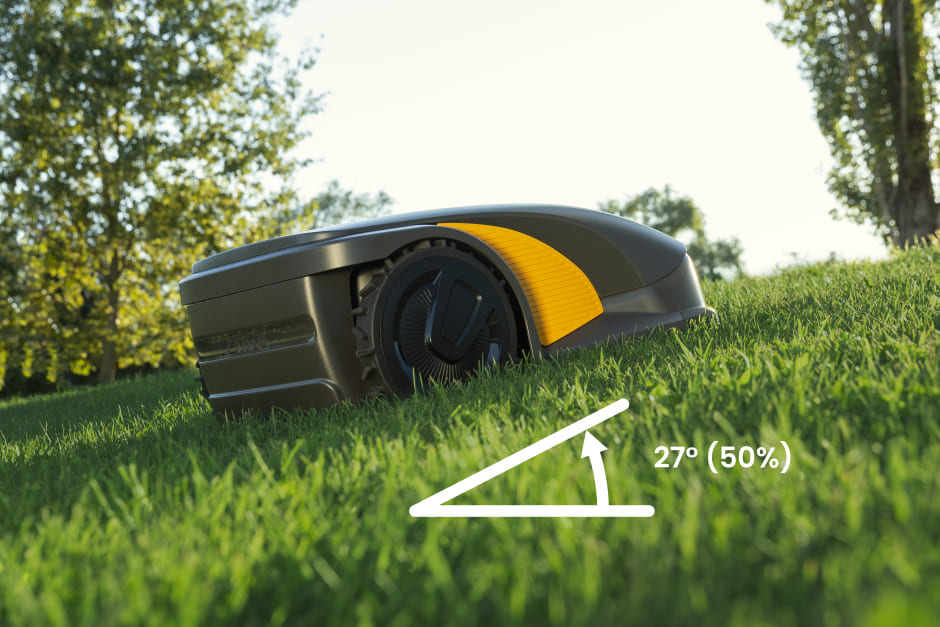
However, if you have a tiny yard (less than 2,000 square feet), it might be overkill. A simple push reel mower or a small electric push mower might be cheaper and just as easy. If you have a massive, complex estate with steep slopes, dense woods, and intricate landscaping, you’ll need a high-end commercial unit, and the ROI takes longer. You need to assess your terrain honestly. Look at the 2026 models from brands like Husqvarna, Worx, Eufy, and Mammotion. Read reviews specifically for yards similar to yours. Don’t just buy the cheapest one; buy the one that fits your topology.
Ultimately, the decision comes down to what you value more: cash or time. If you’re strictly watching every penny and don’t mind the labor, stick with your push mower. But if you view your time as a precious resource, and you want a lawn that looks consistently good without you lifting a finger, the robot is worth every penny. It’s a lifestyle upgrade. It’s the difference between maintaining your home and enjoying your home. In 2026, with the technology mature and prices stabilizing, it’s harder than ever to justify sticking with the noise and fumes of the past.
The shift to robotic mowing isn’t just a trend; it’s an evolution in how we care for our outdoor spaces. It aligns with a broader move toward smarter, more efficient home management. We automate our lights, our thermostats, and our vacuums. Why not our lawns? The data from 2026 shows that for the majority of suburban homeowners, the financial break-even is reachable within a few years, and the quality-of-life improvement is immediate.
You don’t have to be a tech enthusiast to appreciate a quiet yard. You don’t have to be rich to afford one. You just have to be willing to look at the total cost of ownership, not just the sticker price. When you do the math—including the gas, the maintenance, the lawn service fees, and most importantly, your valuable time—the robot mower stops looking like a luxury and starts looking like a smart, logical choice.
So, take a look at your yard. Imagine it staying perfectly trimmed all summer long while you’re inside reading, working, or playing with your kids. Imagine not smelling gasoline on your clothes. Imagine not losing your Saturdays. That’s the true value. And in 2026, that value is more accessible than ever. It’s not just about cutting grass. It’s about reclaiming your life, one square foot at a time.