
We have all been there. You look out at your yard on a blazing hot afternoon and notice the grass looking a little limp. Your first instinct might be to drag out the hose right then and there, or maybe wait until you get home from work in the evening to soak the ground. It seems simple enough, right. Water is water, and the grass needs it.
But as it turns out, your lawn cares deeply about the clock. Dragging the sprinkler out at the wrong hour doesn’t just waste your time and precious water—it can actually make your grass sick. Turf pros have spent years studying how moisture interacts with soil and temperature, and their consensus is clearer than ever. Let us break down exactly when to flip that switch so you can stop guessing.
Why Midday is a Total Wash
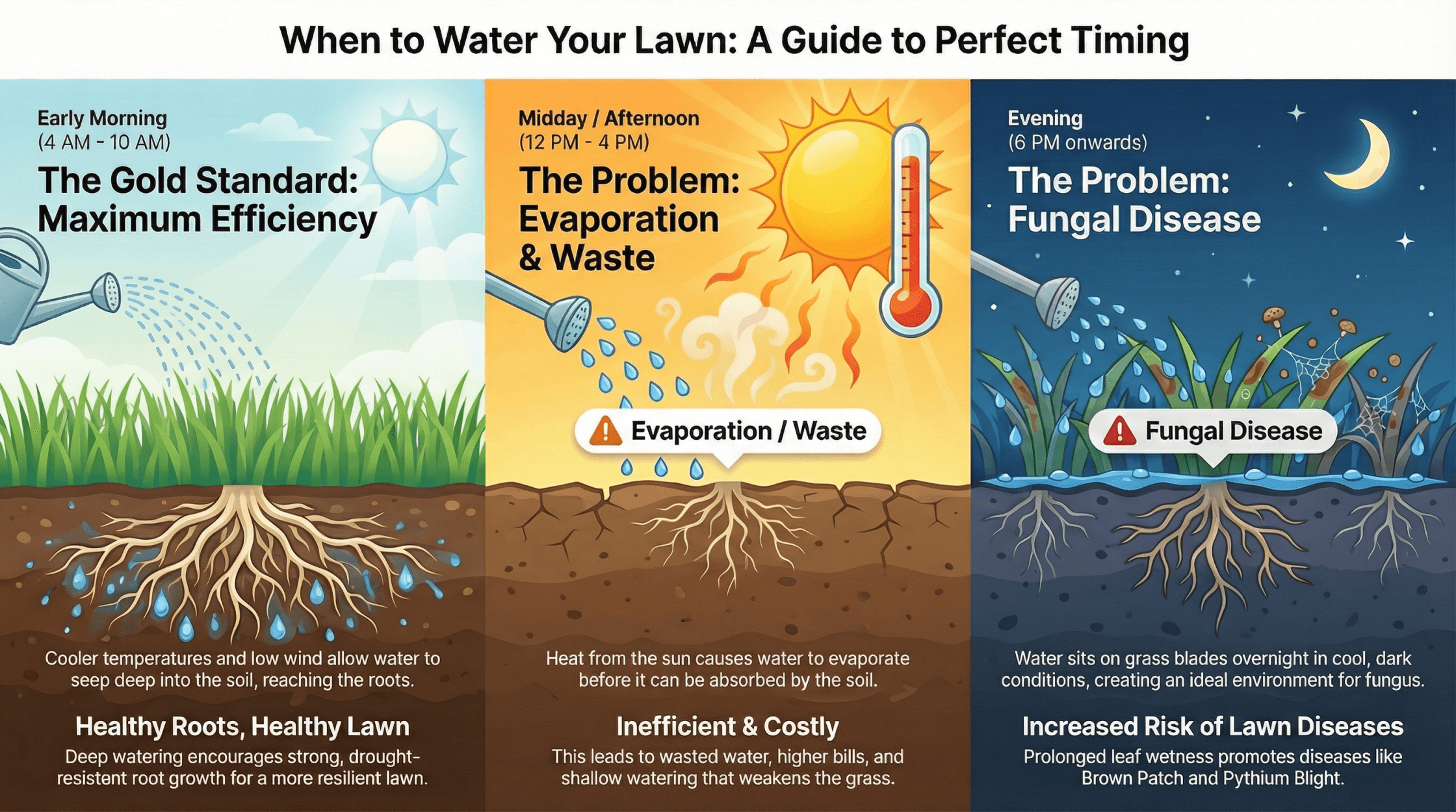
First, let’s address the elephant in the yard: watering in the middle of a hot afternoon. It is tempting to think a cool shower helps your grass beat the heat. Sadly, the exact opposite happens because of intense evaporation.
When the sun is high and the air is dry, a massive chunk of that water—sometimes up to 30%—vanishes into thin air before it even touches the roots. You are basically paying to water the atmosphere. Plus, wet grass blades under intense sunlight can get stressed out. It is a losing battle for your wallet and your lawn health.
The Dark Side of Evening Soaking
If afternoon is out, the nighttime seems like the next logical choice. You are home, it is cool, and the water won’t evaporate. But watering late at night creates a totally different nightmare: a playground for fungal diseases.
When you coat your yard in water at 8 p.m., that moisture just sits on the blades for ten to twelve hours. Damp, cool, and dark conditions are exactly what nasty lawn fungi love to thrive in. By trying to help your yard, you might wake up to strange brown patches and mushrooms creeping across your grass.
The Golden Window: 5 a.m. to 9 a.m.
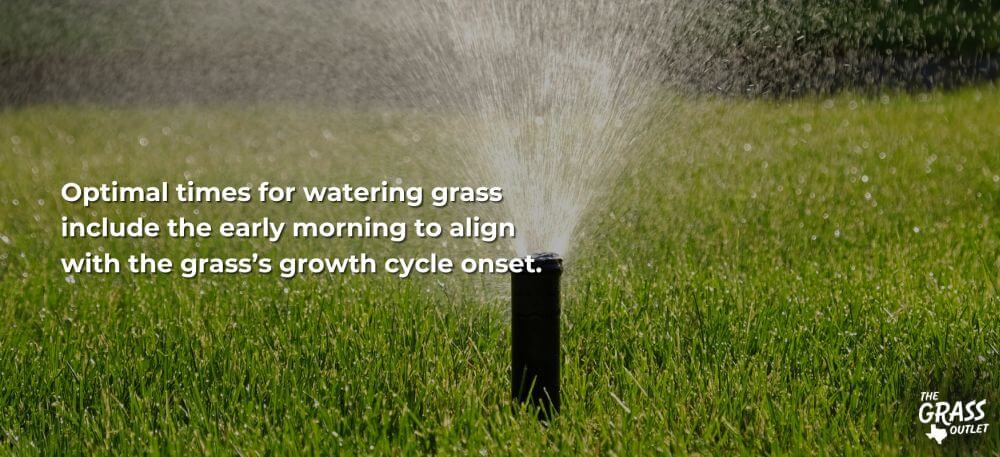
So, when is the ultimate sweet spot. Every turf expert will tell you that early morning, specifically between 5 a.m. and 9 a.m., is the magic hour. It is the time when your lawn responds best.
During these early hours, the air is still cool, meaning evaporation is incredibly low. The water has plenty of time to sink deep into the dirt, reaching the root system where it is needed most. Then, as the sun comes up, any leftover moisture on the grass blades dries off quickly, keeping those fungal invaders far away.
Reading the Clues Your Grass Gives You
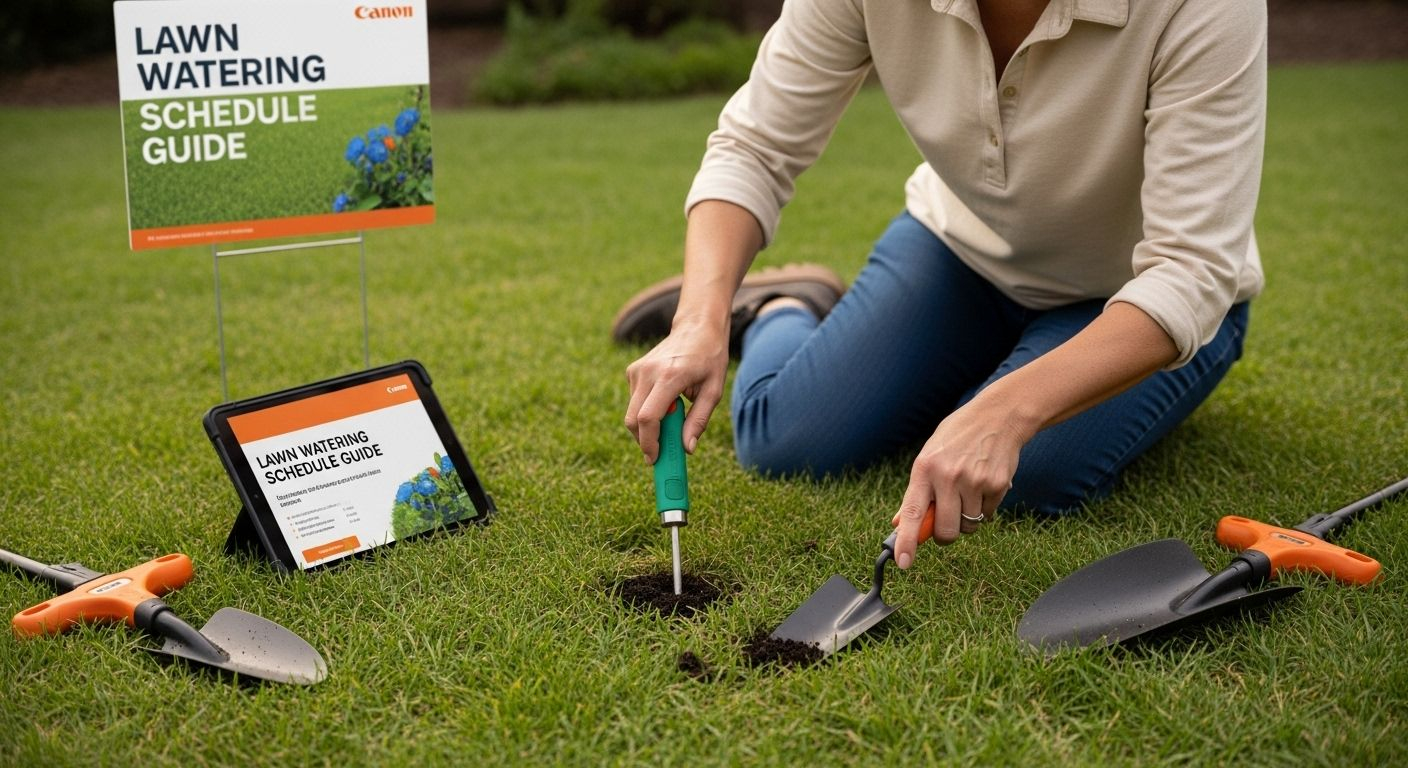
You shouldn’t just water blindly because the calendar says so. Your lawn actually talks to you if you know how to look. Learning these signs will save you a ton of trouble.
Have you ever walked across your yard and noticed your footprints stay flattened in the grass long after you’ve moved on? That is a classic sign of dehydration. Healthy grass snaps right back. Another clue is color; when grass gets thirsty, it shifts from a vibrant green to a dull, bluish-gray tint.
Soil Types and the Weekly Math
Getting the timing right is half the battle, but how much water are we talking about? Generally, your yard needs about 1 to 1.5 inches of water every single week, including rainfall.
How your yard handles that water depends entirely on your soil type. If you have heavy clay soil, it holds onto water like a sponge, so you need to water slower to avoid puddles. Sandy soil, on the other hand, lets water run right through, meaning you might need to split your weekly watering into two or three shorter sessions so the roots can actually grab it.
Making Life Easier with Automation
Let us be real: not everyone wants to wake up at 6 a.m. on a Saturday just to move a sprinkler around. If mornings are tough for your schedule, automation is your best friend.
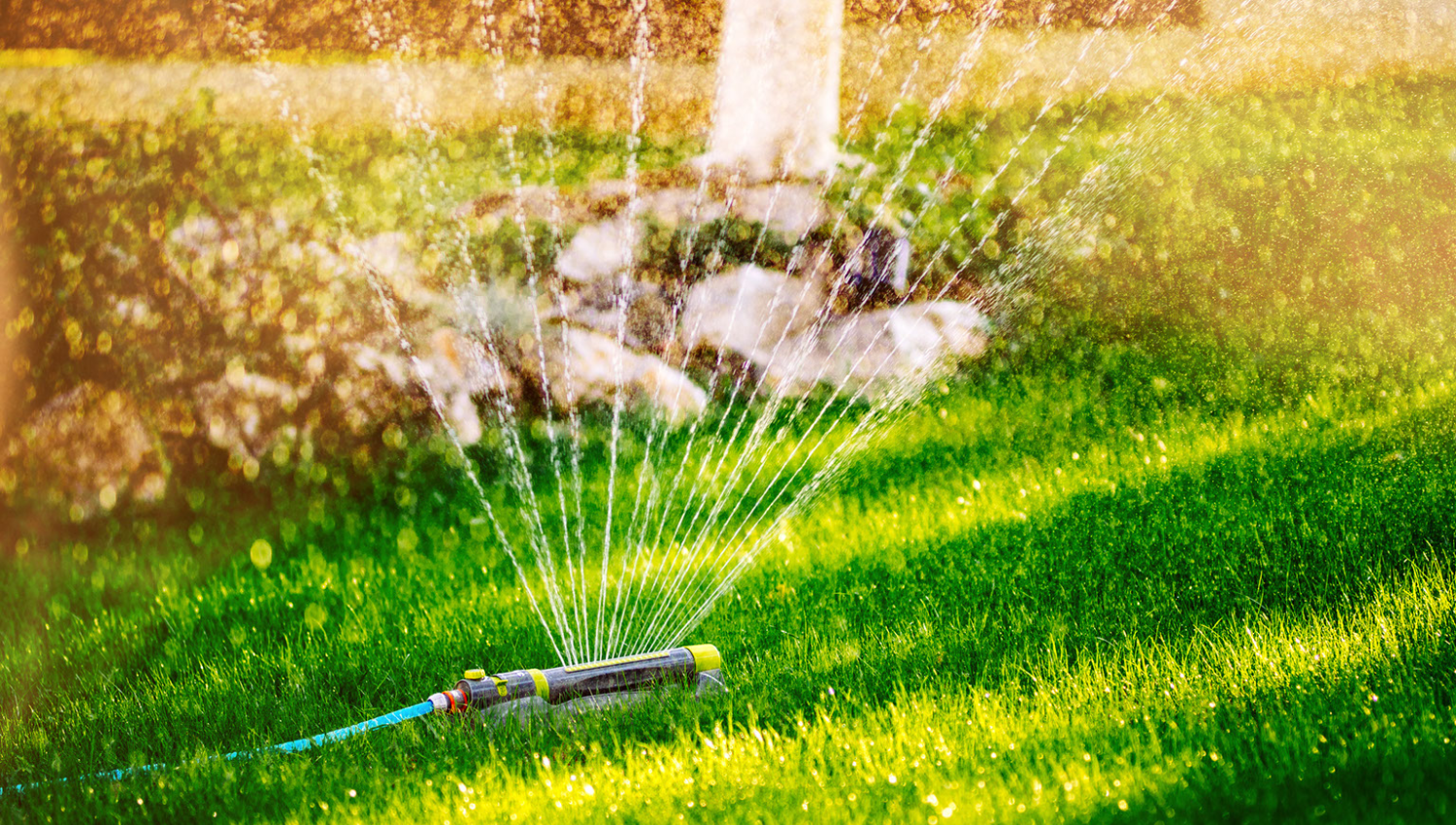
Investing in a simple hose timer or a smart irrigation system lets you set it and sleep better. You can program it to run during that perfect dawn window and forget about it. Your grass stays perfectly hydrated, your water bill doesn’t spike from excess waste, and you get to enjoy your coffee in peace.
At the end of the day, a beautiful yard is all about building deep, strong roots. Frequent, shallow watering keeps roots near the surface, making them weak when a heatwave hits.
Instead, aim for deep, less frequent watering sessions during those golden morning hours. This forces the roots to grow downward in search of moisture, creating a tough, resilient lawn that can handle whatever summer throws its way. Pay attention to the clock, listen to your soil, and watch your yard transform.