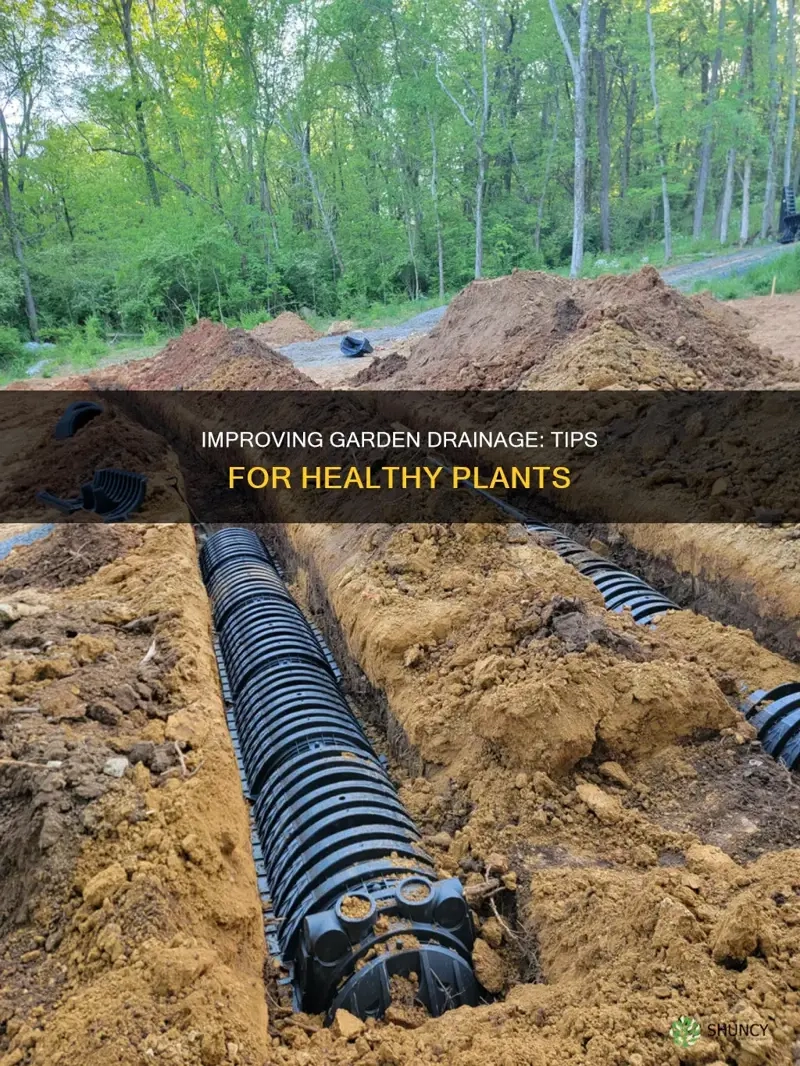

The moving trucks have finally departed, leaving behind a pristine mortgage agreement, a fresh coat of interior paint, and a perimeter of raw, graded dirt that stretches in every direction. Standing on the back patio of a newly built property can feel simultaneously exhilarating and intimidating. Outside your sliding glass doors lies an absolute blank canvas—or more accurately, a lunar landscape composed of compacted construction clay, buried drywall remnants, and aggregate rock.
Homebuyers routinely underestimate the financial reality of transforming this raw perimeter into a thriving outdoor living ecosystem. The standard developer package typically consists of a tiny patch of sod near the front porch and perhaps a lonely, staked-up maple tree gasping for water in the glaring sun. Everything else is left to the homeowner. Without a calculated financial roadmap, it is remarkably easy to hemorrhage thousands of dollars on reactive purchases, impulse plant buys, and uncoordinated contractor bids before the backyard even has a functioning drainage system.
Navigating this financial landscape requires shifting away from superficial aesthetic goals and diving deep into site preparation, soil mechanics, and phased execution. Landscaping a new construction property from scratch is not a weekend gardening project; it is heavy civil engineering paired with horticulture. By breaking down the true cost drivers—ranging from subsurface grading and hardscaping to automated irrigation and plant material tiers—you can build an outdoor space that enhances your property value rather than draining your savings account.
The modern real estate market demands a smarter approach to outdoor budgeting. Professional design-build firms report that first-time landscaping transformations routinely start between $15,000 and $50,000 for a functional backyard, while comprehensive outdoor living packages featuring kitchens, permanent patios, and architectural lighting easily scale past $75,000 to $250,000+. Understanding how to allocate these funds wisely protects you from financial strain and ensures your property matures gracefully over the decades.
Unpacking the True Cost Drivers of Raw Ground
Every new construction yard starts with a distinct handicap: soil that has been systematically pulverized, compacted, and contaminated by heavy earthmoving machinery. Before a single blade of grass can thrive or a paver can be laid, you must confront the hidden liabilities buried beneath the surface. Excavators, concrete trucks, and framing crews spend months driving heavy machinery across your future lawn, compressing the earth into a dense concrete-like stratum where roots simply cannot penetrate.
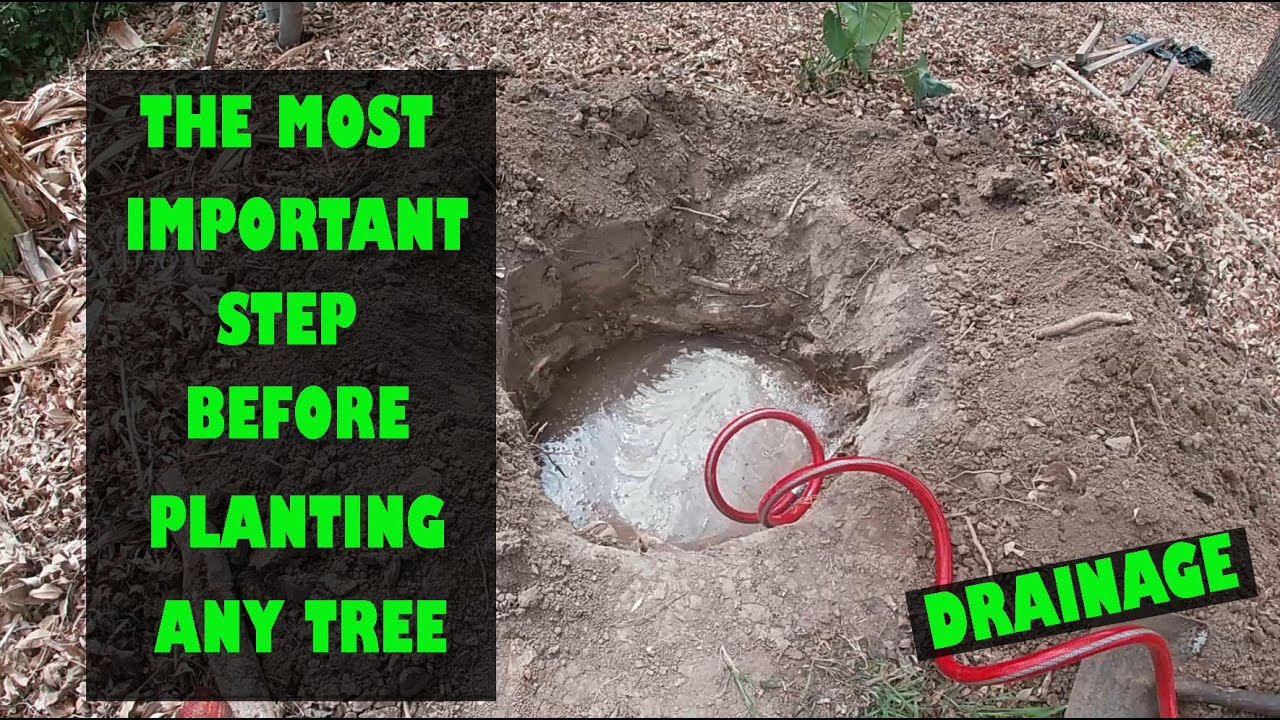
Soil remediation represents the single most overlooked expense in new construction landscaping. Bringing in a sub-contractor with a tractor-mounted box blade or a rotary tiller is only the first step. True remediation requires amending native subsoils with organic compost, gypsum, or topsoil to reintroduce microbial life and establish a functional percolation rate. If you skip this foundational phase to save money upfront, your turf will struggle through every summer heatwave, and your expensive ornamental shrubs will experience root rot due to trapped water pooling on top of compacted clay pans.
Beyond the earth beneath your feet, municipal codes and neighborhood architectural review committees add layers of compliance costs. Many master-planned communities enforce strict landscaping minimums, dictating the caliper size of front-yard trees, the percentage of permeable surface area, or mandatory irrigation connectivity. Ignoring these covenants can result in hefty fines or forced teardowns of completed work. Factor permit fees, utility locating services (calling 811 before digging), and HOA submission fees directly into your initial feasibility ledger before writing any checks to contractors.
Strategic Allocation and Capital Distribution Benchmarks
Effective landscape budgeting operates on a strict percentage-based hierarchy, much like a commercial real estate development. Pouring all your capital into an elaborate paver patio while leaving the side yards as mud pits creates an unbalanced, unusable property. Industry benchmarks suggest dividing your total outdoor budget into functional buckets: 15 to 20 percent for structural hardscaping, 10 to 15 percent for irrigation and drainage infrastructure, 30 to 40 percent for softscaping (trees, shrubs, turf, mulch), 10 percent for lighting and electrical, and a mandatory 15 percent contingency fund for unforeseen site discoveries.
Hardscaping anchors the functional layout of a newly built property, creating designated zones for dining, lounging, and walking. Patios, walkways, and retaining walls demand high upfront labor and material costs because they require proper base compaction, geotextile fabrics, and edge restraints to prevent shifting during freeze-thaw cycles. Choosing poured concrete, interlocking concrete pavers, or natural flagstone drastically shifts the bottom line. Pavers offer flexibility and timeless appeal, while poured concrete provides a modern, clean aesthetic at a lower initial cost per square foot.
Softscaping transforms hard architectural lines into a living, breathing environment. However, mature plant material commands a steep premium. Selecting #1 or #3 nursery containers instead of massive 15-gallon specimens allows you to stretch your budget exponentially. Smaller plants establish root systems faster and adapt to native soil conditions more successfully than root-bound specimen trees hauled in from distant commercial farms. Allocating capital toward a diverse canopy of shade trees also pays massive long-term dividends by reducing household cooling loads during peak summer months.
Phasing Your Master Plan to Prevent Financial Fatigue
Tackling a raw acre or even a modest urban lot all at once is a recipe for severe budget exhaustion. The most successful homeowners treat their landscape design as a master blueprint broken down into distinct, sequential execution phases. This methodology allows cash flow to regenerate between construction milestones while giving newly planted vegetation time to establish robust root networks before subsequent heavy construction begins around them.
- Phase 1 (Site Prep & Drainage): Focus exclusively on rough grading, swales, underground downspout extensions, and essential utility sleeves beneath future hardscape locations.
- Phase 2 (Hardscape & Infrastructure): Install permanent structural elements including concrete slabs, paver patios, retaining walls, fencing, and primary irrigation mainlines.
- Phase 3 (Primary Softscaping & Turf): Plant structural canopy trees, privacy screening hedges along property lines, and lay down turf seed or sod to eliminate active dust and erosion.
- Phase 4 (Accent Gardens & Lighting): Build out detailed perennial flower beds, decorative rock features, and low-voltage path and uplighting fixtures.
- Phase 5 (Furnishing & Outdoor Living): Introduce pergolas, outdoor kitchens, patio furniture, fire pits, and seasonal container gardens to finalize the space.
Navigating Common Pitfalls and Field-Tested Workarounds
Building a landscape on virgin construction soil is fraught with expensive traps that catch unprepared homeowners off guard. Recognizing these hazards before picking up a shovel saves thousands of dollars in rework and corrective labor.
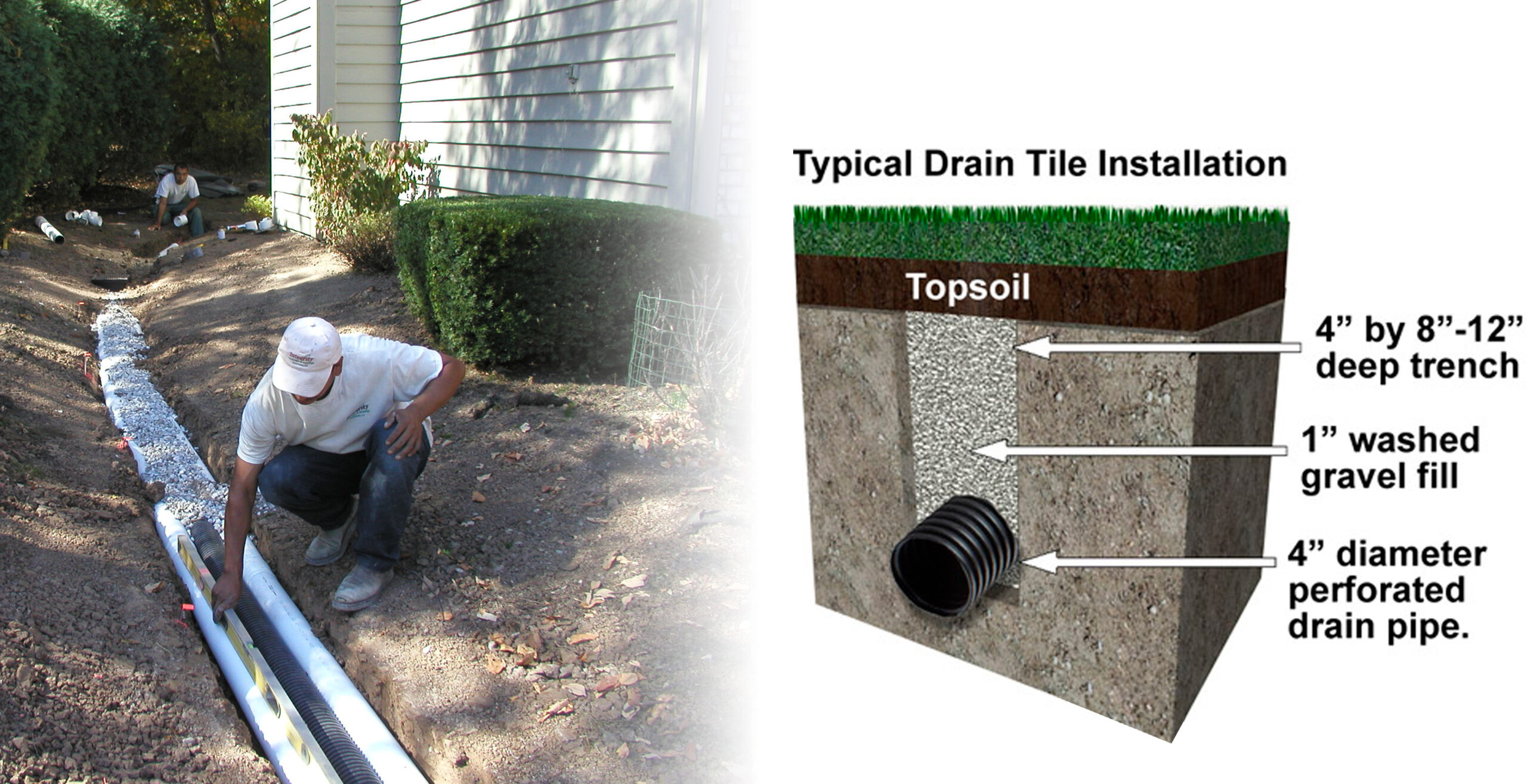
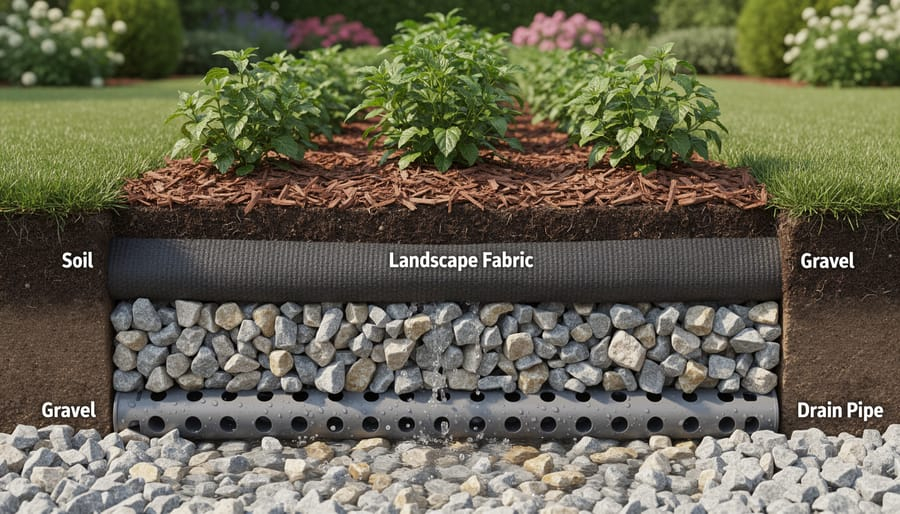
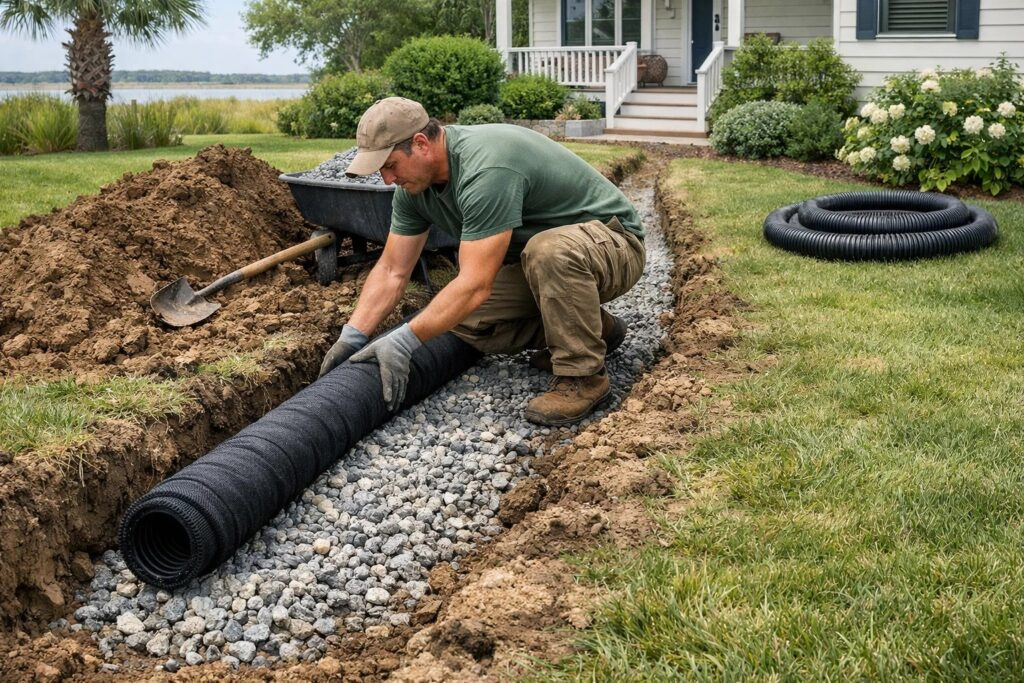
- Pitfall 1 (Ignoring Surface Drainage): Grading water toward your home’s foundation or the neighbor’s property creates catastrophic structural issues. Workaround: Hire a grading specialist to establish a mandatory 2-percent slope away from the foundation for the first ten feet, routing roof runoff into corrugated subsurface French drains.
- Pitfall 2 (Overlooking Irrigation Zones): Installing a single, blanket irrigation zone for both turfgrass and drought-tolerant shrubs results in drowned plants or dying lawns. Workaround: Design separate, dedicated irrigation zones utilizing high-efficiency rotary nozzles for turf and inline drip emitters for garden beds.
- Pitfall 3 (Planting Too Close to Foundations): Placing large ornamental trees or aggressive-rooted shrubs right against exterior walls invites pest infestations and foundation damage. Workaround: Respect mature plant spread radii, ensuring large trees are planted at least 15 to 20 feet away from the structure.
- Pitfall 4 (Skipping Pre-Emergent Herbicides): Raw construction dirt is a dormant seedbed for aggressive weeds like crabgrass and thistle that will overwhelm your new landscape. Workaround: Apply a professional-grade pre-emergent herbicide immediately after establishing bed layouts and before laying thick mulch blankets.
- Pitfall 5 (Buying Retail Plant Material): Purchasing retail nursery stock at peak season inflates project costs by 40 to 60 percent. Workaround: Source bulk plant material directly from regional wholesale nurseries or participate in local municipal tree-distribution programs.
The Long-Term Economic Impact of Sustainable Outdoor Design
A well-executed landscape is not merely an aesthetic luxury; it is a high-yield capital improvement that significantly appreciates property valuation over time. Real estate appraisers consistently note that mature, professional landscaping yields a return on investment ranging from 100 to 200 percent when executed thoughtfully. Conversely, a neglected new construction yard with eroding soil and dying vegetation creates an immediate curb-appeal discount that deters future buyers.
Sustainability also plays a pivotal role in the ongoing operational cost of your property. Water utility rates continue to climb steeply across suburban and metropolitan districts, making smart irrigation controllers, smart rain sensors, and drought-resistant native xeriscaping essential for long-term fiscal health. Selecting regional flora that relies on natural rainfall patterns once established drastically reduces monthly maintenance overhead, transforming your yard from an expensive water-guzzler into a self-sustaining local ecosystem.
Furthermore, strategic placement of deciduous trees along the southern and western exposures of a new home can reduce annual cooling costs by up to 25 percent. In winter, as these trees drop their leaves, they allow beneficial solar radiation to warm the structure’s siding naturally. Factoring these thermodynamic efficiencies into your initial budgeting process proves that every dollar spent on thoughtful placement yields recurring utility savings throughout the lifespan of the home.
Actionable Recommendations and Foundational Frameworks
Securing a successful outcome requires disciplined adherence to structured planning frameworks before breaking ground on your new property.
- Establish a Clear Vision: Create a to-scale drawing or digital render of your property, mapping out sun paths, wind directions, utility lines, and high-traffic pathways before purchasing any materials.
- Prioritize Privacy and Shade First: Direct your initial softscaping budget toward fast-growing privacy screens (such as Emerald Green Thujas or Leyland Cypress) and structural shade trees before investing in seasonal flowers.
- Invest in Quality Base Materials: Never skimp on base aggregates for hardscaping or topsoil quality for garden beds; subsurface failure destroys the longevity of surface-level improvements.
- Buffer Your Timeline: Accept that a landscape takes three to five years to reach maturity and visual fullness; avoid overcrowding beds with oversized plants just to achieve instant gratification.
- Maintain a Strict Contingency: Keep 15 percent of your total budget untouched until the final phase of the project to absorb unexpected utility repairs, drainage adjustments, or material price spikes.
Transforming the raw, unforgiving dirt perimeter of a newly constructed home into a flourishing personal sanctuary requires patience, strategic financial discipline, and a deep respect for natural systems. It is easy to feel overwhelmed by the sheer scale of the project when staring out across a muddy expanse on day one. Yet, by breaking the transformation down into manageable phases and respecting the foundational engineering principles of grading, soil health, and drainage, you turn a daunting liability into your home’s greatest asset.
Remember that a great landscape is never truly finished; it evolves, deepens, and matures alongside your family. The sweat equity and financial investments you make today lay the groundwork for lazy summer afternoons in the shade, vibrant autumn foliage, and a welcoming entryway that greets you every single evening. Embrace the process, protect your budget with a firm contingency, and step forward into the rewarding journey of cultivating your new property from the ground up.