
You know that feeling. You spend a whole Saturday morning at the nursery, loading up your truck with vibrant perennials, maybe a couple of small trees, and some mulch. You’re excited. You can practically see the garden of your dreams. You dig the holes, you tuck the roots in, you water them in. It looks perfect. Then, three days later, it rains. Not a storm, just a regular Tuesday afternoon shower. And suddenly, your new azalea is sitting in a puddle that hasn’t drained in forty-eight hours. By next week, the leaves are yellowing. By month’s end, it’s dead.
It’s heartbreaking. And expensive.
We’ve all been there. We want the instant gratification of a beautiful yard, so we skip the boring, unsexy part: checking how the water moves. But here’s the hard truth that landscapers have known for decades, and that homeowners are finally catching onto in 2026: if you don’t fix your drainage first, you are literally throwing money into a hole. And not a good hole. A wet, muddy, root-rotting hole. Fixing drainage isn’t just about keeping your shoes dry; it’s the single most important financial decision you can make for your landscape.
The Hidden Price Tag of "Just Planting It
Let’s talk numbers, but not the boring kind. Let’s talk about the cost of failure. When you plant in poorly draining soil without fixing it first, you aren’t just risking one plant. You’re risking the entire investment. Most ornamental plants, especially the pricey ones like Japanese maples or specialized roses, hate "wet feet." Their roots need oxygen. When soil is waterlogged, the air pockets fill with water, and the roots suffocate. They rot.
So, what does that cost you? In 2026, the average cost to replace a mature shrub or small tree has risen significantly due to supply chain shifts and labor costs. You’re looking at hundreds of dollars per plant, plus the cost of removal, new soil amendments, and replanting labor. If you lose five plants because you didn’t address the drainage, you’ve easily dropped a thousand dollars. And that’s just the plants.
But it gets worse. Poor drainage doesn’t just kill plants; it kills your hardscaping plans too. Imagine installing a beautiful stone patio or a wooden deck over an area that pools water. That water has to go somewhere. Often, it goes under the pavers, washing away the base material, causing settling, cracking, and heaving. Now you’re not just replacing a $50 plant; you’re repairing a $5,000 patio. As noted by industry experts, installing patios or walkways before fixing drainage often leads to costly re-dos because the water traps underneath, undermining the structure. It’s a domino effect of bad decisions.
Reading the Soil: What It’s Trying to Tell You
Before you buy a single seedling, you need to listen to your dirt. Soil tells the truth early. Long before leaves yellow or growth stalls, drainage reveals whether a plant will thrive—or struggle quietly. If you learn to read it first, planting becomes less about hope and more about alignment. Good drainage doesn’t guarantee success, but without it, even perfect conditions above ground rarely matter.
How do you read it? It’s simpler than you think. You don’t need a degree in geology. Just dig a hole. About a foot deep and a foot wide. Fill it with water. Let it drain completely. Then fill it again. Time how long it takes to drain. If it takes more than four hours, you have a drainage problem. If it’s still there the next day, you have a serious one. This simple test, often called a "percolation test," is the best money you’ll ever spend zero dollars on.
Many people ignore this step because they assume they can just "add compost" or "mix in sand" to fix it. Here’s the thing: adding sand to clay soil often makes it worse, creating a concrete-like substance. Adding compost helps, but it’s not a magic wand for standing water. You need to understand the cause. Is it heavy clay? Is it a low spot in the yard? Is it a high water table? Each cause requires a different fix. Ignoring the diagnosis means you’re treating a broken leg with a band-aid. It might look nice for a minute, but it won’t hold up.
Simple Fixes That Prevent Costly Disasters
Okay, so you’ve tested your soil. It’s slow. Maybe really slow. Do you need to hire an excavator and spend ten grand? Not necessarily. In 2026, there are plenty of affordable, effective solutions that can be done before you plant, saving you from those costly repair services later. Even minor adjustments, such as proper yard grading or temporary drainage systems, can prevent major headaches.
One of the most effective and budget-friendly methods is regrading. This simply means shaping the land so water flows away from your planting beds and your home’s foundation. You don’t need heavy machinery for small areas; sometimes, a shovel and a wheelbarrow of topsoil are enough to create a gentle slope. Water follows gravity. If you give it a path away from your prized petunias, they’ll thank you.
Another great option is the rain garden. Instead of fighting the water, you work with it. A rain garden is a depressed area planted with native species that love moisture. It collects runoff from roofs or driveways and allows it to soak in slowly. This not only solves the drainage issue but also creates a habitat for pollinators. It’s a win-win. You’re turning a problem area into a feature. Plus, native plants are tough. They handle the wet-dry cycles better than exotic imports, meaning you spend less on replacements.
The Hardscaping Trap: Don’t Build on Quicksand
Here is where many homeowners get tripped up. They want a nice patio. Or a walkway. So they lay down pavers or pour concrete over soil that hasn’t been addressed. This is a mistake. Hardscaping can improve drainage—or make it worse—depending on design. Well-planned hardscaping directs runoff intentionally, reduces muddy areas, and creates controlled water paths. Poor placement traps water.
When you put an impermeable surface like concrete over poorly draining soil, you’re capping a bottle. The water that used to evaporate or soak in slowly now has nowhere to go. It builds up pressure. It freezes in winter and expands, cracking your slab. It washes away the gravel base in spring, causing your pavers to sink. Suddenly, your smooth patio looks like a jagged puzzle piece that’s been dropped.
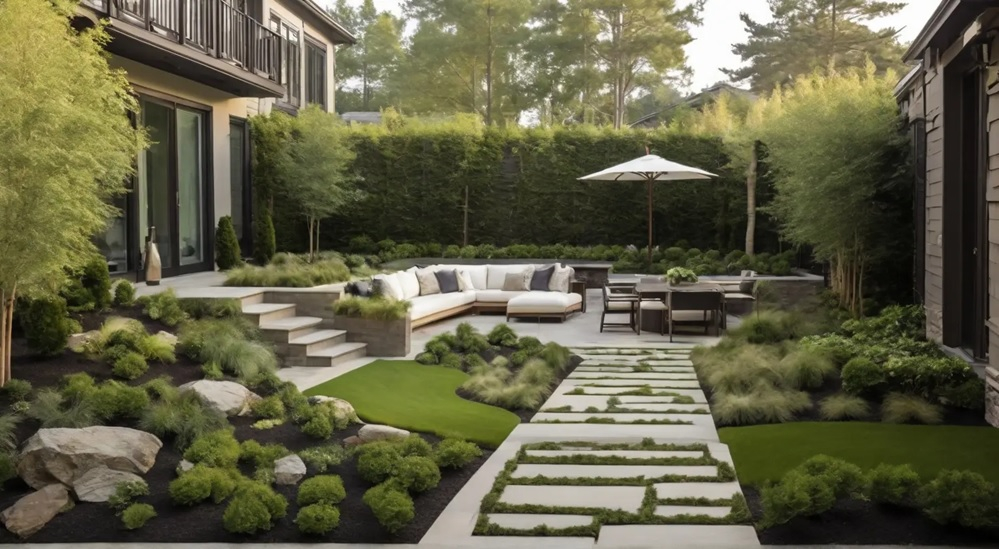
The fix? Permeable hardscaping. Use gravel, permeable pavers, or leave gaps between stones filled with grass or thyme. These materials allow water to pass through, reducing runoff and easing the burden on your soil. But even permeable surfaces need a good base. If the subsoil is clay, you still need to install a French drain or a gravel trench underneath to carry the water away. Solving the drainage before you lay the first stone ensures your hardscape lasts for decades, not just seasons. It’s about building smart, not just building pretty.
Plant Selection: Working With Nature, Not Against It
Let’s say you’ve done some grading. You’ve installed a small French drain. You’re ready to plant. But don’t just grab whatever looks cute at the garden center. Your plant selection is your final line of defense against drainage issues. Landscaping can significantly improve yard drainage through careful plant selection and placement. Planting native species that are well-suited to your local climate and soil conditions helps to improve water absorption and reduce runoff.
Think of plants as pumps. Trees and large shrubs with deep root systems pull massive amounts of water out of the ground. Willows, dogwoods, and certain oaks are thirsty giants. Placing them in wet areas can help dry out the soil naturally. On the flip side, avoid planting shallow-rooted, drought-loving plants like lavender or rosemary in low spots. They will drown. It’s not their fault; it’s yours.
In 2026, there’s a huge push towards "right plant, right place." This isn’t just a catchy slogan; it’s a financial strategy. Native plants are adapted to your local rainfall patterns. They don’t need extra watering, and they don’t need constant rescue when it rains too much. They’re resilient. By choosing plants that tolerate your specific soil conditions, you reduce maintenance costs, fertilizer needs, and replacement rates. You’re aligning your garden with reality, not fighting it. And that saves money, every single year.
Fixing drainage isn’t a one-and-done deal. It’s a system. And like any system, it needs maintenance. Implementing preventive measures can stop drainage issues before they start, saving time and money in the long run. Regular maintenance of drainage systems ensures they function properly. A French drain clogged with silt is useless. A gutter downspout dumping water right next to your foundation is a disaster waiting to happen.
Take ten minutes twice a year—spring and fall—to check your drains. Flush them with a hose. Clear out leaves from your swales. Make sure your downspouts extend at least six feet away from your house. These tiny actions prevent big problems. They keep your soil healthy and your plants happy.
And think about the future. Climate change is making weather more unpredictable. We’re seeing heavier rainfalls in shorter periods. What worked ten years ago might not work today. By establishing good drainage now, you’re future-proofing your yard. You’re protecting your home’s foundation from water damage, which is arguably the most expensive repair a homeowner can face. You’re preventing soil erosion, which strips away your topsoil and nutrients. You’re creating a resilient outdoor space that can handle whatever the sky throws at it. That’s peace of mind. And that’s priceless.
So, next time you’re itching to dig, pause. Look at the water. Test the soil. Fix the flow. It might delay your gardening project by a week or two. It might cost a few hundred dollars in gravel and pipe. But it will save you thousands in dead plants, cracked patios, and foundation repairs. It’s the smart move. The grown-up move. And honestly? It’s the only way to build a garden that lasts. Don’t let your hard-earned cash wash away. Fix the drainage first. Your wallet, and your plants, will thank you.